For years, the flow of automobiles across the Canada–United States border was so routine that it scarcely warranted attention. American-made vehicles filled Canadian showrooms, trade rules were assumed to be stable, and consumer loyalty followed familiar patterns. That sense of permanence is now being tested.
Recent sales data and industry reports show a noticeable decline in Canadian demand for U.S.-manufactured vehicles, a shift that analysts say cannot be explained by ordinary market cycles alone. While overall auto sales in Canada have softened amid higher interest rates and cost-of-living pressures, the downturn for American brands has been sharper than expected. At the same time, European automakers are quietly expanding their footprint, gaining market share with fewer disruptions and steadier pricing.

Executives and dealers point to tariffs and trade uncertainty as central factors. Measures introduced during recent trade disputes, along with lingering threats of new duties, have complicated supply chains that once ran seamlessly across North America. For Canadian dealers, this has translated into longer delivery times, unpredictable pricing, and vehicles arriving with higher embedded costs. “It’s not that consumers suddenly dislike American cars,” said one senior dealership manager in Ontario. “It’s that the buying experience has become less certain, and people are responding to that.”
The change has been subtle but cumulative. Inventory shortages tied to cross-border components have affected production schedules at U.S. plants. Currency fluctuations have amplified price increases. And shifting regulatory standards—particularly around emissions and electric vehicles—have made European models more competitive in categories that Canadian buyers increasingly care about. The result is a market where U.S. brands no longer enjoy the default advantage they once did.
Consumer sentiment appears to be evolving alongside the numbers. Surveys conducted by industry groups suggest that some Canadian buyers are factoring geopolitical considerations into purchasing decisions, a phenomenon rarely associated with car shopping in the past. While few openly frame their choices as political statements, concerns about future tariffs, resale value, and long-term servicing costs are shaping preferences. “People are asking questions they didn’t used to ask,” said an automotive analyst based in Toronto. “They want to know where a vehicle is made, how exposed it is to trade disruptions, and whether today’s price will still make sense five years from now.”
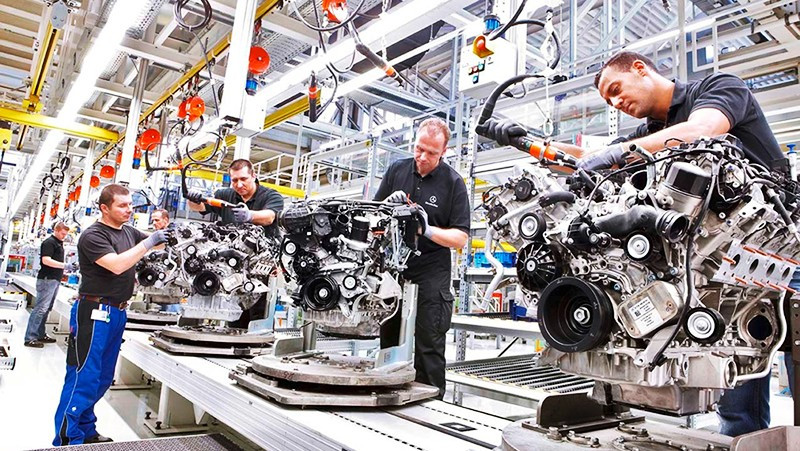
European automakers have benefited from this uncertainty. Companies based in Germany, France, and Sweden have expanded dealer networks in Canada and accelerated the rollout of electric and hybrid models tailored to Canadian regulations. Their messaging has emphasized stability and long-term planning, a contrast to the stop-start nature of North American trade policy in recent years. While European vehicles often carry higher sticker prices, buyers appear increasingly willing to absorb that cost in exchange for predictability.
Behind the scenes, corporate behavior is reinforcing the trend. Fleet buyers, leasing firms, and institutional investors are reportedly adjusting procurement strategies, diversifying away from heavy reliance on U.S. supply chains. These decisions, though less visible to the public, carry significant weight. Large contracts can shape production priorities for years, influencing where automakers invest and which markets they prioritize.

Officials in Ottawa have been careful to downplay the idea of a deliberate shift away from the United States. Canada remains deeply integrated with the American auto industry, and thousands of jobs on both sides of the border depend on that relationship. Government representatives emphasize that Canada’s trade policy continues to support open markets and North American cooperation. Still, they acknowledge that businesses are responding to signals beyond their control. “Markets adapt to uncertainty,” said one federal trade official. “Our role is to manage that uncertainty, not pretend it doesn’t exist.”
In Washington, the trend has not gone unnoticed. Industry groups have warned that declining Canadian demand could foreshadow broader challenges if trade tensions persist. Canada is one of the largest export markets for U.S.-made vehicles, and even modest shifts can have outsized effects on manufacturing regions already under strain from technological change and global competition.
What makes the moment notable is not a dramatic rupture, but the quiet nature of the change. No formal policy announcement marked the shift, no headline-grabbing boycott. Instead, it has emerged through spreadsheets, dealer reports, and cautious strategic adjustments. That incremental quality may be precisely what gives it lasting significance.

Analysts caution against overstating the case. American automakers remain dominant players in Canada, and consumer loyalties are resilient. A stabilization of trade relations or clearer long-term rules could quickly reverse current trends. Yet the episode underscores how quickly assumptions can erode when predictability disappears.
For decades, the Canada–U.S. auto relationship was treated as untouchable, insulated from political turbulence by sheer economic logic. The recent slide in demand suggests that logic now has competitors: trust, stability, and confidence in the rules of the game. Whether this marks a temporary deviation or the early stages of a deeper realignment will depend on decisions still to be made—by governments, corporations, and consumers alike.