Canada’s New Strategic Network Signals a Shift Beyond Washington
In less than two weeks, Canada quietly executed a diplomatic and economic campaign that may signal a broader shift in the global order. A series of defense, energy, and trade agreements signed across three continents — totaling nearly $10 billion — suggests that some of America’s closest allies are beginning to build strategic partnerships that do not revolve around Washington.
At the center of the shift is Canada’s new prime minister, Mark Carney, who spent ten days traveling through India and Australia, sealing deals that range from nuclear fuel supply to advanced military technology. The agreements themselves are substantial. But the symbolism — and the timing — may prove even more significant.
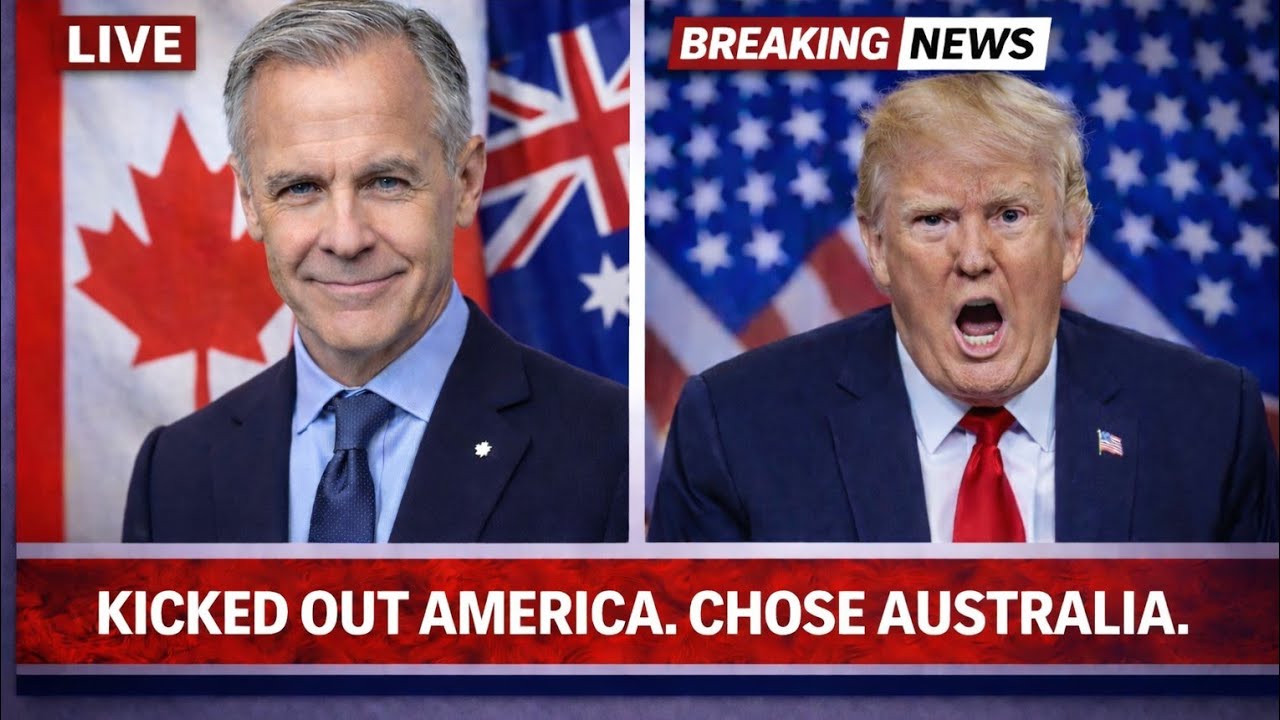
The most striking development is Canada’s purchase of an over-the-horizon radar system from Australia, a $4 billion defense contract that represents the largest military export in Australian history.
Unlike traditional radar systems that are limited by the curvature of the Earth, this technology can detect aircraft, ships and missiles thousands of kilometers away by bouncing signals off the ionosphere. Australia has operated the system for decades to monitor vast areas of the Pacific.
Canada plans to deploy the technology across the Arctic, creating a surveillance shield that stretches from its northern borders toward the North Pole. The system will replace the aging North Warning System, a Cold War-era network originally designed to detect Soviet bombers.
In an era of hypersonic weapons and rapidly evolving missile technology, defense officials have long argued that the old system is no longer adequate.
What makes the deal particularly notable is that the United States had been widely expected to be the first buyer of the radar technology. Instead, Canada secured the agreement ahead of Washington.
The move follows a period of unusually tense relations between the United States and Australia.
Last October, during a bilateral meeting at the White House, President Donald Trump publicly criticized Australia’s ambassador to Washington, Kevin Rudd, a former prime minister who had previously described Mr. Trump as a destructive figure in global politics. The exchange was widely viewed by diplomats as an extraordinary breach of protocol.
Trade disputes soon followed. The United States imposed tariffs on a range of Australian exports, including steel, aluminum and automobiles. Canberra requested exemptions under the longstanding U.S.–Australia free trade agreement, noting decades of military cooperation in conflicts from Korea to Afghanistan. Those exemptions were denied.
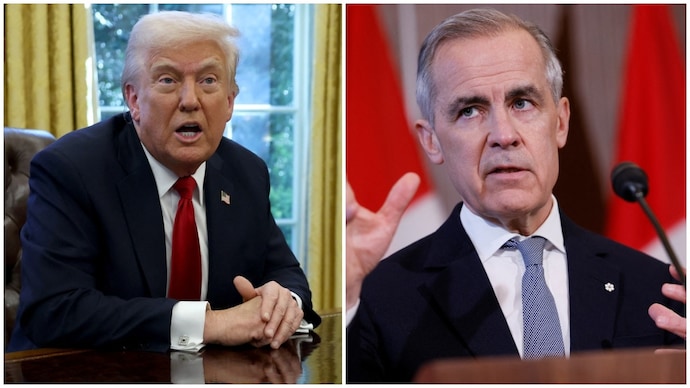
The radar deal, while negotiated on technical grounds, arrived against that backdrop.
Before arriving in Australia, Mr. Carney had already taken steps to repair another strained relationship. Canada’s ties with India had been deeply damaged after Ottawa accused Indian agents of involvement in the killing of a Sikh activist on Canadian soil — allegations that India denied. Diplomats were expelled and relations effectively froze.
Yet during a four-day visit to Mumbai and New Delhi, Mr. Carney and Prime Minister Narendra Modi announced a new set of agreements worth approximately $5.5 billion.
The centerpiece was a $2.6 billion uranium supply arrangement under which Canada will provide more than 20 million pounds of nuclear fuel to India between 2027 and 2035. The two governments also pledged to double bilateral trade to $70 billion annually by the end of the decade and launched negotiations toward a comprehensive free trade agreement.
The diplomatic reset was swift. Only sixteen months earlier, the two governments had barely been speaking.
Mr. Carney has framed these moves as part of a broader strategic adjustment. At the World Economic Forum in Davos earlier this year, he argued that the international order built around American leadership was undergoing a rupture rather than a gradual transition.
“If we are not at the table,” he said during the speech, “we are on the menu.”
The remark drew rare applause from an audience of global political and business leaders.
President Trump responded hours later with a blunt message of his own, saying that Canada’s prosperity depended heavily on its southern neighbor.
The exchange illustrated the widening rhetorical divide between Washington and some of its traditional partners.
Within days, Australia’s prime minister, Anthony Albanese, publicly aligned himself with Mr. Carney’s argument and invited him to address the Australian Parliament — a gesture that further underscored the emerging alignment.
For Canada, the agreements represent more than individual deals. They form the early outlines of a network that links defense cooperation, energy supply and critical minerals across multiple continents.
Last year, Canada and Australia also signed a partnership focused on lithium, cobalt and rare earth elements — resources essential to electric batteries, semiconductors and modern military equipment.
Taken together, these arrangements suggest the construction of new supply chains and security partnerships that operate alongside, rather than through, the United States.
Such changes rarely occur overnight. Defense systems take years to build. Nuclear fuel contracts extend across decades. Trade agreements require lengthy negotiations and legal frameworks.
But when they do take shape, they can quietly redraw the architecture of global alliances.
For decades, many of the world’s economic and security relationships flowed naturally through Washington.
Canada’s recent diplomatic push suggests that some of those pathways may now be branching in new directions.