Canada Draws a Hard Line on Dairy, Exposing a Major Miscalculation in U.S. Trade Strategy
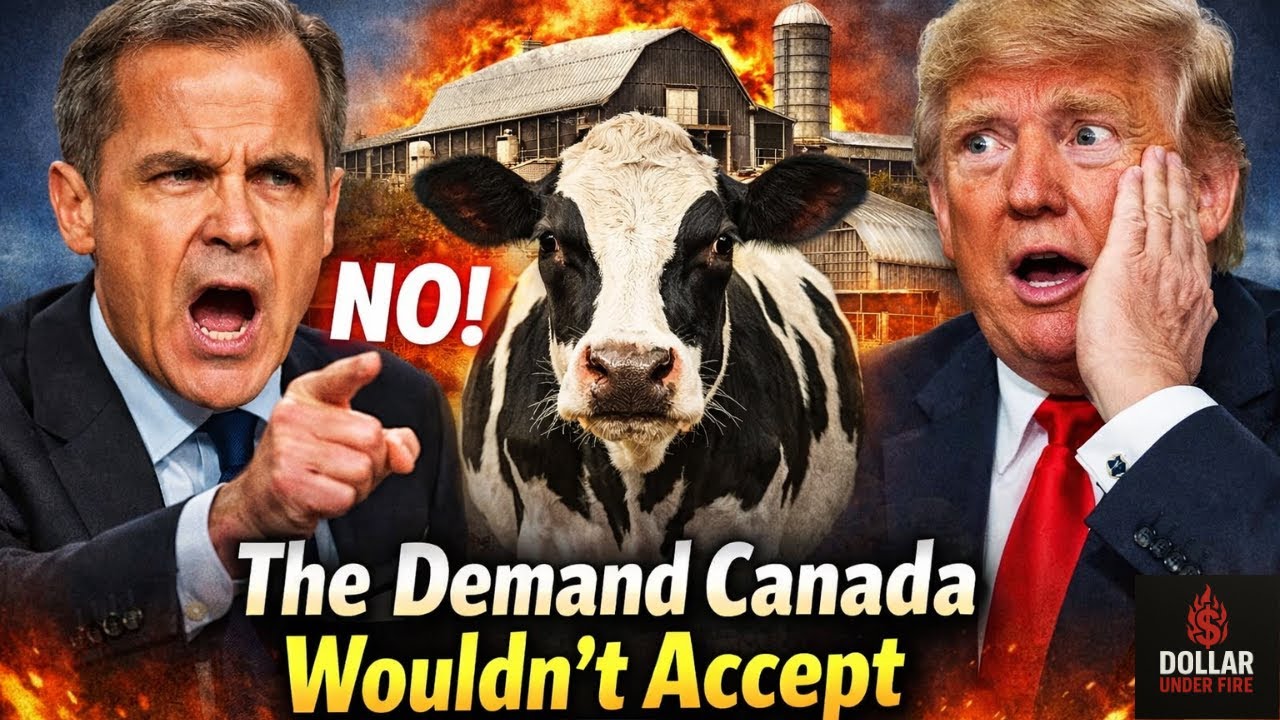
Canada has just delivered an answer Washington did not expect—and one it cannot easily undo. As U.S. officials pressed for expanded access to Canada’s dairy market ahead of the upcoming CUSMA review, Ottawa responded with a flat refusal. No counteroffer. No diplomatic softening. Just a clear “no,” signaling a shift in how Canada approaches pressure from its largest trading partner.
The demand itself was framed as non-negotiable. Behind closed doors, U.S. negotiators treated dairy access as a prerequisite for meaningful talks, assuming Canada’s reliance on U.S. trade would eventually force concessions. Analysts widely believed Ottawa would bend to preserve stability. That assumption proved wrong. Canada had already decided that supply management was off the table—completely.
Prime Minister Mark Carney made the message unmistakable. Standing before national media, he stated that supply management would not be negotiated, then moved on without debate. The delivery mattered. By refusing to justify the policy or acknowledge U.S. grievances, Canada rejected the idea that its domestic framework required American approval. The silence itself became the statement.

While dairy may appear technical, the stakes run far deeper. For the United States, it is a commercial issue. For Canada, it is about sovereignty. Supply management underpins food security, price stability, and rural economies—especially in Quebec, where it is deeply tied to political and cultural identity. Conceding under pressure would have set a precedent that core domestic policies are negotiable.
Washington compounded the pressure by bundling dairy with complaints over Canada’s digital content regulations and provincial alcohol policies. From the U.S. perspective, these were protectionist barriers. From Canada’s, they were constitutional realities. Cultural regulation, provincial authority, and agricultural policy are not bargaining chips—they are foundations of governance.
The standoff also revived unresolved tensions from months earlier, when talks collapsed following an Ontario political ad criticizing tariffs using Ronald Reagan’s words. Negotiations were suspended not over policy, but over political expression. Canada refused to apologize or censor itself, reinforcing a critical distinction: it will negotiate trade, but not its right to govern or speak freely.
What Washington underestimated is that Canada no longer negotiates from fear. Years of trade diversification, stronger ties with Europe and the Pacific, and expanded domestic capacity have reduced dependence on U.S. access. Pressure that once worked now produces repetition, not retreat. Canada’s consistency—same position, same language, every time—has flipped the leverage dynamic.
As the CUSMA review approaches, the implications are clear. The question is no longer whether Canada will move its red line, but whether the United States is willing to negotiate around it. By drawing a firm boundary and refusing to blur it, Ottawa has changed the rules of engagement—quietly proving that in modern trade politics, predictability and credibility can outweigh size and force.