Mark Carney Delivers Fiery Rebuke at Davos, Warning of Global ‘Rupture’ in Clash With Trump Over Tariffs and Greenland

DAVOS, Switzerland — In a speech that reverberated far beyond the snow-covered peaks of this Swiss alpine resort, Canadian Prime Minister Mark Carney stood before the World Economic Forum on January 20, 2026, and declared the world order in the midst of a profound and irreversible “rupture, not transition.” The former central banker turned political leader issued a stark warning about the dangers posed by “unconstrained superpowers” that wield economic leverage as a tool of coercion — remarks widely interpreted as a direct challenge to the aggressive trade and territorial policies of U.S. President Donald J. Trump.
Carney’s address, titled “Principled and Pragmatic: Canada’s Path,” earned a rare standing ovation from an audience of global elites, diplomats, and corporate titans. Without naming Trump explicitly, the prime minister painted a picture of a fracturing international system where great powers dictate terms through tariffs, threats, and territorial ambitions, leaving middle powers like Canada vulnerable unless they unite in defense of shared principles.
“The rules-based order is fading,” Carney said. “The strong can do what they can, and the weak must suffer what they must. Middle powers must act together, because if we’re not at the table, we’re on the menu.” He emphasized that compliance with dominant powers no longer guarantees security or prosperity, urging nations to reject subordination disguised as integration.
The speech arrived at a moment of acute tension in North American relations. Trump, in his second term, has revived longstanding interest in acquiring Greenland from Denmark, threatening tariffs on European allies who resist. He has also mused publicly about Canada as a potential 51st state and posted altered maps incorporating Canadian territory into an expanded United States. In response to Canada’s recent trade overtures toward China — including reduced tariffs on certain goods like canola oil — Trump has floated 100% tariffs on Canadian imports, framing them as necessary to prevent circumvention of U.S. levies.
Carney directly addressed these pressures, reaffirming Canada’s opposition to tariffs linked to Greenland and its unwavering support for Denmark and Greenland’s right to self-determination. “On Arctic sovereignty, we stand firmly with Greenland and Denmark,” he declared, calling for dialogue focused on mutual security and prosperity rather than coercion.
Trump’s Sharp Reprisal and Escalating Rhetoric
President Trump responded swiftly and personally. In his own address to the forum the following day, he dismissed Carney’s warnings, insisting that “Canada lives because of the United States” and accusing the prime minister of ingratitude. “Remember that, Mark, the next time you make your statements,” Trump said, referring to Carney by his first name in a pointed jab reminiscent of his past nicknames for political adversaries.
The president escalated further by rescinding Canada’s invitation to join his newly proposed “Board of Peace” initiative and threatening sweeping tariffs unless Ottawa abandoned its China trade initiatives. The exchange highlighted deepening fractures in one of the world’s most stable alliances, with markets reacting nervously to the prospect of renewed U.S.-Canada trade disruptions.
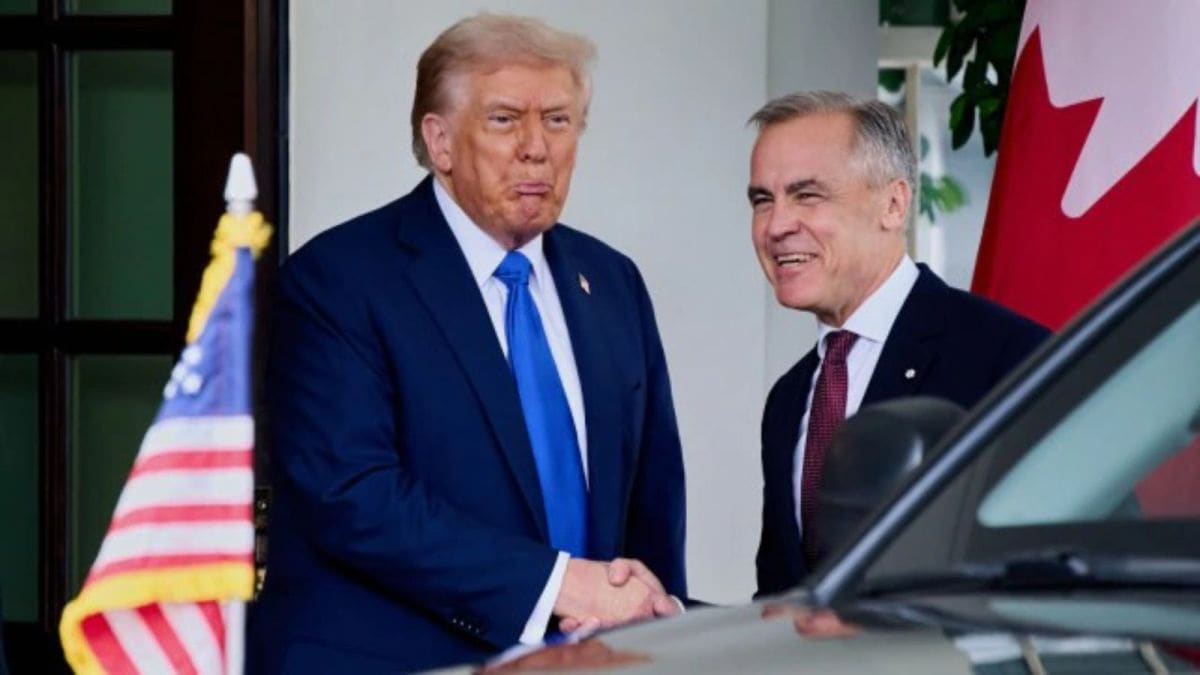
In a subsequent phone call, Carney stood firm. Speaking to reporters afterward, he confirmed he told Trump directly: “I meant what I said in Davos.” He rejected claims from U.S. Treasury Secretary Scott Bessent that he had “aggressively” walked back his remarks, describing the conversation as constructive yet resolute on Canadian sovereignty.
A New Voice for Middle Powers Emerges
Analysts have hailed Carney’s performance as a defining moment in his young premiership. The former governor of the Bank of Canada and the Bank of England, who assumed office in March 2025 after a dramatic Liberal Party leadership victory, has positioned himself as a principled realist unafraid to confront U.S. hegemony. His speech drew praise from European leaders and international observers, with NATO Secretary General Mark Rutte calling it evidence that “Canada is back” as a global force.
Yet the rhetoric carries risks. Discussions of Alberta separatist sentiments have surfaced amid economic anxieties over potential tariffs, and experts warn that prolonged confrontation could strain supply chains, energy exports, and defense cooperation under NORAD and NATO.
Allies express alarm at the erosion of transatlantic unity at a time when challenges from Russia, China, and climate change demand collective action. The episode underscores broader questions about the durability of postwar alliances when one partner pursues unilateral ambitions.
As Carney returns to Ottawa, the rivalry with Trump shows no signs of abating. Whether this marks a temporary flare-up or the beginning of a sustained realignment remains uncertain. What is clear is that Mark Carney, once known primarily for steering economies through crises, has emerged as a formidable figure on the world stage — one willing to stare down superpower pressure in defense of a rules-based order he believes is slipping away.
The world watches closely to see how far this transatlantic tension will extend, and whether middle powers can forge new coalitions in an era of rupture.