Canada’s F-35 Dilemma: Why Ottawa Is Rethinking America’s Fighter Jet and Weighing Sweden’s Gripen
Canada, America’s closest partner in North American defense, is facing one of the most consequential military decisions in its modern history. At stake is not just a fighter jet contract, but national sovereignty, technological independence, and Canada’s long-term role in Arctic security.
Ottawa is now openly weighing whether to walk away from 72 planned F-35 fighter jets and pivot instead toward Sweden’s Saab Gripen E. The debate has drawn a sharp response from Washington. U.S. Ambassador Pete Hoekstra has warned about NORAD interoperability and the “special relationship” between the two countries. Behind the diplomatic language, however, lies a much deeper struggle over control, dependence, and strategic autonomy.
This is no longer just about aircraft. It is about who ultimately holds the keys to Canada’s defense.
How Canada Got Here
The story begins in 2010, when Canada first selected the F-35. That decision was revisited in 2014, delayed again, and finally reaffirmed in 2022 after three prolonged procurement competitions. Ottawa signed a deal for 88 F-35A Lightning II aircraft, valued at 19 billion Canadian dollars.
The first 16 jets are scheduled for delivery in 2026, with Canadian pilots already training at Luke Air Force Base in Arizona. On paper, the choice appeared logical: fifth-generation stealth, seamless integration with U.S. forces, and full compatibility with NORAD.
Then the numbers changed.
According to Canada’s Auditor General, released in June 2025, projected costs had risen to 27.7 billion Canadian dollars. Once infrastructure upgrades, long-term maintenance, and weapons systems are included, the total price could reach 33 billion dollars — nearly double the original estimate.
This was not a marginal increase. It was a budget shock.
The F-35’s Growing Problems
Cost escalation is only part of the concern. In September 2025, the U.S. Government Accountability Office revealed that the F-35’s Block 4 upgrade program — the modernization package intended to unlock its full combat capability — is five years behind schedule and $6 billion over budget.
Block 4 is critical. It enables advanced weapons integration, sensor upgrades, and next-generation combat functions. Without it, the F-35 cannot deliver the capabilities Canada originally paid for.
Defense analysts are now asking uncomfortable questions: Will Canada receive aircraft that are operational but technologically incomplete? Is Ottawa paying for future promises that may arrive years late — or not at all?
Sweden’s Gripen Offer Changes Everything
This is where Sweden’s Saab enters the picture.
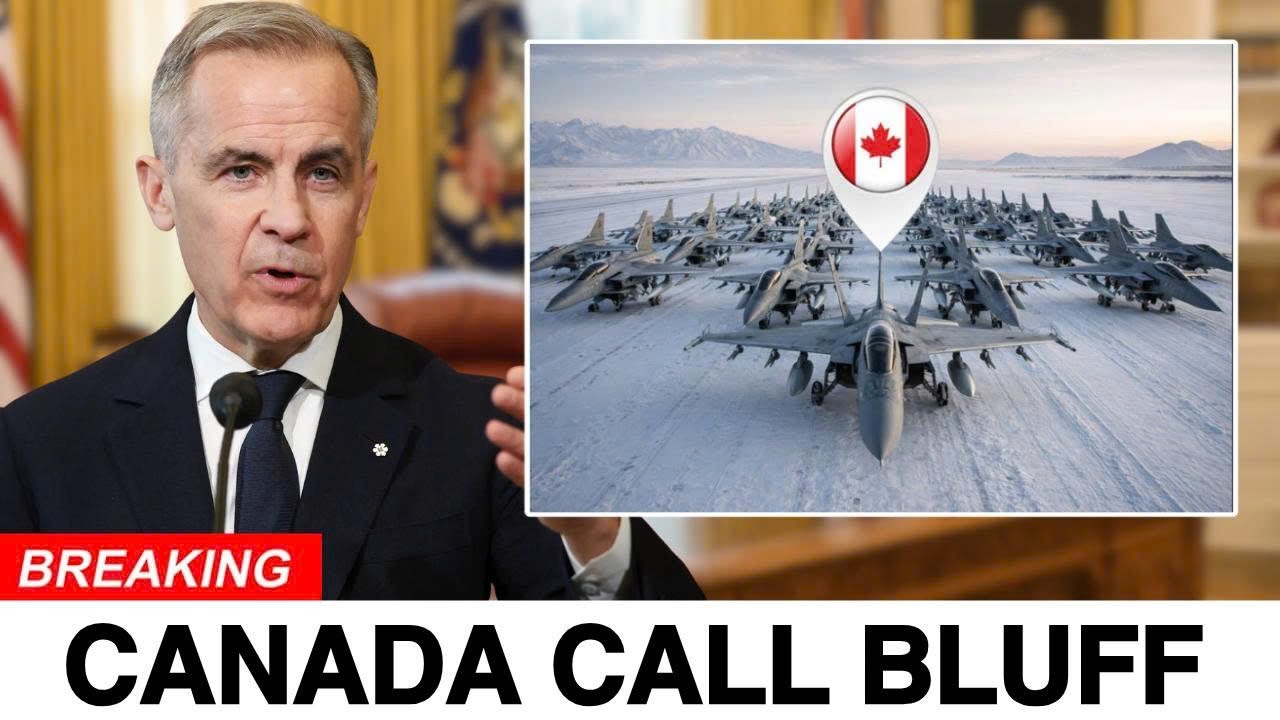
Saab has proposed an alternative that goes far beyond aircraft numbers. Its offer includes 72 Gripen E fighters, six GlobalEye airborne early-warning aircraft, and — most importantly — full final assembly inside Canada.
The industrial package promises 12,600 Canadian jobs, split between Gripen production and GlobalEye assembly in Ontario and Quebec. Saab has proposed partnerships with Bombardier, IMP Aerospace, CAE, and GE Aviation, effectively reviving Canada’s domestic aerospace sector.
This transforms the decision from a military purchase into a national industrial strategy.
Sovereignty vs. Interoperability
The Gripen E offers something the F-35 cannot: operational sovereignty.
Under the Gripen model, Canada would fully control mission software, weapons integration, and system upgrades. No external approval loops. No dependency on foreign code releases. No political gatekeepers.
By contrast, the F-35 operates within a tightly controlled U.S.-led ecosystem. Every software update, weapons integration, and operational modification must align with Pentagon systems. Canada would fly the jets — but it would never truly own them.
This trade-off sits at the heart of the debate. The F-35 offers unmatched integration with U.S. forces. The Gripen offers independence.
The Arctic Factor
The Arctic adds urgency to the decision.
Canada possesses the world’s longest Arctic coastline. As ice retreats, the region is rapidly militarizing. Russia has doubled Arctic military activity since 2020. China now labels itself a “near-Arctic state” and is investing heavily in northern infrastructure.
Here, the Gripen holds practical advantages. It is designed to operate at –40°C, can land on short runways or highways, and requires minimal ground support. A team of six technicians can turn it around in under an hour — ideal for remote northern bases.
Its operating cost is estimated at around $8,000 per flight hour, compared to $35,000–$47,000 for the F-35. That means more patrols, more coverage, and greater endurance with the same budget.
The F-35, however, excels in high-threat environments. Its stealth and sensor fusion offer unmatched surveillance capabilities, particularly when integrated into U.S. early-warning networks. Against advanced Russian air defenses, the F-35 has no true peer.
Pressure from Washington
The United States has not hidden its frustration.
In December 2025, Ambassador Hoekstra warned that delays were straining relations. Earlier, he suggested that walking away from the F-35 could jeopardize NORAD interoperability — a message widely interpreted as a warning rather than a suggestion.
The return of Donald Trump to office has amplified tensions. Tariffs, “Buy American” policies, and inflammatory rhetoric about Canada becoming the 51st state have added economic pressure to military decision-making.
Canada sends 75% of its exports to the United States. Retaliation would hurt — quickly.
Canada’s Quiet Diversification
Ottawa has responded carefully. In August 2025, Canada and Sweden signed a bilateral defense cooperation agreement. In December, Canada joined the EU’s Safe Defence Program — a signal that diversification is now official policy.
Analysts view this not as defiance, but as hedging.
An Unfinished Decision
Despite months of review, Canada has not made a final call. The first 16 F-35s are coming. The remaining 72 aircraft remain undecided.
This is no longer a procurement issue. It is a test of whether a middle power can preserve technological sovereignty while living next to a superpower.
Does security come from the most advanced platform on paper — or from controlling the technology in practice? Is Canada a strategic partner, or a dependent customer?
There is no perfect answer. Only trade-offs.
But one thing is certain: this decision will shape Canada’s defense posture, industrial future, and relationship with Washington for decades. And once that path is chosen, there may be no way back.