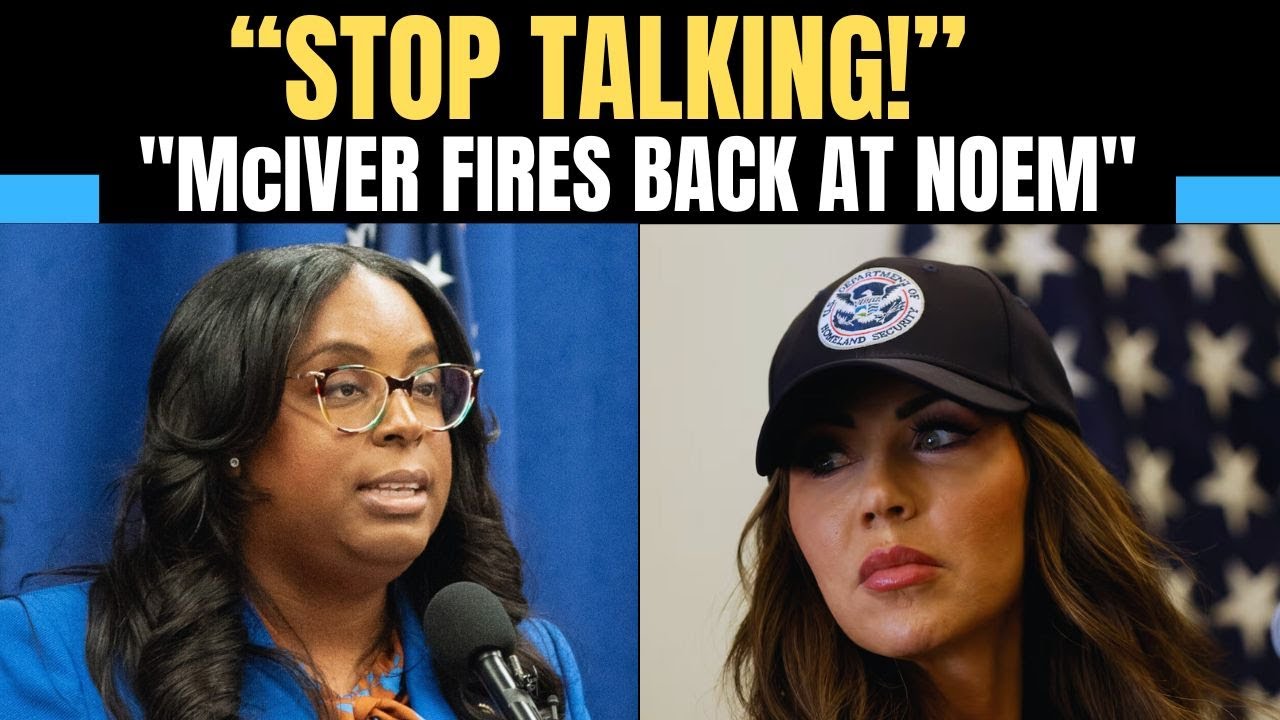
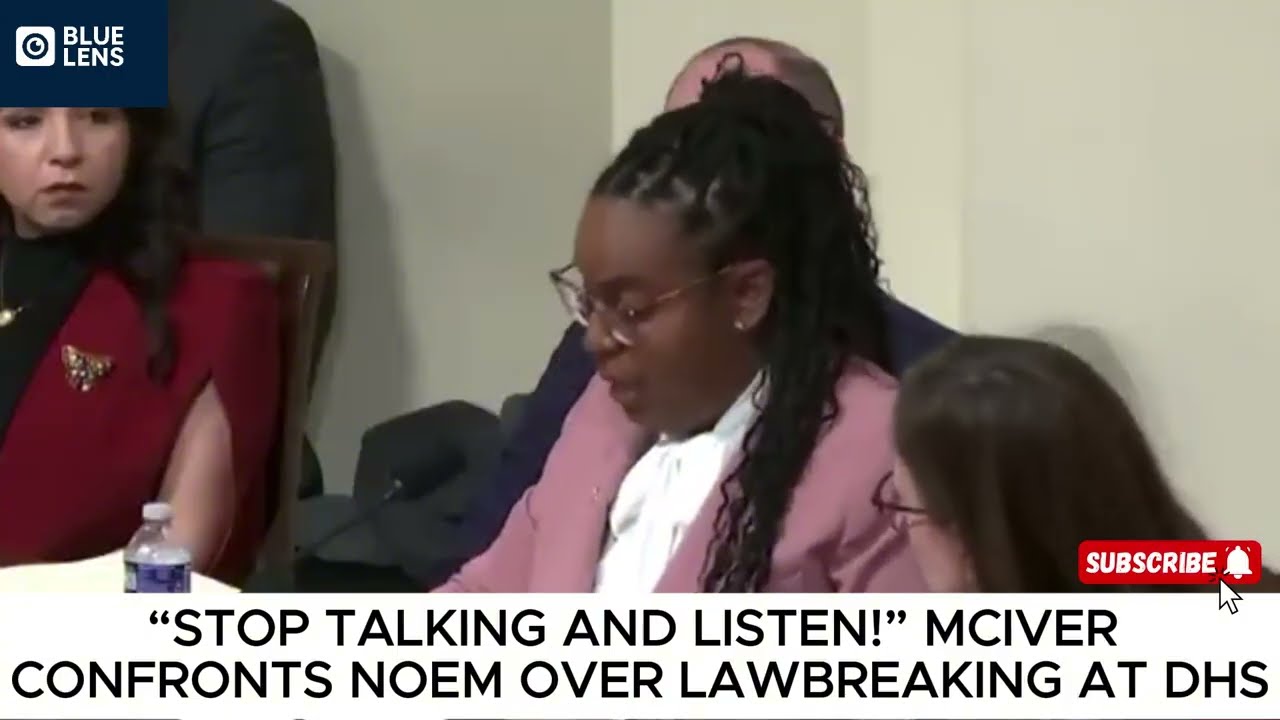
WASHINGTON — A House hearing intended to review routine operations at the Department of Homeland Security erupted into a sharp confrontation when Representative LaMonica McIver delivered a blistering rebuke to DHS Secretary Kristi Noem, accusing the department of ignoring congressional oversight and engaging in conduct that, if substantiated, would raise serious legal and constitutional concerns. The exchange, marked by raised voices and visible tension, quickly became one of the most discussed moments on Capitol Hill this week.
“Stop talking and listen,” McIver said, cutting through Noem’s response as she attempted to pivot away from a line of questioning about compliance with subpoenas and congressional requests. The admonition underscored a broader frustration that Democrats on the panel said had been building for months: a belief that DHS leadership is stonewalling lawmakers while expanding enforcement actions that stretch — and in some cases may exceed — its legal authority.
Oversight, Ignored
At the center of McIver’s critique was the principle of congressional oversight itself. As a cabinet department, DHS is legally obligated to respond to lawful inquiries from Congress, including document requests and testimony related to policy implementation. McIver argued that Noem’s department has repeatedly failed to do so in a timely and substantive manner, substituting generalized talking points for direct answers.
“This is not optional,” McIver said. “Oversight is not a courtesy. It is the law.”
She cited multiple instances in which DHS allegedly delayed or withheld information related to immigration enforcement practices, internal disciplinary processes, and coordination with state and local authorities. According to McIver, these delays have impeded Congress’s ability to assess whether DHS actions align with statutory requirements and constitutional protections.
Noem rejected the characterization, insisting that DHS has cooperated “to the fullest extent possible” while balancing operational security and privacy concerns. But the response did little to satisfy McIver, who pressed the secretary on why basic questions about policy directives and internal reviews remained unanswered months after they were first raised.
Allegations of Targeting Lawmakers
The exchange escalated when McIver referenced reports suggesting that DHS components may have monitored or flagged members of Congress during oversight-related activities, including visits to detention facilities and border sites. While McIver stopped short of asserting definitive conclusions, she framed the allegations as deeply troubling if true.
“If the Department of Homeland Security is even appearing to target members of Congress for doing their jobs, that is a profound abuse of power,” she said.
Noem pushed back forcefully, denying that DHS targets lawmakers and calling the suggestion “categorically false.” She emphasized that DHS law enforcement activities are guided by threat assessments, not political considerations.
Still, McIver argued that the lack of transparency surrounding these reports only amplifies concern. Without clear documentation and sworn testimony addressing the issue, she said, public confidence in DHS leadership continues to erode.
A Pattern, Not an Isolated Incident
What distinguished McIver’s remarks from typical partisan clashes was her insistence that the confrontation was not about a single policy disagreement but about a broader pattern of conduct. She pointed to repeated instances in which DHS leadership has, in her view, minimized congressional authority while aggressively expanding enforcement discretion.
“This is about a culture that treats accountability as an inconvenience,” McIver said. “That is not how a democracy functions.”
Other lawmakers echoed the concern, noting that DHS wields extraordinary power over immigration enforcement, border security, and domestic threat response. With such authority, they argued, comes an equally extraordinary obligation to operate transparently and within the law.
Republicans on the panel largely defended Noem, accusing Democrats of politicizing national security and undermining DHS morale. They argued that the department faces unprecedented challenges and should not be hamstrung by what they described as excessive oversight demands.
The Stakes for Public Trust
Beyond the immediate exchange, the hearing highlighted a deeper issue confronting DHS: a growing trust deficit. Polling has consistently shown that public confidence in federal institutions is fragile, particularly when agencies are perceived as opaque or unaccountable.
McIver framed her confrontation with Noem in those terms, emphasizing that oversight is not about partisan advantage but about maintaining the legitimacy of government power.
“When people believe the rules don’t apply to those in charge, trust collapses,” she said. “And when trust collapses, so does the effectiveness of government.”
Legal experts note that while executive agencies have discretion in how they implement laws, persistent refusal to engage with Congress can trigger serious consequences, including subpoenas, budgetary restrictions, and, in extreme cases, litigation.

What Comes Next
The hearing ended without resolution, but few observers expect the issue to fade. McIver and several colleagues indicated they are considering additional oversight tools, including formal document demands and potential referrals if DHS continues to resist cooperation.
Noem, for her part, signaled that DHS would continue to prioritize what she called “mission-critical operations,” while maintaining that it operates within the law. Whether that assurance will satisfy lawmakers remains an open question.
For now, the moment that resonated most was not a policy detail but a command: “Stop talking and listen.” It captured a fundamental clash between an executive department asserting operational autonomy and a Congress insisting on its constitutional role.
As debates over immigration, border security, and domestic enforcement intensify, the confrontation between McIver and Noem serves as a reminder that the struggle for accountability is not abstract. It plays out, in real time, in hearing rooms where the balance of power — and the public’s right to know — is tested.