LONDON, Feb. 25, 2026 — Independent MP Rupert Lowe delivered a pointed and persistent challenge to a Labour government minister in the House of Commons on Monday, accusing the Home Office of deliberately withholding or downplaying data on crimes committed by foreign nationals, particularly those involving sexual violence against women and girls. The brief but intense exchange has since circulated widely on social media, with clips garnering hundreds of thousands of views within hours.
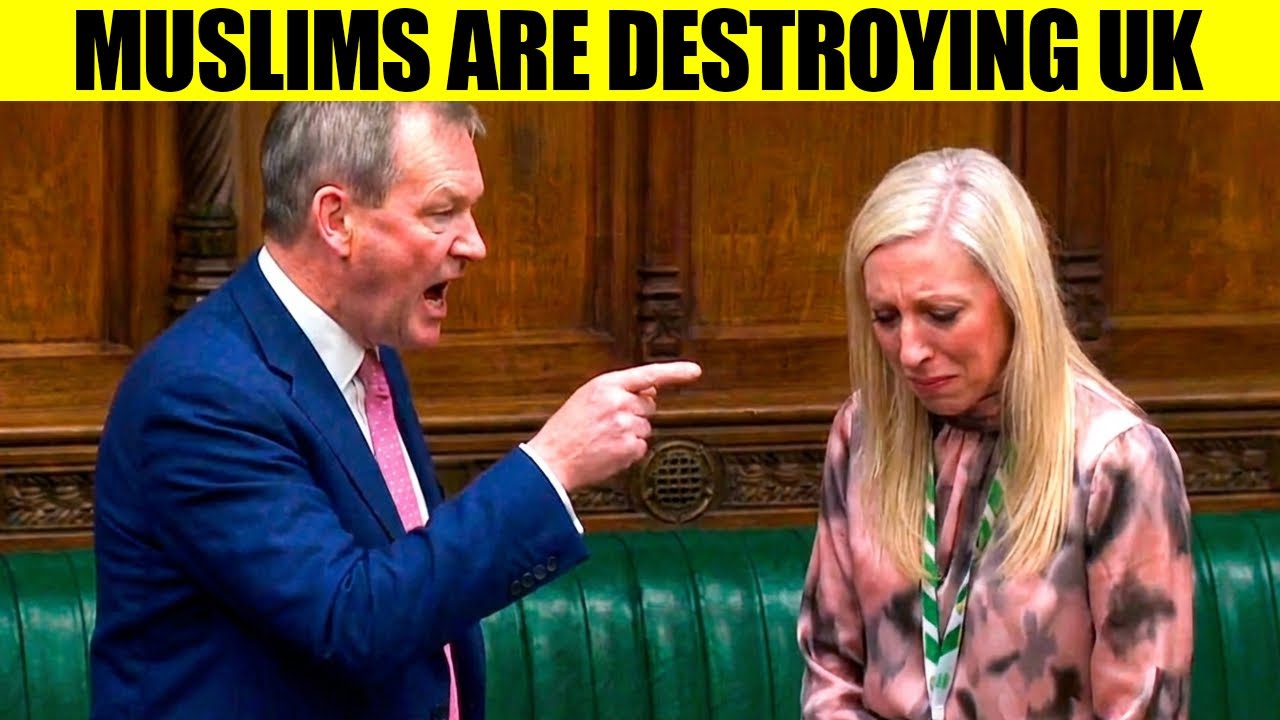
During a session of the Public Accounts Committee, Mr. Lowe, the MP for Great Yarmouth who now sits as an independent after leaving Reform UK, pressed Home Office Permanent Secretary Dame Antonia Romeo on what he described as a “national security emergency” caused by the government’s inability to locate thousands of illegal migrants and foreign offenders who have entered the country. He cited internal whistleblower documents that he said showed over 10,000 such individuals had gone missing after arrival.
“The scale of illegal immigration and its impact on our country is simply not understood in this Parliament,” Mr. Lowe stated. He then turned to the specific question of migrant-related sexual offences, asking why detailed breakdowns of crimes — including rape and assault — committed by non-British nationals were not being published or made available to MPs. He suggested the absence of transparent statistics amounted to a cover-up that endangered women and girls.
Dame Romeo responded by rejecting the accusation of concealment. “It is fundamentally incorrect to say that court records are being deleted,” she told the committee. She explained that criminal records are retained in line with statutory policies and that aggregate data on offending by nationality is published annually in Home Office statistical bulletins. She added that the department does not routinely release granular, individual-case information due to privacy and data-protection rules, but that court proceedings remain open and public where appropriate.
Mr. Lowe was not satisfied. He accused the government of using “semantic games” to avoid accountability and pressed Dame Romeo on whether the Home Office had ever considered publishing nationality-specific offending rates for serious sexual crimes. The exchange grew tense as he interrupted to interject that the answers were “evasive” and that the public deserved “the full truth, not carefully curated statistics.”
The Labour members present pushed back. One MP accused Mr. Lowe of “talking down Britain” and inflaming community tensions, while another suggested his line of questioning risked stigmatising entire groups. Mr. Lowe shot back that it was the government’s “open border experiment” that represented the real extremism, and that protecting vulnerable British girls should take precedence over political sensitivities.
The clip of the confrontation, shared by Mr. Lowe on his social media channels, quickly went viral. Supporters praised him for “speaking truth to power” and refusing to accept what they called bureaucratic deflection. Critics condemned the exchange as inflammatory, arguing that focusing on nationality in crime statistics perpetuates harmful stereotypes and distracts from broader failures in the justice system, including underfunding of police and courts.
Mr. Lowe has made migrant crime and deportation policy a central plank of his parliamentary work since leaving Reform UK. In December 2025 he launched a crowd-funded, non-governmental inquiry into historical cases of grooming gangs, raising more than £500,000 and collecting victim testimonies. The inquiry’s report, published in February 2026, focused on cases from the 1980s to the 2010s involving predominantly Pakistani-heritage men targeting young white British girls — a scandal that has haunted British politics for more than a decade.
The Labour government has defended its record on immigration and crime. Official figures show deportations of foreign national offenders increased by 15 percent in 2025 compared with the previous year, though the overall number of absconded individuals remains a point of contention. Ministers have repeatedly stated that they are reforming the asylum system and working to remove barriers — including ECHR rulings — that have delayed removals.
The Home Office did not respond to a request for further comment on the exchange. Mr. Lowe, for his part, doubled down on social media, writing: “They can’t answer the question because the numbers are too embarrassing. Women and girls deserve better than this evasion.”
The brief but sharp parliamentary clash is the latest illustration of how deeply immigration, crime and public safety continue to divide British politics — and how quickly such moments can ignite online.