🚨 Canada’s Quiet Rail Revolution Is Undermining U.S. Power in the Global Grain Trade
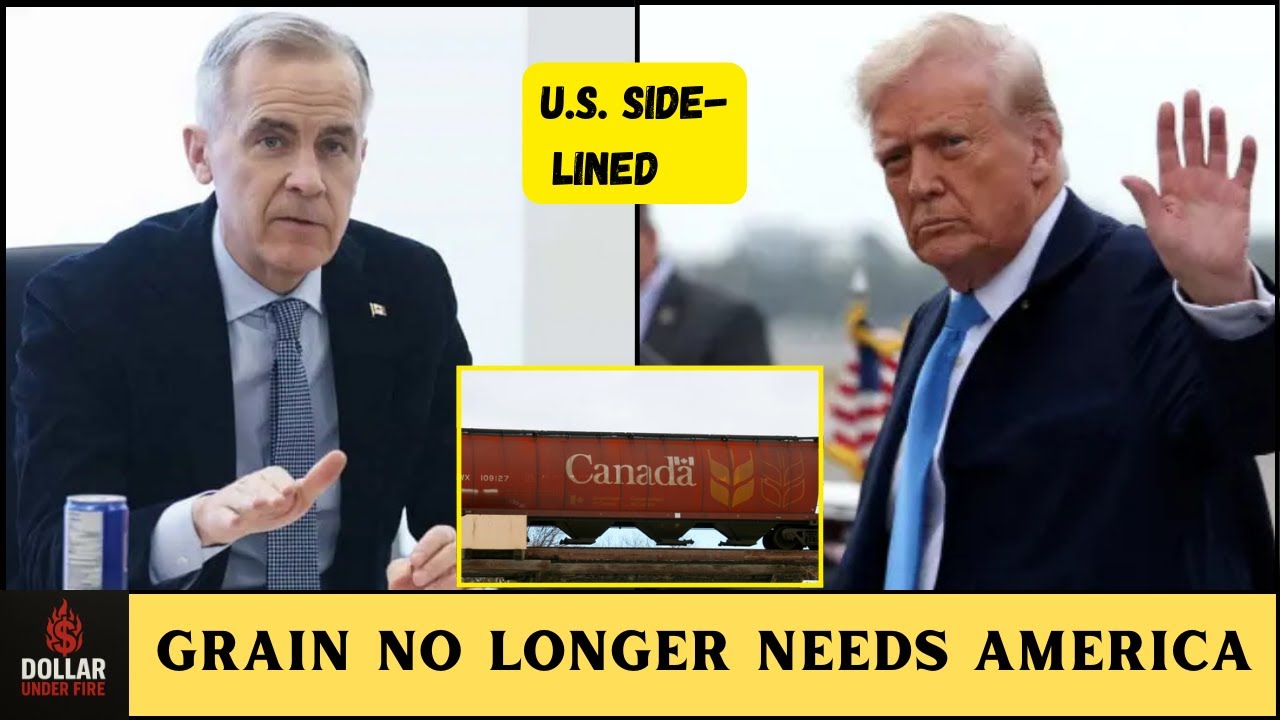
A single Canadian grain train recently crossed more than 3,000 miles of U.S. territory on its way from the Prairies to Mexico City, and most Americans never noticed. No speeches, no trade threats, no headlines—just steel wheels rolling south, carrying wheat that bypassed U.S. ports, exporters, and long-standing American leverage in agriculture.
For decades, Washington assumed Canada had no choice but to rely on U.S. infrastructure to reach global markets. That assumption shaped trade policy and power dynamics across North America. But while the U.S. focused on pressure and rhetoric, Canada quietly invested in alternatives—rail corridors, ports, and systems designed to eliminate dependence rather than protest it.
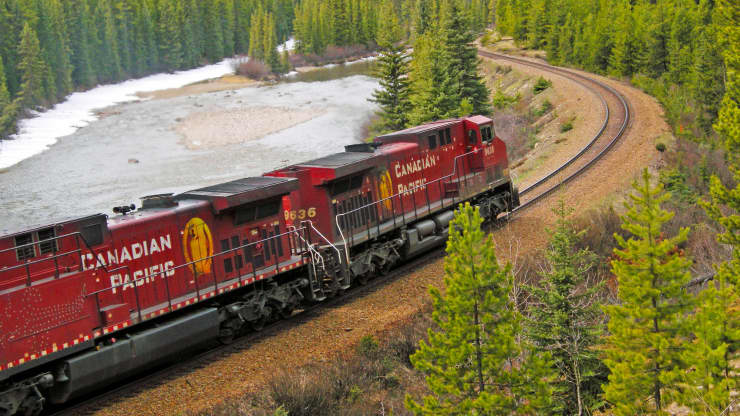
In September 2025, that strategy became reality. A fully loaded Canadian grain train traveled uninterrupted from Manitoba to Mexico City, proving that Canadian producers could reach foreign buyers directly by rail. Wheat, oats, and canola that once generated revenue for U.S. ports and handlers now moved seamlessly past them, contract already signed.
The backbone of this shift is a unified continental rail corridor linking Canada, the U.S., and Mexico. Ironically, much of the journey still runs on American rails with American crews, but the economic value no longer stays in the United States. Export fees, terminal revenues, and logistics margins now flow to Canadian and Mexican partners instead.

U.S. ports are already feeling the impact. Canadian investments in Vancouver, Prince Rupert, Montreal, and Quebec have absorbed volumes that once moved through Seattle, New Orleans, and the Great Lakes. Each bypassed shipment represents a permanent loss, not a temporary diversion, weakening port activity and related industries.
The deeper damage, however, lies in competitiveness. As Canadian grain exits U.S. channels, American exporters lose volume, scale, and pricing power. Smaller volumes mean higher per-unit costs, thinner margins, and less flexibility—while Canadian grain becomes cheaper and more attractive due to cleaner logistics and fewer intermediaries.
Canada’s advantage did not come from retaliation, but preparation. Years of investment in rail capacity, port throughput, digital export certification, and reliability transformed its supply chain. By eliminating bottlenecks and paperwork delays, Canada reduced risk for buyers and built long-term trust, especially with Mexico and Asian markets.
This shift is unlikely to reverse. Supply chains, once rerouted, rarely snap back. Infrastructure creates habits, habits create stability, and stability drives trade decisions. The grain train was not a protest—it was proof of independence. And in modern trade, power fades not when it is challenged loudly, but when it is no longer needed at all.