Canada Positions Itself as a Diplomatic Counterweight as Trump’s Rhetoric Alarms Allies
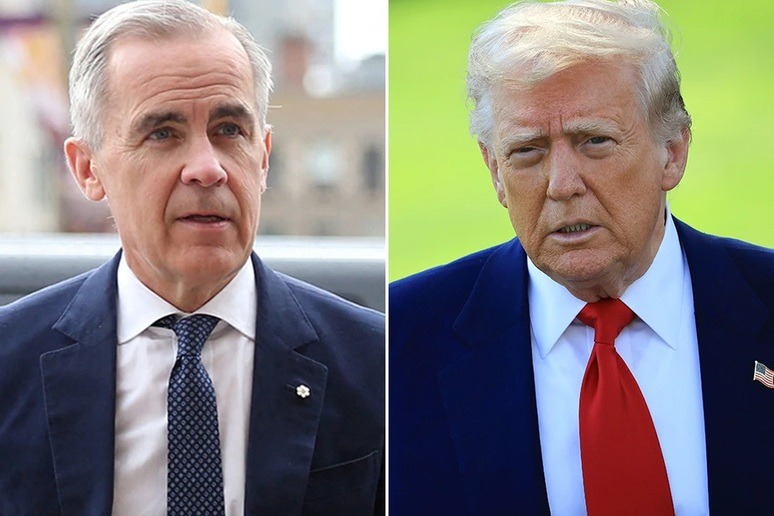
In recent days, Canada has stepped into an unusually prominent diplomatic role, projecting itself as a stabilizing force amid rising tensions fueled by President Donald Trump’s confrontational foreign-policy rhetoric. Through a series of high-profile meetings and carefully calibrated statements, Prime Minister Mark Carney has sought to reassure allies unsettled by Trump’s language on sovereignty, security, and the use of American power—particularly in Europe and the Arctic.
The contrast between Ottawa and Washington has become a central theme in political commentary across North American and European media, as well as on major U.S. social platforms such as X, YouTube, and Substack, where influential political commentators have framed Canada as an emerging counterweight to what they describe as an increasingly unilateral American posture.
The moment crystallized earlier this week when President Trump publicly reiterated his interest in Greenland, a semi-autonomous territory within the Kingdom of Denmark. While U.S. officials have stopped short of outlining any formal policy shift, Trump’s remarks revived anxieties among NATO allies about American respect for territorial sovereignty.
Within hours, Prime Minister Carney appeared alongside Danish Prime Minister Mette Frederiksen, issuing a joint message emphasizing alliance unity, Arctic cooperation, and respect for international law.
“Canada and Denmark are allies and partners in our shared responsibility for the security and resilience of the Arctic,” Carney said in a statement. “Canada will always support the sovereignty and territorial integrity of Denmark, including Greenland.”
The language was notable not for its novelty, but for its clarity. In diplomatic circles, such direct reaffirmations are often deployed when leaders believe norms require visible reinforcement.
Ukraine, Europe, and the Optics of Alliance Leadership
Canada’s diplomatic positioning has extended well beyond the Arctic. As Trump has intensified criticism of Ukraine’s leadership and questioned the value of continued Western support for Kyiv, Carney has repeatedly emphasized Canada’s alignment with Ukraine and Europe.
In recent months, Carney has met publicly with Ukrainian President Volodymyr Zelenskyy during moments of heightened tension in U.S.–Ukraine relations, offering symbolic gestures of support that were widely circulated across social media and European news outlets. Canadian officials describe these meetings as routine alliance coordination, but analysts note their careful timing.
“Canada is filling space that the United States is voluntarily vacating,” said one former European diplomat, speaking on condition of anonymity. “It’s not replacing American power, but it’s preserving alliance norms.”
That interpretation has gained traction online, particularly among commentators affiliated with progressive U.S. media ecosystems such as the Midas Touch Network, whose Canada-focused offshoot has amplified the idea that Ottawa is emerging as a moral and diplomatic leader of the Western alliance.
Social Media, Narrative, and the Politics of Perception

Much of the intensity surrounding Canada’s role is being driven not through official channels but through social media narratives. On YouTube, TikTok, and X, prominent commentators have framed Trump’s foreign-policy posture as transactional and coercive, contrasting it with Canada’s emphasis on multilateralism and international law.
Former Canadian parliamentarian Charlie Angus, now a leading progressive commentator, has described the Trump administration as embodying what he calls “gangster fascism,” a term that has circulated widely in online discourse but remains firmly within the realm of political rhetoric rather than formal analysis.
Angus and others argue that Trump’s repeated references to border threats—whether involving Canada, Venezuela, or Europe—are less about specific security risks and more about constructing a narrative that legitimizes aggressive leverage.
These claims, while influential online, are sharply contested by Trump allies, who argue that the administration’s posture reflects long-overdue realism and a rejection of what they view as ineffective post–Cold War consensus politics.
Canada’s Strategic Calculation
For Canadian officials, the moment is less about ideological confrontation and more about national interest. Canada’s economy, security, and geography are deeply intertwined with the United States, limiting how far Ottawa can diverge in practice.
Yet Carney’s government appears to believe that silence carries its own risks.
“Canada has always relied on rules,” said a senior Canadian official familiar with Arctic policy. “When rules are questioned, smaller and middle powers have to speak louder—not because they want conflict, but because ambiguity favors the strong.”
That calculation echoes historical precedent. During moments of global instability—from the Suez Crisis to the Iraq War—Canada has often positioned itself as an intermediary, reinforcing multilateral institutions when great-power consensus frays.
Limits of Power, Strength of Symbolism
Despite the heightened rhetoric, analysts caution against overstating Canada’s capacity to lead the so-called “free world” in any traditional sense. Canada lacks the military scale, economic leverage, and intelligence reach of the United States.
What it does possess, however, is credibility.
“Leadership isn’t only about force,” said a senior fellow at a Washington think tank. “It’s about trust, predictability, and alignment with shared norms. Canada scores high there right now.”
Whether that credibility translates into lasting influence will depend on events still unfolding—U.S. domestic politics, European security decisions, and the trajectory of the war in Ukraine chief among them.
For now, Canada’s message is consistent: sovereignty matters, alliances matter, and diplomacy still has value.
As Prime Minister Carney told reporters this week, standing beside Denmark’s leader, “The future of nations is decided by their people—not by threats, not by coercion, and not by force.”
In a world where that principle feels increasingly contested, Canada is betting that saying it out loud still counts.