A Kentucky Special Election Sends a Quiet but Forceful Signal About Trump’s Grip on the Ballot
On a cold December night in southwest Jefferson County, Kentucky, an election few outside the state were watching delivered a result that quickly reverberated far beyond its borders. The special election for Kentucky’s vacant 37th State Senate District ended not with a nail-biter, but with a landslide: Democrat Gary Clemens captured roughly 73 percent of the vote, defeating Republican Calvin Leech by nearly 50 points in a district Republicans had expected to hold narrowly.
Low turnout — about 7 percent of eligible voters — might ordinarily temper the significance of such a result. Fewer than 5,200 ballots were cast, with Christmas just days away and frigid weather discouraging participation. But the scale of the margin, and the political context surrounding it, made the outcome difficult to dismiss as a fluke. In a place where Donald Trump barely scraped out a presidential win in 2024, voters swung sharply in the opposite direction.

Mr. Clemens, an Army veteran and the president of a local United Steelworkers union, ran a campaign centered on working-class issues: health care costs, wages, veterans’ benefits and bread-and-butter economic concerns. He prevailed across a sprawling district that includes Shively, Pleasure Ridge Park, Valley Station and parts of Fairdale — communities long seen as competitive terrain where party loyalty is often fluid and pragmatic.
Republicans had read the district’s recent history as a sign of opportunity. In 2024, the presidential race here was close enough to suggest the area was trending slightly red, or at least open to candidates aligned with Mr. Trump. Instead, the result suggested something else entirely: a decisive rejection of a Republican brand increasingly defined by its association with the president.
The magnitude of the defeat quickly reframed the conversation. Analysts noted that Democrats overperformed their 2024 baseline by more than 40 points, an extraordinary swing in any election, let alone a special one. For some observers, Kentucky’s 37th District became the latest data point in a broader national pattern that has emerged in recent special elections, from Virginia to Georgia to Pennsylvania, where Democrats have flipped or overperformed in seats Republicans once considered safe.
What makes the Kentucky result particularly striking is not just the margin, but the message voters appeared to send. Interviews and post-election commentary emphasized fatigue — with rising health care costs, with economic pressures, and with a style of leadership many voters described as chaotic or dismissive of everyday concerns. In districts like this one, party labels matter less than outcomes, and candidates are judged by whether they seem attentive to local needs or consumed by national battles.
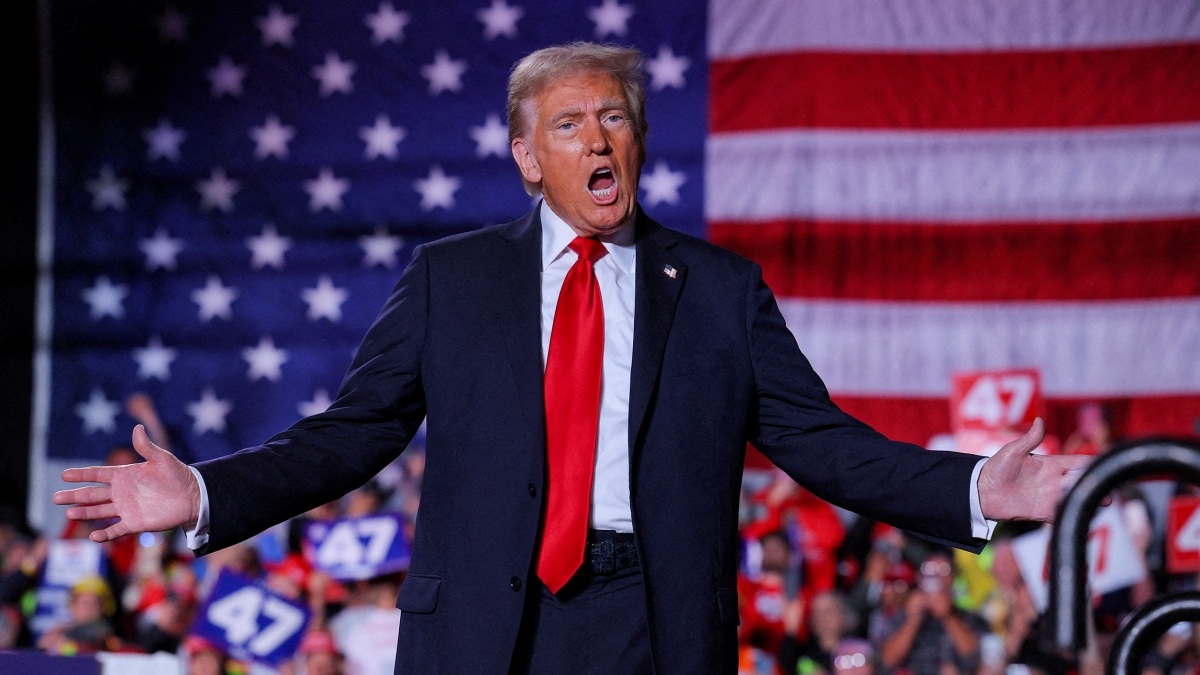
That dynamic has complicated the Republican Party’s relationship with Mr. Trump. While he remains the most influential figure in the party, his presence on the ballot — even indirectly — no longer guarantees momentum. In some places, it appears to do the opposite. Several Republican leaders have acknowledged, sometimes obliquely, that the president’s rhetoric and conduct have become a liability, particularly in closely divided districts.
Speaker Mike Johnson of the House has been among those who have urged greater restraint and “moral clarity” from the White House, remarks that underscore a growing unease within Republican ranks. The criticism has not amounted to a break with Mr. Trump, but it reflects a recognition that his dominance of the political narrative can crowd out other messages — especially those focused on policy.
For Democrats, the Kentucky victory offers both encouragement and caution. Mr. Clemens’s campaign succeeded by emphasizing tangible concerns rather than simply positioning itself as anti-Trump. That approach has fueled Democratic gains in other recent contests, where candidates have talked less about ideology and more about affordability, health care access and local accountability.
Yet party strategists are careful not to overinterpret a single race. Special elections are idiosyncratic, shaped by turnout quirks and candidate quality. Kentucky remains a Republican-leaning state overall, and statewide races tell a more complex story. Still, the accumulation of these results has begun to challenge long-held assumptions about electoral geography and voter behavior.
The implications for 2026 are already being debated. Midterm elections traditionally favor the party out of power, but the Kentucky result suggests that dissatisfaction with leadership style and policy direction could scramble those expectations. Districts once thought safely red may now be competitive, forcing Republicans to defend terrain they assumed was secure.
Ultimately, the lesson of Kentucky’s 37th District may be less about partisan realignment than about volatility. Voters appear increasingly willing to shift allegiances when they feel ignored or taken for granted. Brand loyalty — whether to a party or a president — has limits, especially when daily economic pressures dominate household concerns.
For now, the outcome stands as a warning and an opportunity. Republicans face a choice about how tightly to tether their candidates to Mr. Trump’s image. Democrats, buoyed by unexpected gains, must decide whether they can translate protest votes into durable support. In southwest Jefferson County, at least for one December night, the verdict was unmistakable — and its echoes are likely to be felt well beyond Kentucky.