In early 2025, a political shockwave rippled across North America when President Donald Trump reportedly declared Canada a “national security threat” while imposing sweeping 25% tariffs on Canadian goods. The justification—framed under emergency economic powers—sent an unmistakable signal: this was no ordinary trade dispute. For over eight decades, the U.S.–Canada relationship has been treated as a cornerstone of Western stability. Now, that foundation appears to be under unprecedented strain, raising urgent questions about the future of North American security, trade integration, and global alliances.
To understand the magnitude of the rupture, historians point back to 1940, when President Franklin D. Roosevelt and Canadian Prime Minister William Lyon Mackenzie King forged the Ogdensburg Agreement, creating the Permanent Joint Board on Defense. That wartime pact evolved into one of the closest bilateral defense partnerships in modern history, eventually reinforcing structures such as NATO and the binational command of NORAD. For generations, the assumption was simple and sacred: the world’s longest undefended border would never become a fault line. Declaring Canada a security threat challenges not only trade policy, but the philosophical core of that assumption.
Economically, the stakes are staggering. The United States and Canada exchange roughly $900 billion in goods and services annually, with Canada serving as the largest export destination for dozens of U.S. states. Integrated automotive supply chains cross the border multiple times before a single vehicle is completed. Energy grids, pipelines, agricultural markets, and manufacturing hubs are deeply intertwined. A 25% tariff does not merely adjust pricing—it disrupts physical infrastructure built over a century. American consumers face higher costs for lumber, oil, food products, and vehicles, while Canadian exporters accelerate diversification toward Europe and Indo-Pacific markets.
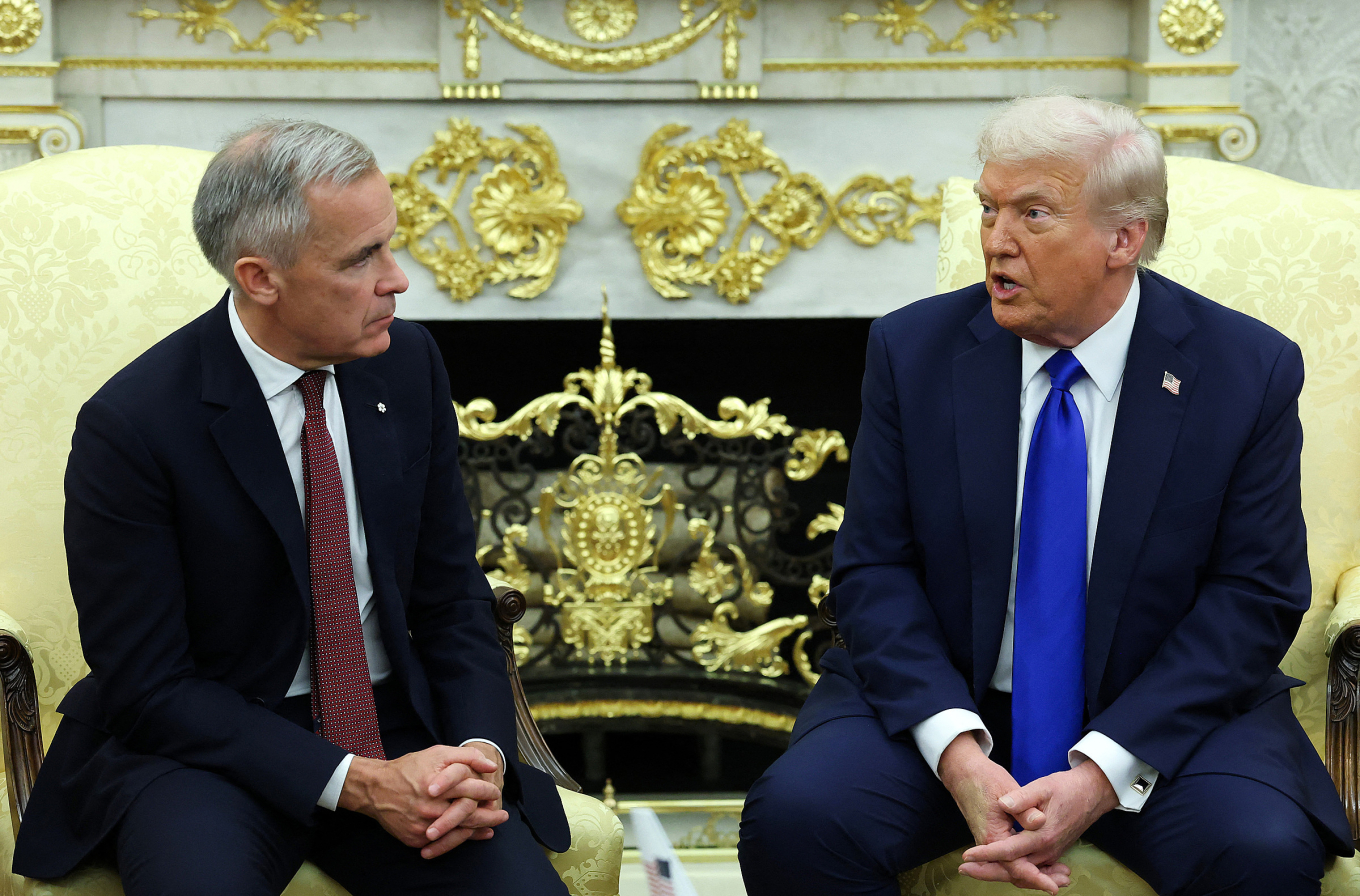
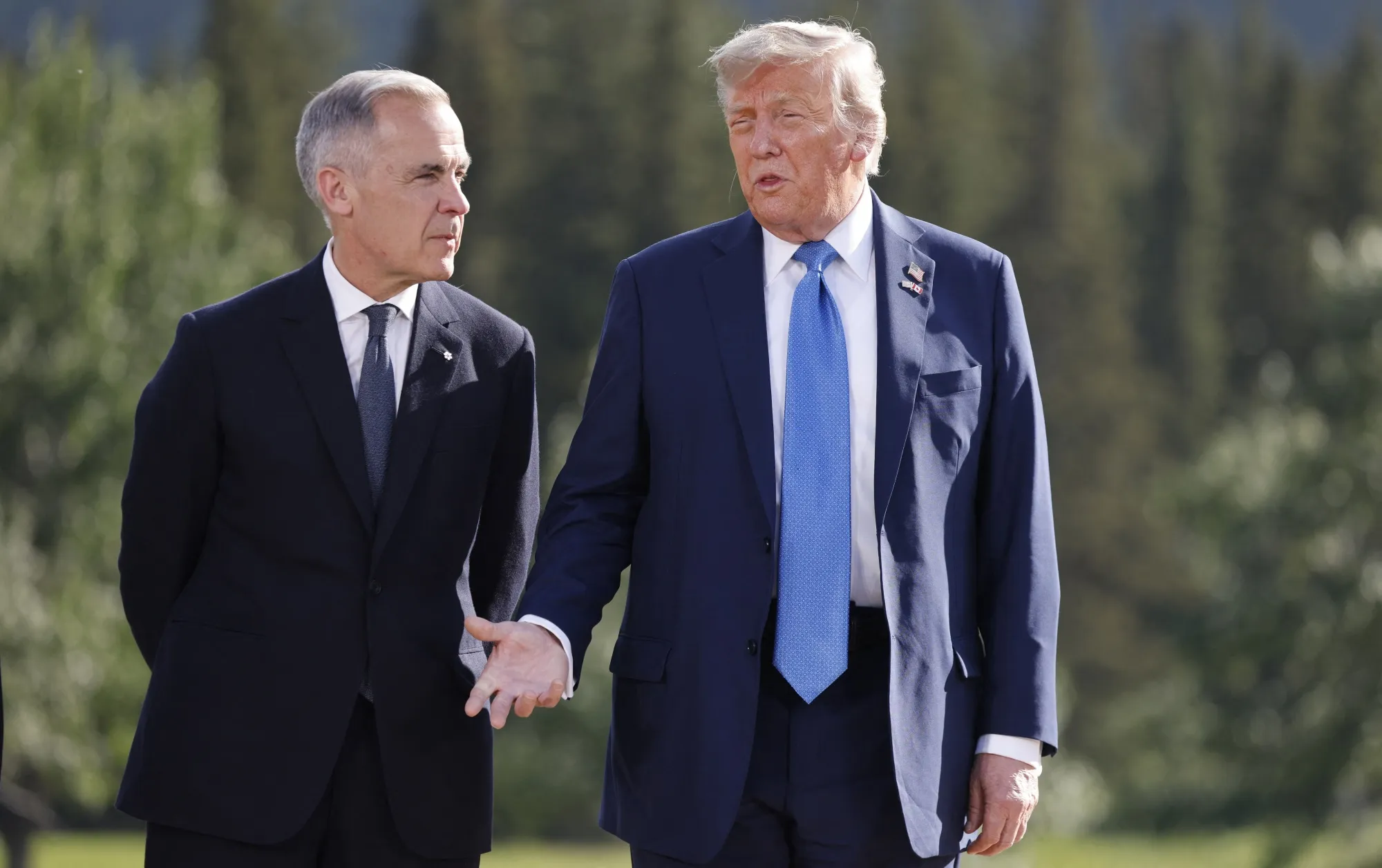
At the center of Canada’s response stands Prime Minister Mark Carney, a former Governor of the Bank of Canada and the Bank of England with deep credibility in global finance. Rather than escalate rhetorically, Carney delivered a measured but firm rebuttal: Canada would respond dollar-for-dollar, defend its sovereignty, and intensify efforts to reduce reliance on U.S. markets. His calm assertion that the “old relationship is over” resonated internationally, not as emotional defiance, but as strategic recalibration. The viral moment reflected something deeper than political theater—it signaled to allies worldwide that contingency planning is no longer theoretical.
The geopolitical implications extend far beyond Ottawa and Washington. Allies in Europe and Asia are watching closely. If the United States is prepared to classify its closest military partner as a national security concern, long-standing assumptions about alliance permanence come into question. The concept of the “security umbrella” becomes more conditional, more transactional. In international relations theory, such shifts risk triggering a security dilemma—where actions intended to enhance one nation’s leverage prompt others to hedge, diversify partnerships, and quietly construct alternative frameworks that reduce dependence on a single power.
What happens next will define a generation. In one scenario, economic pressure forces renegotiation and partial restoration of trust. In another, structural realignment accelerates, supply chains reroute permanently, and global institutions adapt to a more fragmented order. For businesses, workers, and consumers, the impact is immediate: rising costs, shifting markets, and growing uncertainty. For strategists and policymakers, the question is larger and more enduring—whether alliances built over 80 years can withstand a philosophy that views every partnership as leverage rather than legacy. The answer is unfolding in real time, and the world is recalibrating accordingly.