When reports surfaced that Canada was exploring the possibility of assembling Saab’s Gripen fighter jet domestically despite strong signals of concern from Washington, the discussion quickly moved beyond procurement. At issue is not simply which aircraft will replace Canada’s aging fleet, but whether a close ally can recalibrate its defense-industrial strategy without unsettling the architecture of North American security.
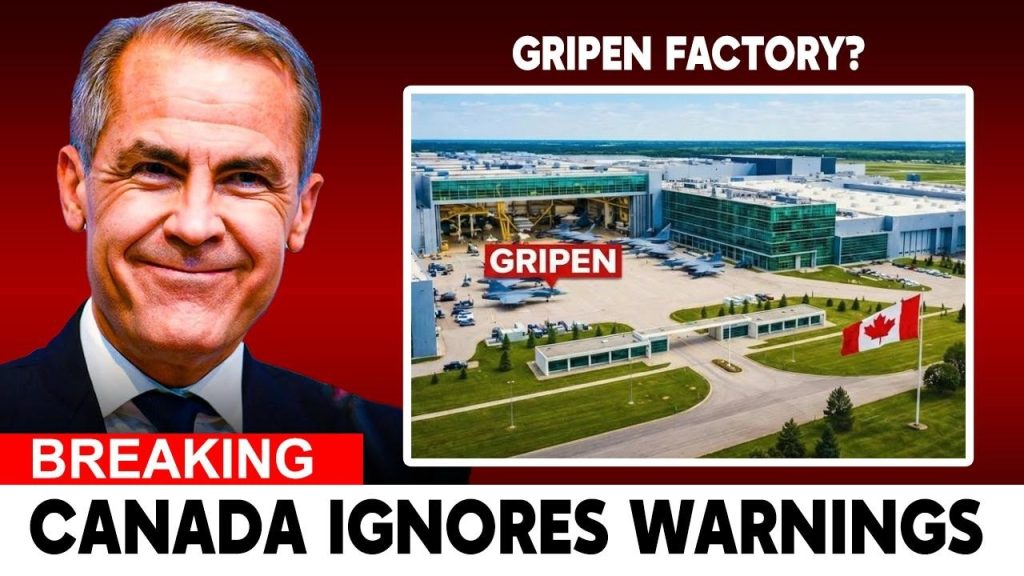
For decades, the United States has been the gravitational center of Western combat aviation. Programs such as the F-35 were designed not only as weapons systems but as multinational industrial ecosystems, binding partner nations into tightly integrated supply chains and software frameworks. Canada has long participated in that system as a supplier and customer. A decision to build the Swedish-designed Gripen on Canadian soil would not sever those ties, but it could complicate them.
American officials, speaking cautiously and often off the record, have emphasized interoperability as their principal concern. Modern air forces rely on shared communications protocols, encrypted data links and coordinated maintenance standards. Introducing an alternative platform into North America’s air defense network, particularly one produced outside the F-35 consortium, raises technical and political questions. Would intelligence-sharing arrangements require modification? Would software dependencies become points of friction? These are not trivial matters in a NORAD framework built on seamless integration.
Yet Canadian policymakers frame the debate differently. They argue that sovereign control over maintenance, software modification and industrial output is itself a security asset. By hosting production domestically, Canada would anchor high-value aerospace jobs, reduce long-term operating costs and gain greater autonomy over upgrades tailored to Arctic operations. Supporters contend that diversification within an alliance strengthens resilience rather than undermines cohesion.
The economic stakes are substantial. Aerospace is among Canada’s most advanced manufacturing sectors, with deep expertise in composites, avionics and cold-weather testing. Industry analysts estimate that a full production line could generate tens of thousands of jobs across Quebec and other provinces over a decade. At the same time, Canadian firms are deeply embedded in U.S. defense supply chains. Any disruption to export licenses or joint programs would carry significant financial consequences on both sides of the border.
Legal considerations further complicate the picture. Under the United States–Mexico–Canada Agreement, investment protections and dispute mechanisms limit the scope of punitive trade measures between the two countries. Trade lawyers note that overt economic retaliation could invite formal arbitration, a process that would test not only treaty language but the political will of both governments. In an era of heightened sensitivity around economic coercion, such a case would resonate beyond North America.

Strategically, the question extends into NATO. Several European allies have sought to balance reliance on American platforms with domestically produced alternatives. A Canadian-built Gripen would effectively create a transatlantic production node for a European fighter, potentially influencing procurement debates in Eastern Europe. Defense economists suggest that even modest shifts in orders can alter long-term cost curves for major programs, affecting unit pricing and maintenance contracts across the alliance.
Financial markets would likely respond swiftly to any formal announcement. Defense contractors operate on thin margins calibrated to projected export volumes. A credible competitor in a segment long dominated by a single platform can alter investor expectations overnight. Still, seasoned analysts caution against dramatic forecasts. Military procurement unfolds over years, not news cycles, and governments rarely abandon interoperability commitments lightly.
The deeper issue is one of leverage and interdependence. Canada depends on the United States for continental defense coordination; the United States relies on Canadian aerospace capabilities for components, testing environments and Arctic expertise. That mutual reliance constrains the extremes of escalation. A rupture would be costly for both sides, which is precisely why policymakers on each side speak carefully about preserving partnership even as they explore alternatives.
If Canada proceeds, the immediate outcome is unlikely to resemble a diplomatic break. More plausible is a period of negotiation over standards, data-sharing agreements and industrial participation thresholds. The precedent, however, would matter. It would signal that even close allies are willing to diversify strategic industries in pursuit of autonomy, recalibrating the balance between integration and independence.
In that sense, the fighter jet debate reflects a broader global trend. Nations that once accepted concentrated supply chains are reexamining their vulnerabilities. The calculus is not purely military; it encompasses economics, technology and political signaling. Whether Canada ultimately builds the Gripen domestically or reaffirms its existing commitments, the episode underscores a reality of modern alliances: partnership endures, but it evolves. And evolution, in the defense world, can be as consequential as confrontation.