Israeli Strikes in Eastern Lebanon Signal Escalation in Campaign Against Hezbollah
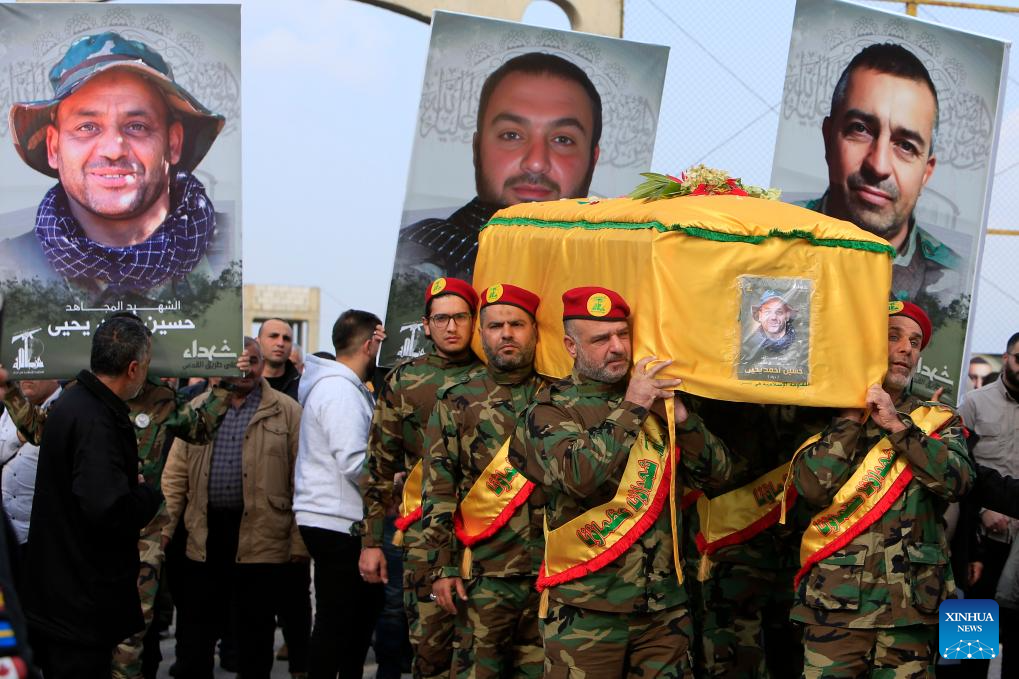
An Israeli airstrike in eastern Lebanon has killed a senior Hezbollah commander along with several other operatives, marking one of the most consequential escalations along the Israel–Lebanon front in months. The strikes, carried out Friday in the Baalbek region of the Bekaa Valley, left at least 10 people dead and roughly 50 wounded, according to Lebanese security sources and the country’s health ministry.
Hezbollah acknowledged that eight of its fighters, including a local commander, were among those killed. The Israeli military said it had targeted multiple Hezbollah command centers tied to the group’s missile and rocket units, describing the operation as a preemptive measure against planned attacks on Israeli territory.
The strike underscores a deepening Israeli campaign aimed not only at degrading Hezbollah’s operational capabilities but also at countering what Israeli officials describe as an expanding Iranian military footprint inside Lebanon.
Targeting Command Structures
According to the Israel Defense Forces, fighter jets struck three separate command centers in the Baalbek area simultaneously. Israeli officials said those present were involved in accelerating weapons deployment and coordinating potential missile fire toward Israeli cities.
Hezbollah sources confirmed that among the dead were several mid-level commanders. Lebanese health authorities reported that the casualties included non-Lebanese nationals and civilians, including children, though the exact circumstances surrounding their presence at the targeted sites remain unclear.
The IDF has not publicly commented on reports from regional media outlets that officers from Iran’s Islamic Revolutionary Guard Corps, or IRGC, were present at the locations when the strikes occurred. Israeli officials have long accused Tehran of embedding military advisers within Hezbollah’s command structure, particularly in units overseeing advanced missile systems.
The IRGC, a powerful branch of Iran’s military, has for decades provided Hezbollah with funding, training and weapons. Analysts say that any confirmed targeting of IRGC personnel inside Lebanon would mark a significant escalation, risking a broader regional confrontation.
A Broader Campaign

Since a ceasefire arrangement in late 2024 temporarily reduced hostilities along the northern border, Israeli officials say they have conducted hundreds of targeted strikes aimed at preventing Hezbollah from rebuilding its arsenal.
According to IDF figures, more than 400 Hezbollah operatives have been killed in Israeli operations since November 2024. Between mid- and late February alone, Israeli strikes reportedly killed more than a dozen militants in operations spanning southern Lebanon to the Bekaa Valley.
Military officials describe the campaign as a systematic effort to disrupt Hezbollah’s command hierarchy, destroy weapons depots and neutralize what they call “regeneration efforts” by the group’s elite Radwan force — a special operations unit Israel says is tasked with cross-border incursions into northern Israel.
On February 26, Israeli aircraft struck eight sites linked to the Radwan force in eastern Lebanon, according to the IDF. Lebanese state media reported casualties from those strikes, including at least one minor.
Lebanon’s Fragile Position

The intensifying strikes have placed Lebanon’s government in a precarious position. The country, already grappling with economic collapse and political paralysis, has limited authority over Hezbollah, which operates as both a political faction and a heavily armed militia.
Lebanese Foreign Minister Abdallah Bou Habib recently appealed for restraint, stating that Lebanon does not seek to be drawn into a broader regional war. Officials in Beirut have privately expressed concern that any large-scale confrontation between Israel and Iran could devastate Lebanese infrastructure, including critical transportation hubs.
Israel has sent indirect warnings that if Hezbollah launches significant attacks in coordination with Iran, it would respond forcefully across Lebanese territory.
Regional Implications
The strikes come amid heightened tensions between Israel and Iran, particularly over Tehran’s regional network of allied militias. Israeli intelligence assessments, according to security officials, indicate that Hezbollah’s missile units have been preparing contingency plans in the event of a direct conflict involving Iran.
While Hezbollah has refrained from entering previous rounds of fighting between Israel and Iranian forces, Israeli leaders argue that waiting could allow the group to strengthen its arsenal further.
For now, both sides appear to be calibrating their actions carefully. Israel continues to pursue what it describes as targeted, intelligence-driven operations. Hezbollah has vowed retaliation but has largely avoided the kind of sustained rocket fire that could trigger full-scale war.
The risk of miscalculation, however, remains high. Any confirmed killing of Iranian officers on Lebanese soil would test Tehran’s threshold for response. Likewise, further Israeli strikes causing civilian casualties could intensify domestic and regional pressure.
As the conflict simmers, Lebanon once again finds itself at the crossroads of a broader struggle — one shaped not only by local actors but by the strategic rivalry between Israel and Iran that stretches far beyond its borders.