The Maduro Capture and a Case That Is Rapidly Unraveling
Legal Contradictions, Political Motives, and the Limits of American Power
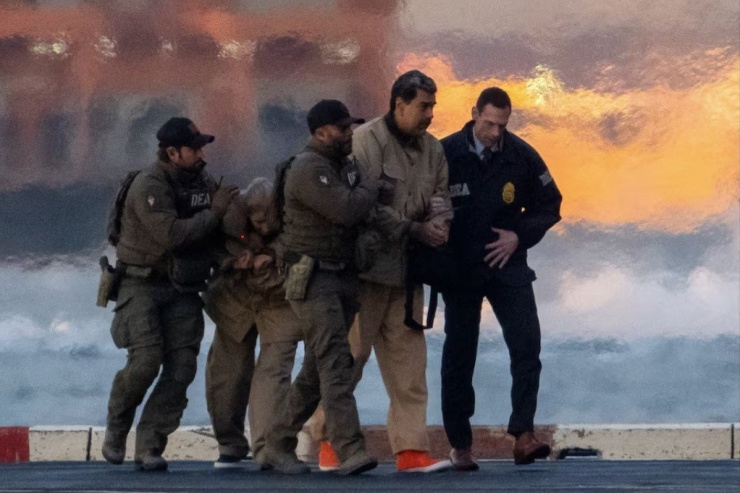
New York — When the Trump administration announced that Nicolás Maduro, Venezuela’s embattled leader, had been transported to New York to face federal criminal charges, the White House framed the operation as a decisive blow in America’s global war on drugs and terrorism. Yet within days, the legal rationale underpinning that extraordinary operation began to fracture — not only under scrutiny from international law experts, but within the Justice Department’s own filings.
What was initially portrayed as a bold commando-style strike now increasingly resembles, according to legal scholars, former national security officials, and commentators across American political media, a precarious political gamble with far-reaching legal and diplomatic consequences.
An Operation Without a War
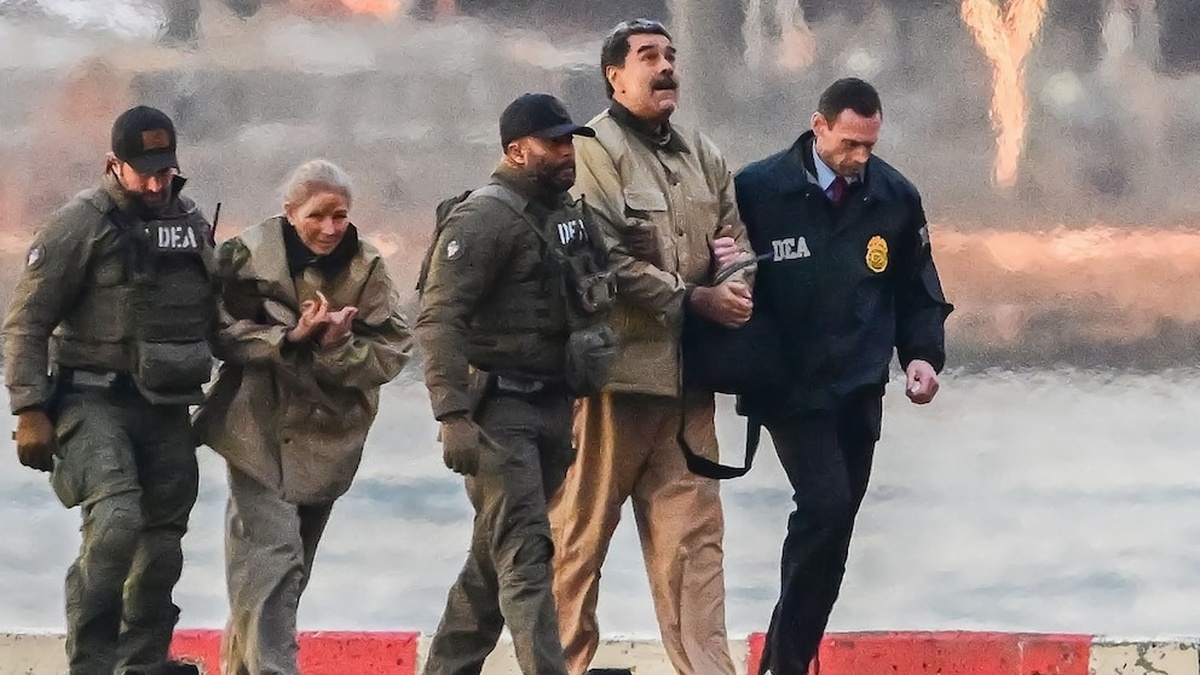
According to U.S. officials, Mr. Maduro and his wife were seized from the presidential compound in Caracas during a pre-dawn operation ordered directly by President Trump. The action occurred without congressional authorization, without a declaration of war, and without an approved Authorization for the Use of Military Force.
That absence immediately ignited fierce debate among constitutional scholars and international law experts.
“Seizing a sitting head of state from foreign territory — even when framed as law enforcement — is extraordinarily rare and legally explosive,” Harold Koh, a former State Department legal adviser, wrote on X. “It risks shredding long-standing norms that protect U.S. officials abroad.”
Compounding the confusion was what did not follow. The Trump administration did not install a U.S.-backed opposition government, nor did it elevate María Corina Machado — long recognized by Washington as Venezuela’s democratically elected leader. Instead, the existing power structure in Caracas remained intact, including security forces with well-documented ties to Russian interests.
Oil and “National Interest”

President Trump made little effort to obscure his priorities. In remarks widely circulated across social media platforms, he described Venezuelan oil as the United States’ “primary concern” and suggested that American companies would soon take control of the country’s reserves.
Those comments reinforced suspicions among critics that economic and geopolitical interests — not legal accountability or democratic restoration — were the true drivers of the operation.
Appearing on Meet the Press, Secretary of State Marco Rubio rejected claims that the United States was at war with Venezuela. Instead, he framed the operation as a matter of law enforcement, repeatedly describing Mr. Maduro as the leader of the so-called Cartel de los Soles, which he characterized as a transnational drug trafficking and terrorist organization posing a direct threat to the United States.
A Cartel That Does Not Exist
That argument quickly began to collapse.
Experts on organized crime and narcotics trafficking in the United States and Latin America noted that Cartel de los Soles has never appeared in official assessments by the Drug Enforcement Administration, including its annual National Drug Threat Assessment, nor in the United Nations Office on Drugs and Crime’s World Drug Report.
Scholars have long argued that the term is not the name of a formal criminal organization, but rather a piece of Venezuelan media shorthand dating back to the 1990s, used to describe corrupt officials alleged to have accepted drug money. Unlike established cartels in Mexico or Colombia, it lacks a defined hierarchy, command structure, or operational footprint.
That distinction proved consequential.
The Justice Department Retreats
According to The New York Times, federal prosecutors in Manhattan quietly revised their approach. While continuing to accuse Mr. Maduro of participating in a drug trafficking conspiracy, they abandoned the claim that Cartel de los Soles constituted an actual criminal organization.
In the revised indictment, the phrase appears only twice, down from more than 30 references in the original filing. The focus instead shifted to allegations that Mr. Maduro participated in a system of political patronage and kickbacks — a markedly different charge than running a terrorist organization.
“Corruption and terrorism are not interchangeable,” said a former federal prosecutor familiar with international cases. “This represents a substantial narrowing of the government’s theory.”
An Uncomfortable Comparison
On American political media and social platforms, the revised indictment prompted pointed — and often caustic — comparisons. Critics noted that the alleged conduct now attributed to Mr. Maduro — accepting foreign benefits, trading state power for personal or political gain, and monetizing access to government authority — mirrors behavior for which President Trump himself has long faced scrutiny.
“The irony is impossible to ignore,” one constitutional law professor wrote on Substack. “The United States has undertaken an unprecedented extraterritorial seizure based on conduct that would barely be considered unusual in Washington.”
The Risks Ahead
The central question now is no longer whether the Maduro operation was controversial, but whether it can survive judicial review.
Should the case falter — whether due to evidentiary weaknesses, jurisdictional challenges, or the revised legal theory — the fallout could be severe. A dismissal or acquittal would leave the United States having violated international norms, destabilized a foreign nation, and exposed its own leaders to reciprocal legal risks abroad.
“It would set a dangerous precedent,” said one national security analyst. “You cannot dismantle the rules-based order and expect to remain its chief enforcer.”
The trial has yet to begin. But with each amendment to the indictment, what the Trump administration initially hailed as a historic triumph is increasingly viewed as a high-stakes political wager — one with uncertain legal footing and potentially lasting consequences for American credibility on the world stage.