Late-Night’s Biggest Stars Unite: A Rebellion Sparks from Colbert’s Cancellation
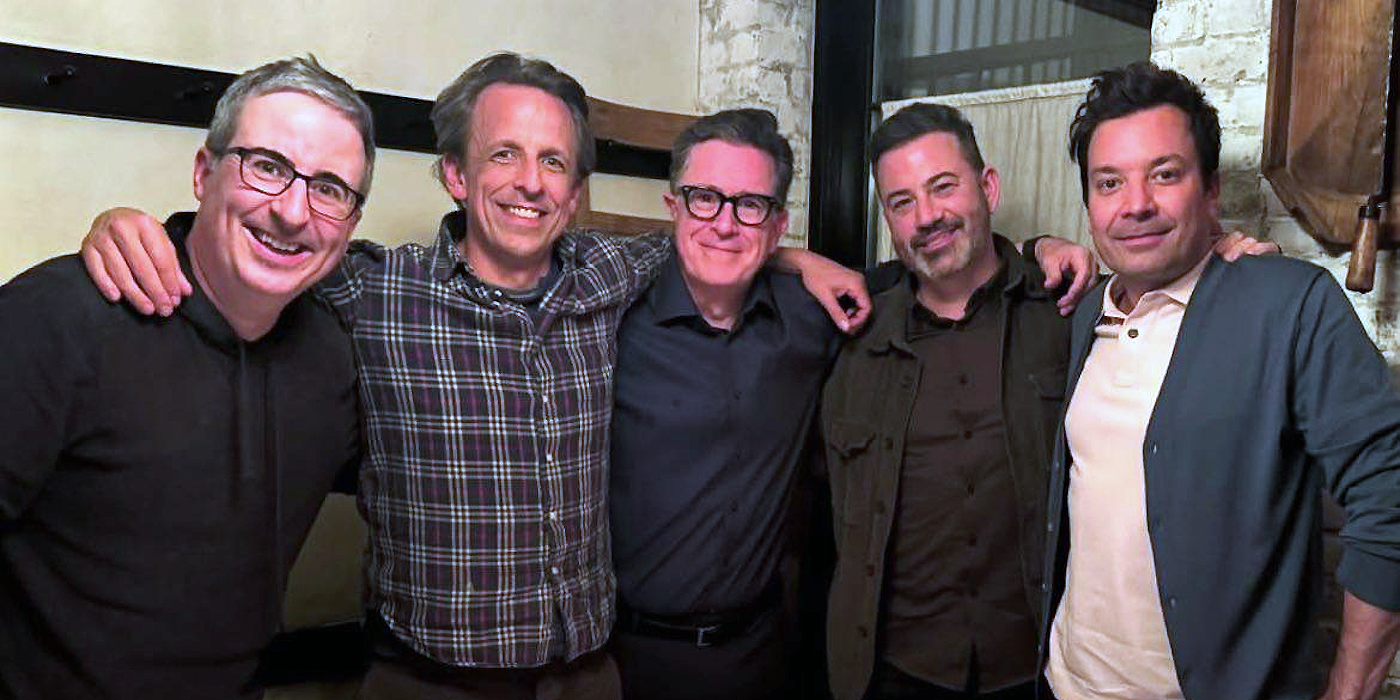
The late-night television landscape is ablaze with defiance as the cancellation of The Late Show with Stephen Colbert has ignited an unexpected rebellion. Announced by CBS on July 17, 2025, the decision to end the show in May 2026 has sent shockwaves through the industry, prompting a powerful response from some of comedy’s biggest names. Led by Jimmy Fallon, a “who’s who” of late-night hosts—including Seth Meyers and John Oliver—made a surprise joint appearance on The Late Show’s first episode back on July 21, 2025. This bold move was not just a show of solidarity with Colbert but a clear signal to corporate executives: the voices of late-night will not be silenced or divided. What began as a controversial network decision has evolved into a movement, uniting comedians in a stand against what many perceive as a troubling precedent.
The cancellation stemmed from CBS labeling it a “purely financial decision” amid a “challenging backdrop in late night.” With The Late Show reportedly losing between $40 million and $50 million annually, the network, under Paramount Global’s umbrella, opted to retire the franchise entirely rather than replace Colbert. Yet, the timing raised eyebrows. Just days before the announcement, Colbert had criticized Paramount’s $16 million settlement with President Donald Trump over a 60 Minutes interview edit, calling it a “big fat bribe” to secure approval for the Skydance merger. This political context fueled speculation that the cancellation might be less about finances and more about appeasing a vengeful administration, a narrative amplified by Democratic senators like Elizabeth Warren, who demanded transparency on potential political motives.
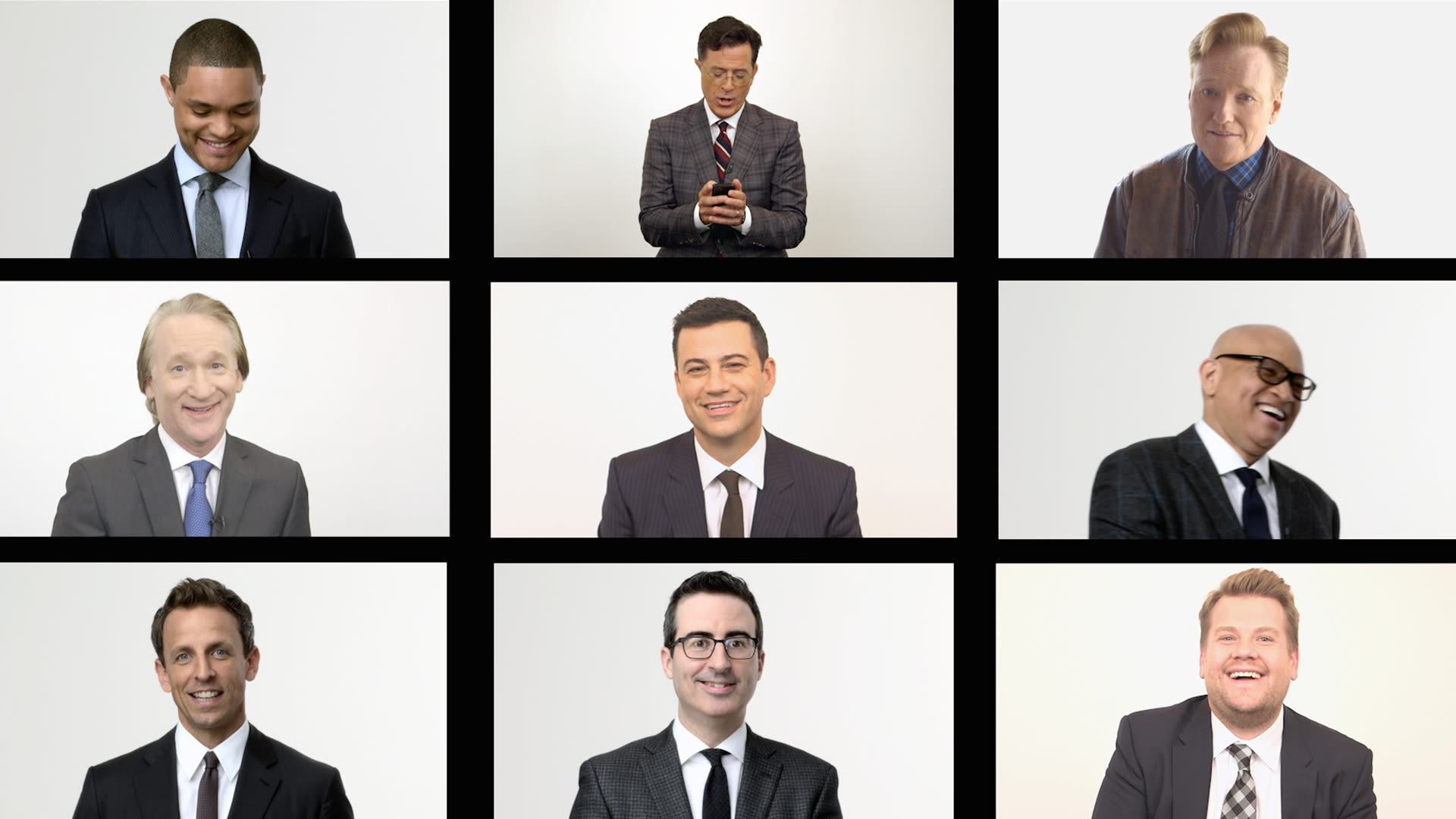
Enter the rebellion. On July 21, Colbert’s return to the Ed Sullivan Theater was anything but a quiet affair. The episode opened with a parody of the viral Coldplay kiss-cam incident, featuring Lin-Manuel Miranda and “Weird Al” Yankovic performing “Viva la Vida.” As the camera panned the audience, it revealed a star-studded lineup: Fallon and Meyers sharing beers, Oliver and Jon Stewart flashing middle fingers, and even Anderson Cooper and Andy Cohen staging a mock kiss. The gag peaked with a cartoon Trump embracing the Paramount logo, prompting Colbert to halt the song with a quip: “Your song has been canceled. This is a purely financial decision.” The humor masked a serious undertone—late-night’s top talents were rallying, turning a cancellation into a collective cry of resistance.
Fallon, host of The Tonight Show, set the tone with an Instagram post on July 17, calling Colbert “one of the sharpest, funniest hosts” and lamenting the loss. Meyers, from Late Night, echoed this on Instagram Stories, praising Colbert’s character and hinting at future hangouts now that he’s “too busy” no excuse holds. Oliver, of Last Week Tonight, told NBC News the cancellation was “heartbreaking” for comedy’s legacy, while Stewart, on The Daily Show, delivered a scathing monologue blaming “fear and pre-compliance” in a Trump-dominated climate. Leading a gospel choir in a chant of “go fuck yourselves” aimed at Paramount, Stewart’s defiance underscored the movement’s edge.
This unity isn’t new. The 2023 writers’ strike birthed the Strike Force Five podcast, uniting Colbert, Fallon, Kimmel, Meyers, and Oliver in a shared struggle. That bond resurfaced here, with Kimmel, despite being on vacation, firing off an Instagram expletive at CBS: “Love you Stephen. Fuck you and all your Sheldons, CBS.” The collective action suggests a strategic shift—late-night hosts, often rivals, are now allies against a perceived corporate overreach. Protests outside the theater and a WGA call for a New York State attorney general investigation into potential bribery further fueled the fire.
Critics question the narrative. CBS insists the decision was financial, pointing to declining linear TV viewership and the rise of YouTube, where The Tonight Show boasts 32.7 million subscribers compared to The Late Show’s 10 million. Yet, the optics—cancelling the top-rated late-night show amid a Trump settlement—invite skepticism. The network’s $16 million payout, tied to a presidential library rather than Trump directly, and Paramount’s merger approval process with the FCC, add layers of doubt. Was this a calculated move to avoid Trump’s wrath, as Stewart suggested, or a genuine cost-cutting measure in a dying format?
The movement’s impact is already felt. Fallon joked on The Tonight Show about a potential boycott costing CBS “millions of viewers, plus tens of hundreds on Paramount+.” Letterman’s YouTube video, captioned “You can’t spell CBS without BS,” and Sandra Oh’s Shakespearean curse on the July 21 episode—“A plague on both your houses”—amplified the revolt. Fans on X echoed the sentiment, with some cancelling Paramount+ subscriptions, signaling a grassroots pushback.

This rebellion could redefine late-night. With Kimmel’s contract ending in 2026 and NBC’s Fallon and Meyers secured until 2028, the industry faces a crossroads. If CBS’s move signals a retreat from political satire, as some fear, the hosts’ solidarity might force networks to reconsider. Colbert, with 10 months left, vowed to speak “unvarnished truth,” a promise his peers seem eager to support. Whether this movement sustains beyond May 2026 remains unclear, but for now, late-night’s biggest stars have turned a cancellation into a battle cry, proving their voices endure despite corporate suits’ decisions.