🔥 BREAKING: Canada ADJUSTS LUMBER POLICY IN SURPRISE SHIFT — WASHINGTON CLOSELY WATCHING 🌲🇺🇸
When the United States imposed steep tariffs on Canadian softwood lumber, the stated goal was straightforward: protect domestic mills and counter what American officials have long argued are unfair Canadian subsidies. Instead, the policy has contributed to a new chapter in a decades-old trade dispute — one that is reverberating through housing markets on both sides of the border.
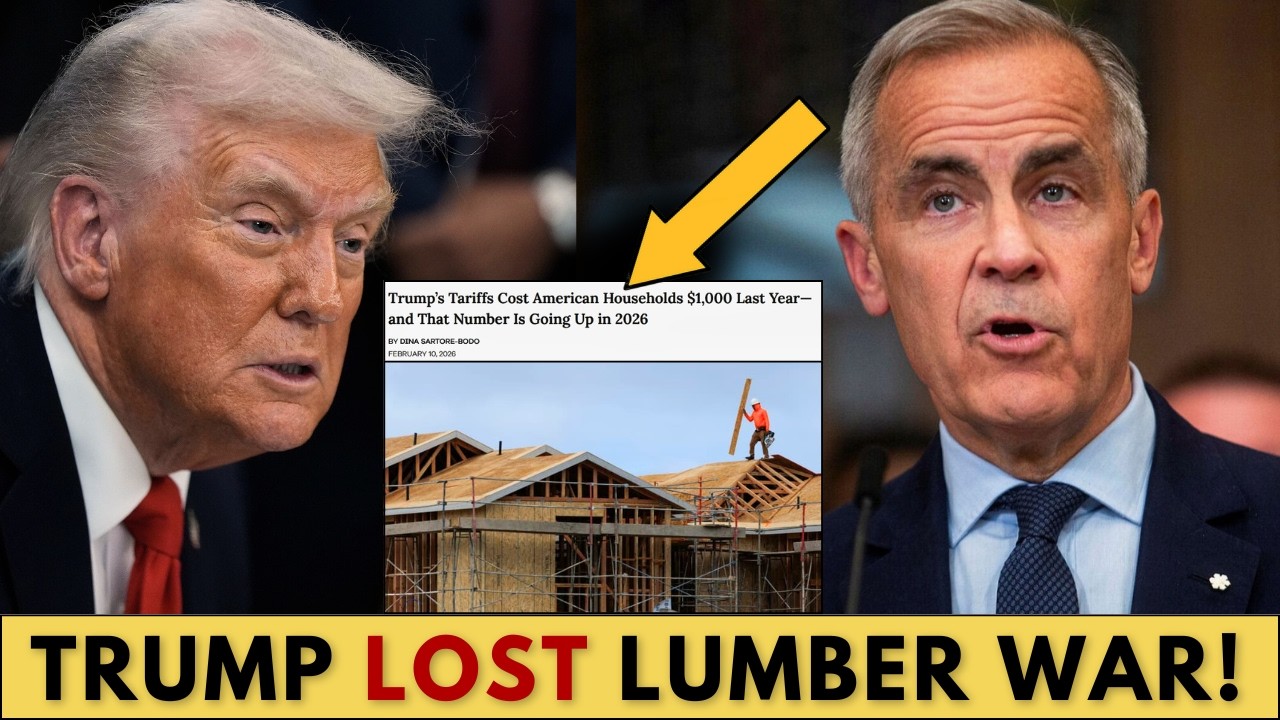
The most recent round of duties, first expanded under former President Donald Trump, reached rates as high as 47 percent for some Canadian producers. Companies such as Canfor and West Fraser, among the largest exporters of Canadian softwood lumber to the United States, faced particularly heavy levies. The intention in Washington was to level the playing field for American sawmills and reduce reliance on imports.
Canada’s response has been less about counter-tariffs and more about restructuring.
Under Prime Minister Mark Carney, Ottawa introduced a multibillion-dollar plan aimed at strengthening domestic demand and diversifying export markets. The strategy included expanded financing through the Business Development Bank of Canada, infrastructure investments in forest regions and procurement rules encouraging the use of Canadian lumber in federally funded construction projects.
Officials framed the plan as an effort to modernize the sector and reduce vulnerability to trade disputes. “We are ensuring long-term stability for Canadian forestry workers and communities,” a government statement said at the time.
The effects have been uneven. Industry groups report that more than 20 mills have closed permanently in recent years, with thousands of jobs lost as companies consolidated or paused operations. But surviving firms have upgraded equipment, streamlined production and sought buyers beyond the United States, including in Europe and Asia.
For American home builders, the consequences have been more immediate.
The United States consumes roughly 70 billion board feet of lumber annually but produces significantly less, according to industry estimates. Canada has traditionally filled much of that gap. When tariffs raise the cost of imports, builders often pass higher material prices to buyers.
Framing lumber prices, which spiked dramatically during the pandemic, have fluctuated but remain sensitive to trade policy and supply disruptions. Even modest increases can translate into thousands of dollars added to the price of a newly built home. In a market already strained by elevated mortgage rates and limited inventory, additional costs compound affordability challenges.
The National Association of Home Builders has warned that tariffs on lumber, along with duties on steel and aluminum, function as a tax on housing construction. In public comments, the group has urged policymakers to pursue negotiated settlements with Canada to stabilize supply chains.
Economists caution, however, that lumber prices are influenced by multiple factors beyond tariffs. Wildfires, insect infestations and regulatory limits on logging in both countries have constrained supply. Pandemic-era shifts in home renovation demand disrupted normal production cycles. And interest rate changes have altered the pace of construction.
Still, trade policy plays an undeniable role in shaping expectations.
Canada’s decision to prioritize domestic procurement for public projects has reduced the incentive for some producers to focus primarily on the U.S. market. At the same time, Canadian exporters have sought to deepen ties with the United Kingdom, Japan and South Korea, markets that value stable long-term contracts.

“The more uncertainty there is around cross-border trade, the more companies look for diversification,” said a trade analyst based in Toronto. “Once supply chains shift, they don’t automatically revert.”
In Washington, supporters of tariffs argue that protecting domestic mills is essential for long-term industrial resilience. They contend that Canadian provincial timber policies, which involve government-set stumpage fees on public lands, create distortions that disadvantage American producers.
Critics counter that the cyclical nature of the dispute — which has resurfaced repeatedly since the 1980s — ultimately harms consumers more than it helps mills. Each round of duties tends to prompt litigation, retaliation or renegotiation, without resolving underlying disagreements over forestry management.
The broader economic context complicates the picture. Housing affordability has become a central concern nationwide, with home prices and borrowing costs limiting access for first-time buyers. Even incremental increases in building materials can slow new construction, particularly for entry-level homes where margins are thin.
Research organizations, including the Tax Foundation, have estimated that tariffs across multiple sectors raise costs for American households, though the precise impact varies depending on consumption patterns and business responses.
For now, the lumber dispute illustrates how trade tools can ripple through domestic policy priorities. A tariff designed to bolster American sawmills intersects with efforts to expand housing supply. A Canadian strategy aimed at protecting forestry communities alters global trade flows.
Whether the current realignment proves temporary or durable will depend on future negotiations. The United States and Canada remain deeply integrated economically, with supply chains that span forests, mills and construction sites. Yet the latest episode suggests that even longstanding partners are willing to recalibrate when policy tensions escalate.
As lawmakers debate the path forward, families navigating the housing market may feel the effects first — not in diplomatic communiqués, but in the price per square foot of a new home.