Federal Judges Revolt: Courts Push Back as Trump Tests the Limits of Presidential Power
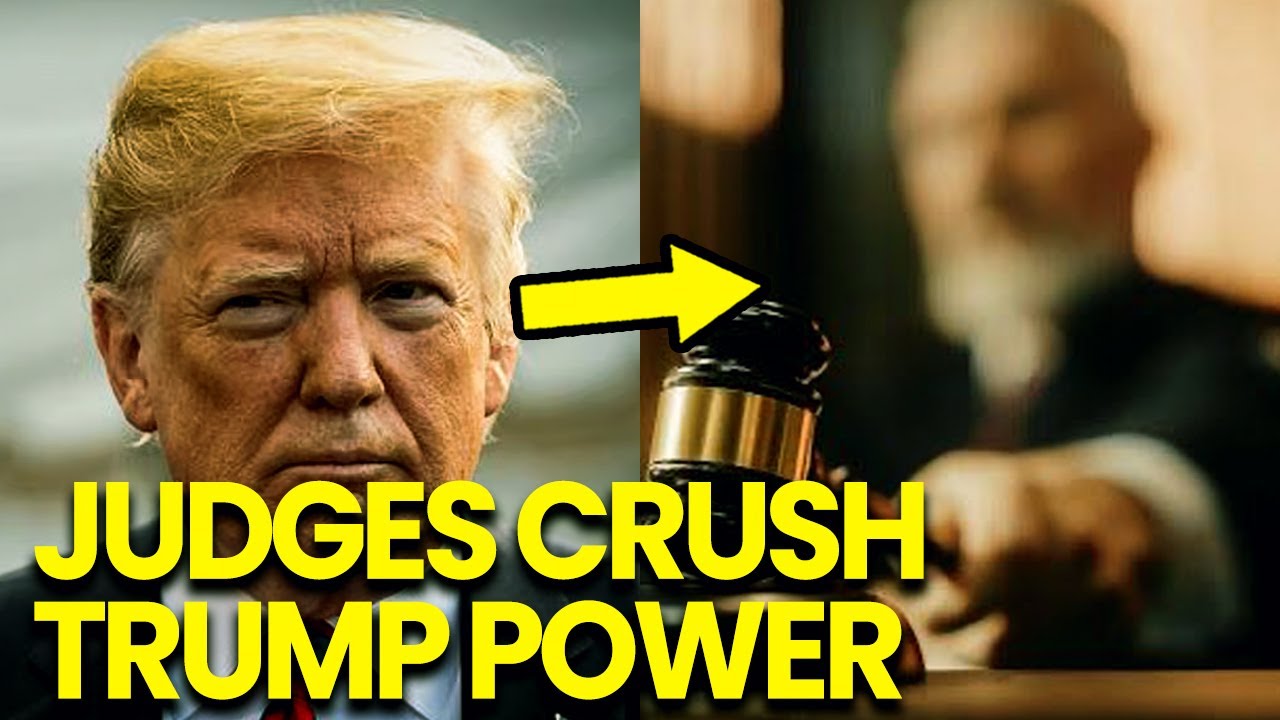
A rare and revealing backlash is emerging inside the federal judiciary as judges openly express frustration with the Supreme Court and the Trump administration. In unusually candid interviews, multiple federal judges accuse the high court of repeatedly overturning rulings against the White House with little explanation, creating the impression that lower courts are politically biased. The tension underscores a deeper concern: whether judicial independence is being eroded as executive power expands.
At the center of the controversy is a striking pattern. The Supreme Court has granted the Trump administration emergency relief in more than 70% of cases where it sought to block lower court rulings. Several judges say this trend has left them exposed, undermined, and portrayed as partisan actors. One judge bluntly described the situation as being “thrown under the bus,” while another called the court’s silence “inexcusable.”

That frustration is now spilling into active resistance. Across multiple cases, federal judges are signaling they are done being used as props in political theater. They accuse the administration of stretching presidential authority to extreme limits, skirting court orders, and manipulating legal processes for optics rather than compliance. What makes this moment different is its scale: these concerns are not isolated but echoed by judges in separate courts, dealing with unrelated cases.
The most explosive confrontation involves mass deportations under the Alien Enemies Act of 1798. Chief Judge James Boasberg ordered that 137 migrants not be disembarked in El Salvador, only for the Trump administration to allegedly proceed anyway. Boasberg has launched a contempt investigation to determine whether officials knowingly defied his order, framing the inquiry as a test of whether the executive branch believes it can simply ignore the judiciary.
The Justice Department pushed back hard, asking the D.C. Circuit Court of Appeals to halt the investigation. While the appeals court temporarily paused some contempt proceedings, it allowed Boasberg to continue probing who ordered the flights and why. Notably, the court described the standoff as an “extraordinary ongoing confrontation” between branches of government—language rarely used outside moments of constitutional crisis.
A separate but equally telling clash is unfolding over the Epstein files. Trump’s Justice Department asked a federal court to unseal a narrow slice of grand jury material, framing the move as a push for transparency. Judge Richard Berman rejected the premise, noting the administration already controls roughly 100,000 pages of Epstein-related documents it could release without court approval. He called the request a diversion, accusing the DOJ of staging a political stunt rather than delivering real accountability.

Taken together, the cases reveal a troubling pattern. Judges argue that the administration invokes emergency powers aggressively, tests legal boundaries, and then attacks the courts when challenged. In response, some judges are no longer hiding their alarm. They are issuing sharper opinions, authorizing investigations, and openly questioning whether court orders still carry weight.
The stakes extend far beyond any single ruling. If court orders can be ignored without consequence, the judiciary’s role as a check on presidential power collapses. Legal scholars warn that once courts become advisory rather than authoritative, separation of powers begins to fail, regardless of who occupies the White House.
This moment may mark a turning point. Federal judges are asserting themselves after months of perceived retreat, but the outcome remains uncertain. As investigations continue and appeals advance, the nation is watching a fundamental question play out in real time: whether the rule of law can still restrain presidential power, or whether the balance has shifted too far for the courts to pull it back.