Something consequential unfolded across North America this summer, largely unnoticed until its effects had already begun to spread. It did not begin with a factory closure or a mass layoff. It began with a policy decision—quiet on its face, disruptive in its reach.
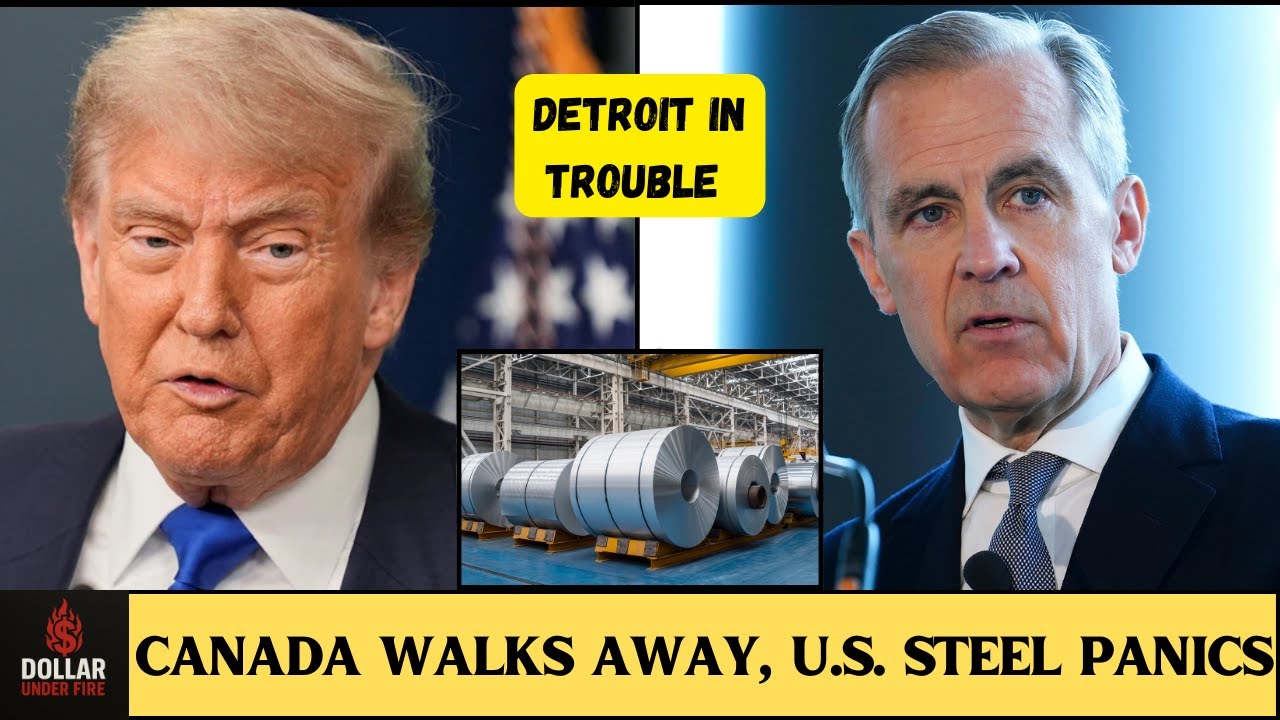
A single announcement fractured supply chains that had been built over decades, unsettled industrial towns on both sides of the U.S.–Canada border, and subtly rewrote the rules of the global steel trade. While headlines fixated on tariffs and political blame, a deeper realignment was taking place beneath the noise.
Prices surged. Orders stalled. Long-standing commercial relationships, once assumed to be permanent, suddenly felt provisional. One country responded with pressure and barriers. Another responded with speed, coordination, and preparation. By the time markets grasped what was happening, the balance had already begun to shift.
Detroit felt the shock first. Canada saw an opening.
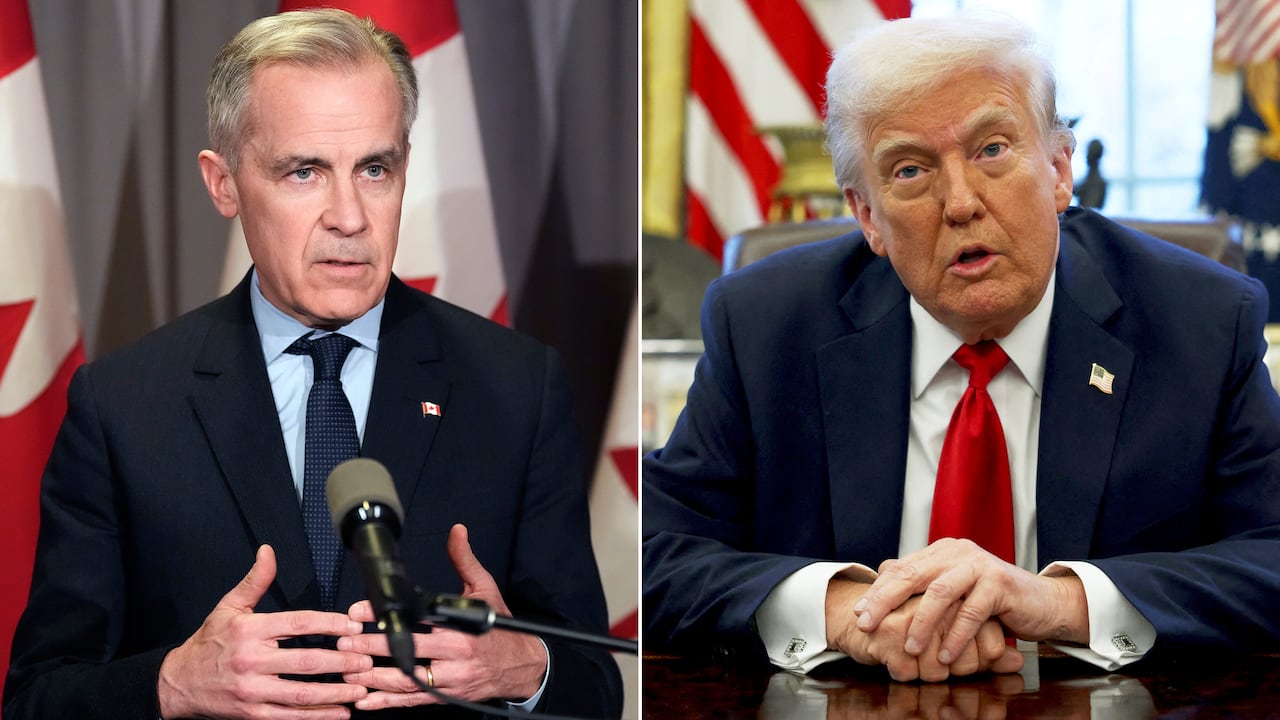
When President Donald Trump announced that U.S. tariffs on steel and aluminum would double from 25 percent to 50 percent, the justification followed familiar lines: national security, border enforcement, leverage. At a rally in Pennsylvania, the move was framed as protection for American workers and American industry.
Markets did not wait for explanations. Within hours, steel buyers began to pull back. Manufacturers scrambled to reassess costs. Contracts that once seemed stable were suddenly renegotiated or abandoned. By August 1, Canadian exporters were facing an additional 35 percent tariff outside U.S.M.C.A. protections, pushing bilateral tensions toward a full-scale trade confrontation.
Hot-rolled coil prices jumped to roughly $900 a ton, a $150 increase in less than two weeks. Rail shipments slowed. Steel yards stopped releasing inventory. What had long been a tightly integrated North American production system began to seize almost overnight. The tariff announcement became a stress test—one that exposed vulnerabilities years in the making.
The most immediate fallout surfaced in Detroit. Few outside the auto industry fully appreciate how dependent American manufacturing is on Canadian steel. A single Ford F-150 requires roughly a ton of it. Multiplied across millions of vehicles, the reliance becomes unmistakable.
Canada supplies as much as 12 million tons of steel annually to U.S. manufacturers, much of it flowing directly into automotive production lines. When tariffs took effect, those orders did not taper. They vanished. By mid-July, rail shipments had slowed to a crawl. Steel yards froze inventory.

Ford’s River Rouge complex idled stamping operations as deliveries dried up. Automakers were not confronting abstract cost increases; they were confronting missing inputs. Wall Street took notice. The S&P 500 dipped amid growing concern over a metal-driven slowdown. In Michigan, unemployment climbed to 5.4 percent, then the highest rate in the country.
Across the river in Windsor, anxiety spread just as quickly. Families that had endured previous downturns sensed something different this time. The supply pipeline linking Canada to Detroit had not weakened. It had snapped.
Yet while American factories stalled, Canadian furnaces kept running.
Within forty-eight hours, Ottawa responded—not with retaliation, but with investment. Prime Minister Mark Carney announced a $1 billion initiative to modernize and decarbonize Canada’s steel industry. Coal-fired blast furnaces would be replaced with electric arc systems and hydrogen-based technologies, powered largely by Canada’s hydroelectric and nuclear capacity.
Publicly, the move was framed as climate leadership. Strategically, it was something else. Cleaner steel meant access. Cleaner steel meant leverage. Canada was not racing to preserve yesterday’s model; it was aligning its industrial base with the direction of global demand.
Ottawa reinforced the shift with trade controls of its own. Steel imports from countries without free-trade agreements faced strict quotas. A flat 25 percent duty was imposed on Chinese steel, signaling that Canada would not become a dumping ground. Federal procurement rules were revised to prioritize Canadian-made steel for infrastructure, housing, transit, and pipelines. Provinces followed suit.
Ontario, Alberta, and Saskatchewan mandated domestically melted steel for public projects. Jobs stayed local. Supply lines shortened. The floor beneath Canada’s steel industry quietly rose.
The most consequential response came from overseas. European buyers, already preparing for the European Union’s carbon border adjustment mechanism set to fully take effect in 2026, were watching closely. Emissions were no longer a secondary concern; they were a gatekeeper.
Canadian steel qualified. Its lower emissions profile translated into faster approvals, fewer penalties, and more favorable pricing. Contracts flowed in from Europe and Asia within weeks. What began as a North American trade dispute evolved into an export opportunity.
While the United States struggled to stabilize domestic supply, Canada redirected shipments outward. Steel once destined for Detroit flowed east and west instead. This was not accidental. It was alignment. Canada was not simply selling steel; it was selling compliance with the future.
In the United States, costs continued to mount. Ford’s chief executive warned Congress that the tariff regime could cost the company $2.5 billion in a single year. Steel costs per F-series truck approached $900. Those pressures did not remain on balance sheets. Dealership prices rose by $1,500 to $2,000. Vehicles assembled in Mexico climbed even higher.
The effects spread beyond autos. Texas oil drillers faced pipe shortages as Canadian suppliers redirected output to domestic projects. Enbridge resorted to cannibalizing older inventory to keep construction moving. Smaller contractors were locked out altogether. Political pressure built quietly in Washington.
By late July, U.S. senators urged Ottawa to ease what they described as a metal blockade. Mr. Carney declined broad concessions, offering only narrow quotas that preserved Canada’s advantage. There were no dramatic counter-tariffs, no rhetorical escalation—only redirection.
Export data soon reflected the shift. Shipments to the United States, once roughly 75 percent of Canada’s steel exports, slipped into the high 60s within months. The decline was not a collapse. It was intentional. European, Japanese, and Indian buyers stepped in, locking in contracts through 2026 and 2027.
Crucially, Canada remained within the bounds of U.S.M.C.A. There was no treaty breach, no standoff. Instead, access tightened everywhere else. Finished steel increasingly bypassed U.S. customs altogether.
For decades, Canada had been treated as a junior supplier tethered to American demand. That assumption quietly dissolved. Ottawa began acting less like a feeder and more like a gatekeeper.
The human cost surfaced long before trade statistics caught up. In Windsor, overtime vanished. Shorter shifts became routine. Layoffs followed, especially among contractors and younger workers without seniority. South of the border, American plants announced furloughs tied directly to shortages and price volatility.
Families delayed home purchases. Apprentices questioned whether skilled trades still offered stability. Older workers worried about retirement security. None of them had negotiated tariffs or voted on industrial strategy, yet their livelihoods absorbed the shock.
By the time the dust began to settle, a central truth was difficult to ignore. This was never simply a dispute over tariffs. It was a test of foresight.
One approach attempted to impose control through pressure. The other invested in readiness. When the shock arrived, the difference was exposed with unforgiving clarity. Strength in the modern economy is not measured by how high walls can be raised, but by how many doors are already open when the world changes.
Steel made that reality impossible to miss.