Trump Footage Sparks Outrage After ICE’s Christmas Message Ignites Moral Backlash
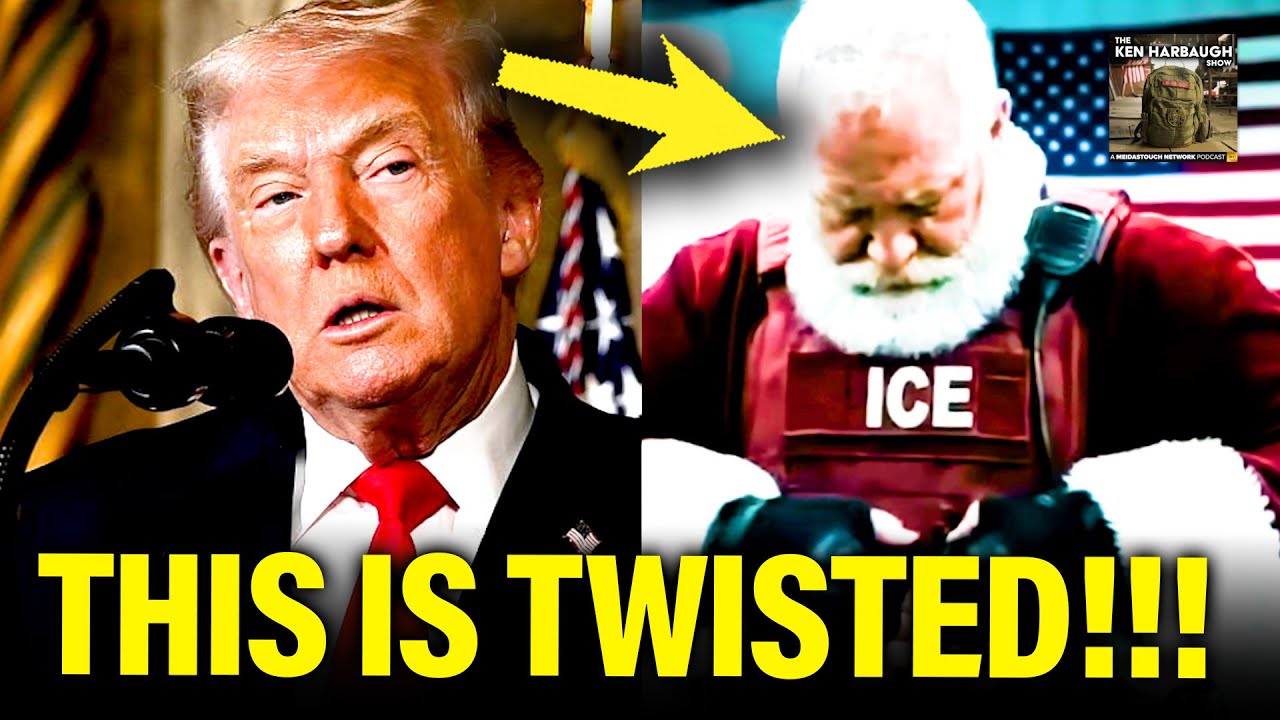
A newly surfaced video tied to Donald Trump’s immigration agenda has triggered widespread outrage after showing a Santa Claus–themed figure promoting deportations during the Christmas season. Critics say the imagery crosses a moral line, weaponizing a religious holiday to normalize cruelty and fear at a time traditionally associated with compassion and refuge.
The footage, circulated online just days before Christmas, shocked viewers not because of technical manipulation, but because it appeared to be officially sanctioned. Faith leaders and advocates argue the message directly contradicts core Christian teachings that emphasize welcoming the stranger, protecting the vulnerable, and showing mercy to those in need.
The backlash quickly grew beyond politics into a broader spiritual debate. Religious scholars pointed to biblical passages that call for hospitality toward migrants, warning that using scripture to justify deportations represents a profound moral failure rather than a policy disagreement. For many believers, the issue is not partisan, but ethical.
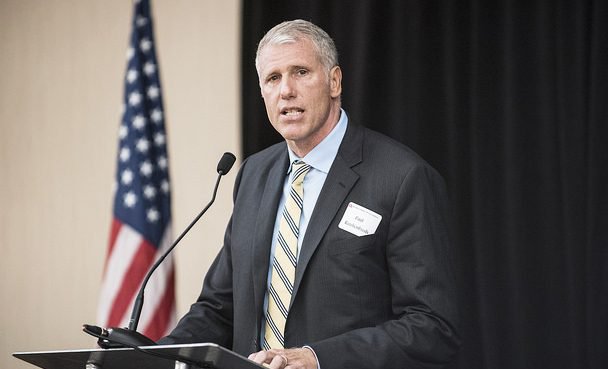
In response, Reverend Paul Brandeis Raushenbush of the Interfaith Alliance described the moment as a “spiritual crisis,” arguing that cruelty has become a feature, not a flaw, of current immigration enforcement messaging. He warned that religion is being exploited as a power tool, stripped of its core message of love and dignity.

Raushenbush and other faith leaders stressed that this approach does not reflect religion as a whole. While Christian nationalism has gained visibility, it represents a narrow movement seeking control rather than compassion. Across denominations, many religious communities are actively resisting policies they see as incompatible with democratic and humanitarian values.
The controversy also reopened uncomfortable conversations about complicity. Evangelical support for Trump remains strong, raising questions about how faith communities helped empower policies now widely criticized as inhumane. Still, religious advocates emphasize that large portions of the faithful reject these actions and are organizing in opposition.

Beyond symbolism, the impact is deeply personal. Clergy warn that immigration agents themselves may suffer moral injury when asked to carry out policies framed as righteous but experienced as brutal. The emotional toll, they argue, is another consequence of merging enforcement with religious justification.
As the debate intensifies, one message is emerging clearly: religion is not monolithic, and it is not owned by any administration. Faith leaders are urging Americans to engage, challenge misuse of belief, and reclaim moral language from political exploitation. In a season meant for reflection and mercy, the clash over this footage has become a defining test of the nation’s conscience.