By XAMXAM
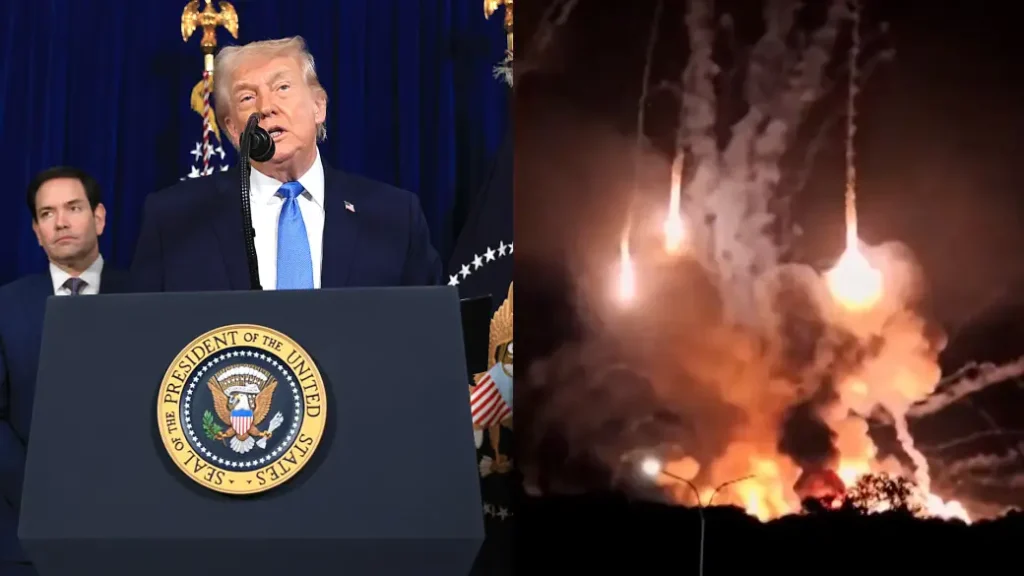
The reaction in Canada was swift, sharp, and unusually unified. Within hours of President Donald Trump declaring a new phase of American dominance in the Western Hemisphere following military action in Venezuela, officials and commentators in Ottawa began treating his words not as rhetorical excess, but as a warning shot.
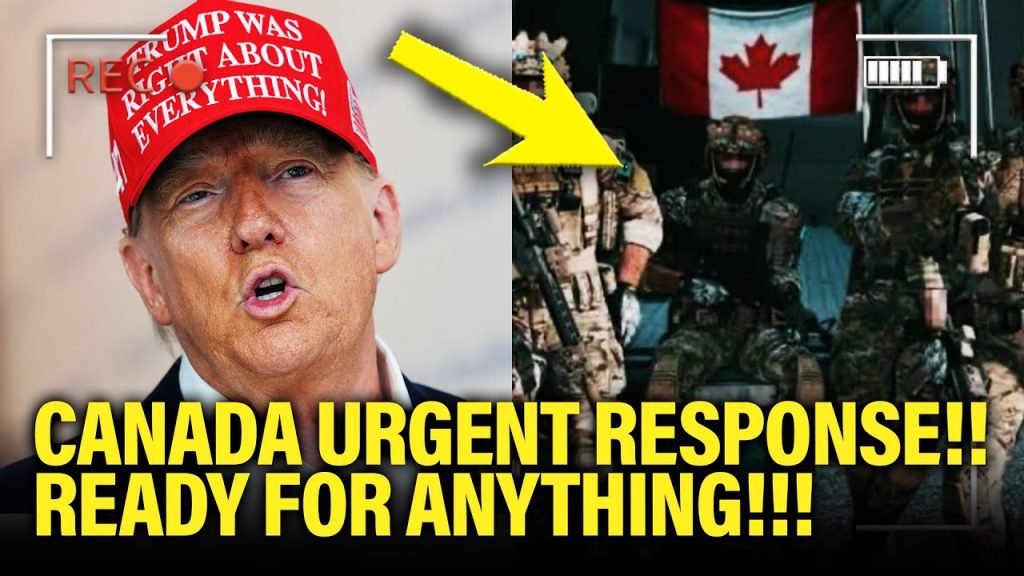
For decades, Canada has lived comfortably in the shadow of American power, insulated by geography, alliance, and habit. But Trump’s language — invoking a rebranded version of the Monroe Doctrine and speaking openly about “dominance” rather than partnership — struck a nerve. What might once have been dismissed as bombast is now being interpreted as intent.
Canadian leaders have avoided theatrical denunciations. Instead, their response has been deliberate and calibrated. Diplomatically, Ottawa has intensified coordination with European allies, reinforcing ties that many believed had weakened during recent years of geopolitical turbulence. Militarily, officials have acknowledged — often quietly — that contingency planning is being updated in light of what they describe as a more unpredictable United States.
At the center of the concern is not Venezuela alone, but precedent. Trump’s framing of the operation as a unilateral assertion of control, rather than a limited intervention or multilateral action, has unsettled governments far beyond Latin America. In Canada, where Trump has previously floated the idea of turning the country into a “51st state,” those remarks have taken on new weight.
“This is no longer abstract,” one senior Canadian official said privately. “When language of conquest is normalized, even jokingly, you prepare for the consequences.”
Public sentiment reflects that shift. Canadian media, often restrained in their coverage of American politics, have increasingly described Trump’s approach as “expansionist” and “destabilizing.” The concern is less about imminent invasion and more about erosion of international norms that Canada has long relied on: respect for sovereignty, rule-based order, and alliance consultation.
Trump’s comments about Venezuela’s leadership only deepened the unease. When asked about the country’s democratic opposition, he dismissed its central figure as lacking respect and support, signaling that Washington’s priorities lay elsewhere. To Canadian observers, the implication was stark: democracy was secondary to control.
That perception has complicated Canada’s position. Ottawa has been openly critical of Venezuela’s human rights record and governance failures. Yet Trump’s overt dismissal of democratic legitimacy undermined any moral high ground the intervention might have claimed. As one former Canadian diplomat put it, “You cannot sell liberation while talking like an occupier.”
Behind the scenes, Canada’s defense establishment has been reassessing assumptions that once seemed settled. Discussions about procurement, intelligence-sharing, and technological independence have accelerated. While American equipment remains central to Canada’s military, officials have begun publicly questioning the wisdom of overreliance on a partner whose leadership appears increasingly transactional.
Prime Minister Mark Carney, speaking cautiously but firmly, emphasized Canada’s commitment to international law and multilateralism. Without naming Trump directly, he underscored that “no nation has the right to redraw borders or political systems through force.” The message was unmistakable: Canada would not endorse a world governed by unilateral muscle.
The broader international context amplifies Canada’s concerns. European leaders, already navigating war on their eastern flank, have expressed quiet alarm at the prospect of another theater of instability driven by American unilateralism. Trump’s critics argue that by discarding diplomatic guardrails, he risks normalizing a style of governance that mirrors the very authoritarianism he claims to oppose.
For Trump, the backlash has been dismissed as overreaction. Allies, he insists, will ultimately fall in line. But Canada’s response suggests otherwise. Rather than retreating into silence, Ottawa is recalibrating its posture, signaling that loyalty to Washington is not unconditional.
This moment marks a subtle but significant shift in North American relations. Canada is not threatening rupture, nor is it abandoning cooperation. But it is preparing — politically, diplomatically, and psychologically — for a future in which American leadership may no longer be synonymous with stability.
What troubles Canadian officials most is not any single action, but the pattern. Trump’s language toward Venezuela echoes his past remarks about Greenland, Panama, and Canada itself. Taken together, they suggest a worldview in which borders are negotiable and power justifies itself.
History looms heavily in this calculation. Canada remembers that global conflict often begins not with tanks crossing borders, but with words that redefine what is acceptable. By responding firmly now, Canadian leaders hope to draw a line early — before ambiguity hardens into reality.
Whether Trump intended to provoke such a reaction is beside the point. In Ottawa, the conclusion is clear: the era of assuming benign American intentions has ended. What replaces it will depend on whether restraint, law, and alliances can still outpace ego and force.
For Canada, the message is no longer whispered. It is spoken plainly, to Washington and to the world: sovereignty is not a joke, dominance is not leadership, and silence is no longer an option.