Canada has sent shockwaves through global defense circles after announcing a review of its multibillion-dollar F-35 fighter jet agreement with the United States. What began as a routine procurement program has evolved into a major geopolitical moment. Ottawa’s reassessment signals more than a budget concern—it reflects a deeper debate about sovereignty, military autonomy, and the future of Western alliances. As NATO faces growing uncertainty, Canada’s decision may mark the beginning of a broader strategic realignment.
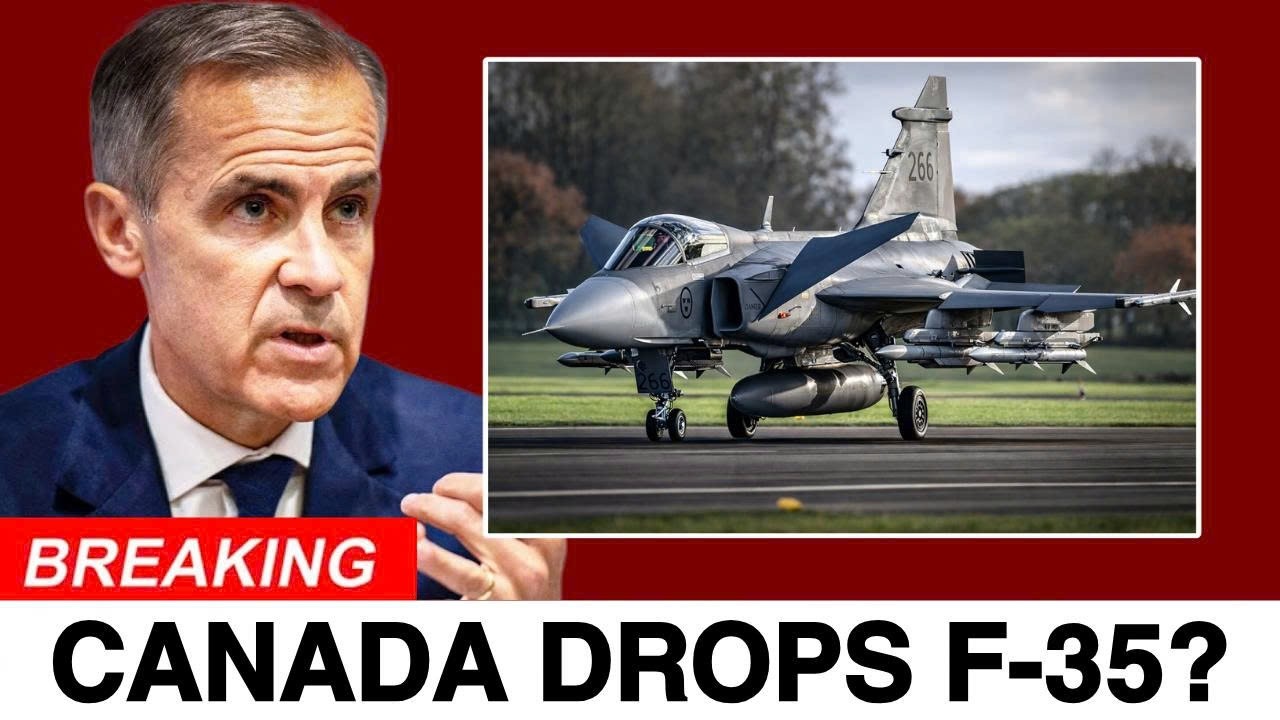
The F-35 Lightning II program was once seen as the cornerstone of Canada-U.S. defense cooperation. Originally negotiated at a far lower estimated cost, the project’s price has surged dramatically over time, with long-term operational expenses becoming increasingly difficult to justify. Canadian policymakers are now questioning whether dependence on American-controlled logistics systems, software upgrades, and maintenance approval could limit national decision-making in future crises.
The political backdrop has intensified the debate. Following Donald Trump’s renewed political influence and rising trade tensions between Washington and Ottawa, Canadian leaders have emphasized national independence more openly than in previous decades. Prime Minister Mark Carney’s declaration that Canada will never become subordinate to another nation resonated domestically and internationally, framing the fighter jet review as part of a broader sovereignty strategy rather than a simple defense procurement adjustment.
Attention has rapidly shifted toward Sweden’s Saab Gripen E fighter jet, an aircraft designed for operational flexibility and national control. Unlike the F-35, the Gripen offers lower operating costs, simplified maintenance, and the possibility of domestic production within Canada. Technology transfer, job creation, and independent upgrade capability have become decisive factors, positioning the Swedish option as an attractive alternative for a country seeking both security and industrial leverage.

Canada is not alone in reconsidering defense dependence. Across Europe, several NATO members are reassessing heavy reliance on U.S. defense systems while investing in regional defense industries. Rising European defense spending and collaborative weapons development projects suggest a gradual shift toward diversified procurement strategies. Analysts argue this evolution may not weaken NATO but instead reshape it into a more flexible alliance built on cooperation without technological dependence.
Canada has yet to cancel its F-35 purchase outright, with initial deliveries still expected. However, the ongoing review sends a powerful signal: modern alliances may increasingly prioritize strategic independence alongside cooperation. If Ottawa ultimately pivots toward alternative aircraft like the Gripen, it could redefine how middle powers balance alliance loyalty with national autonomy, making Canada’s decision one of the most closely watched defense stories in the world today.