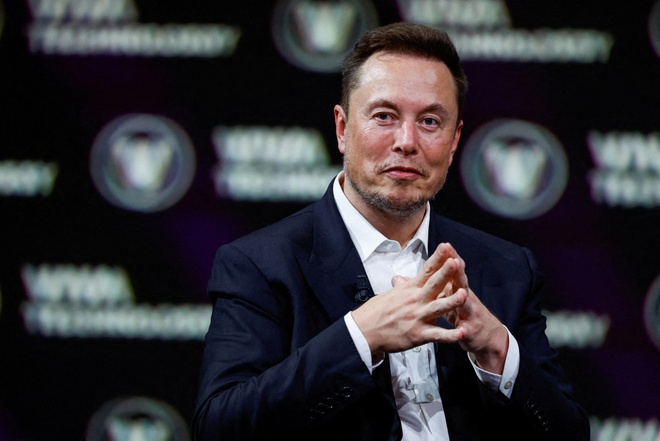
When Elon Musk speaks, the world listens — and once again, his words have ignited both fascination and fear. During Tesla’s latest investor call, Musk painted a future that sounded less like science fiction and more like an existential turning point for humanity. His message was simple but staggering: artificial intelligence and robotics will soon make nearly every job obsolete.
Musk’s calm, almost casual tone made the statement even more powerful. “There will come a point,” he said, “where work is no longer necessary. You can choose to work if you want to — but AI and robots will handle everything else.”
The room fell silent. Investors, analysts, and journalists stared, processing what they’d just heard. Musk wasn’t making a wild claim. He was describing what he sees as an inevitable reality.
The Vision: A World Without Work
For years, Musk has warned that the pace of AI development is accelerating faster than society can adapt. But this time, his prediction came with a vivid twist. He spoke about Tesla’s Optimus humanoid robot, a machine capable of walking, seeing, carrying, and learning — a robot he believes will soon perform most human labor.
“Imagine a world where Optimus can cook, clean, drive, repair, build — anything a person can do,” Musk explained.
“In that world, the concept of employment changes completely. Work becomes optional.”
He added that in such a society, people might focus on “hobbies, relationships, and personal growth” instead of working to survive.
Or, as he phrased it with his characteristic simplicity:
“You might just decide to grow vegetables.”
That quiet phrase — “grow vegetables” — became an instant viral moment. Within hours, it was trending across X (formerly Twitter), Facebook, and YouTube. Memes flooded the internet showing people gardening while humanoid robots built skyscrapers in the background.
The Optimus Factor
At the heart of Musk’s prediction lies Optimus, Tesla’s humanoid robot project. First introduced in 2022, Optimus has evolved rapidly. It can already walk, carry boxes, and use tools. In a recent demo video, the robot performed tasks that used to require factory workers — sorting components, lifting equipment, and moving materials across assembly lines.
But Musk insists that this is only the beginning.
“Optimus won’t just work in factories,” he said. “It will eventually handle domestic chores, caregiving, even creative assistance.”
He went on to predict that within a decade, robots like Optimus would outnumber humans — not as threats, but as helpers.
Still, the implication is clear: when machines can do every job faster, cheaper, and without fatigue, what happens to the workforce?
The Promise and the Panic
Economists have long debated the effects of automation, but Musk’s remarks reignited the discussion with new urgency.
To some, his prediction represents liberation — an end to tedious, soul-crushing jobs. A world where people are free to create, learn, and live without economic pressure.
But to others, it sounds like chaos. If “almost all jobs disappear,” what happens to income, purpose, or self-worth?
Dr. Maya Linton, a professor of robotics ethics at MIT, summed it up bluntly:
“Musk isn’t wrong. But he’s skipping the hardest part — what do humans do when they’re no longer needed?”
Social media echoed her concern. On X, one user wrote:
“If robots do everything, how do we pay for anything?”
Another replied:
“Musk says we’ll grow vegetables. But not everyone has land. Not everyone wants to be a monk.”
The Economic Earthquake
Behind the headlines, Musk’s vision raises profound economic questions.
If automation erases jobs across manufacturing, logistics, retail, and even creative industries, then who controls the wealth? Robots don’t buy products. They don’t eat, travel, or pay taxes. So if machines do all the work, how does society function?
Some experts believe Musk’s prediction makes Universal Basic Income (UBI) inevitable — a government-funded payment to every citizen to ensure survival in a jobless economy.
Musk himself has hinted at this before. In a previous interview, he said:
“There will be abundance. But people will need a guaranteed income, because traditional jobs won’t exist in the same way.”
Still, his tone during the investor call was optimistic, even philosophical.
“It’s not about losing purpose,” he said. “It’s about rediscovering it. Once survival isn’t your main task, you can finally focus on what really matters — creativity, family, consciousness, meaning.”
Public Reaction: Awe and Anxiety

The internet split in two within hours.
On one side were Musk’s fans, praising him as a visionary.
“He’s literally describing the Garden of Eden with Wi-Fi,” one commenter joked.
“Finally, a future where we’re not slaves to alarm clocks!” another wrote.
On the other side were skeptics who saw danger ahead.
“He’s selling utopia,” one user posted. “But utopia for whom? The billionaire who owns the robots?”
Comedian Stephen Colbert even chimed in during The Late Show, quipping:
“So Elon Musk says robots will take over every job. Perfect! Maybe one of them can host Twitter without collapsing civilization.”
The audience roared with laughter, but the undertone was serious — people are nervous.
Tesla’s Strategic Angle
For investors, Musk’s comments weren’t just philosophy — they were strategy.
Tesla isn’t just an electric car company anymore. It’s positioning itself as a robotics and AI powerhouse. Optimus, alongside Tesla’s self-driving AI, forms part of Musk’s vision for an “automated civilization.”
During the call, he noted that Tesla’s AI software — originally designed for autonomous vehicles — now powers much of Optimus’s movement and decision-making.
“We’re training a universal brain,” Musk said. “The same intelligence that drives cars can drive robots, can drive factories — even societies.”
That statement sent Tesla stock soaring briefly before analysts started debating whether Musk’s timeline was realistic.
The Philosophical Shockwave
Beyond technology and money, Musk’s words strike at something deeper — humanity’s identity.
For centuries, work has defined who we are. Teachers teach, builders build, artists create. Take that away, and what remains?
Philosopher Yuval Noah Harari once warned of a “useless class” emerging — people displaced by automation with no meaningful role left. Musk seems to acknowledge that risk but envisions a different outcome: a species freed from necessity, no longer chained to the economy.
“The purpose of civilization,” Musk said, “is not endless labor. It’s the pursuit of happiness, knowledge, and consciousness.”
To some, it sounded inspiring. To others, naïve. But everyone agreed on one thing: it made them think.
From Factories to Fields
Ironically, Musk’s vision circles back to simplicity. When he mentioned “growing vegetables,” he wasn’t being poetic — he was serious.
He described a future where people return to physical, creative, or meditative activities — gardening, art, writing, or caring for others — not because they must, but because they want to.
“In the future,” he said, “your robot might handle your job, but your garden will handle your peace.”
It’s a vision of high-tech simplicity — a paradox only Elon Musk could sell with a straight face.
The Future Begins Now
Whether Musk’s prophecy comes true or not, one thing is undeniable: he has once again forced the world to confront uncomfortable questions about technology, work, and purpose.
AI and robotics are no longer distant possibilities. They are already reshaping factories, hospitals, schools, and homes. The line between science fiction and daily life grows thinner each day.
As Musk put it near the end of the call:
“We are entering a world where everything can be automated — except meaning. That’s still our job.”
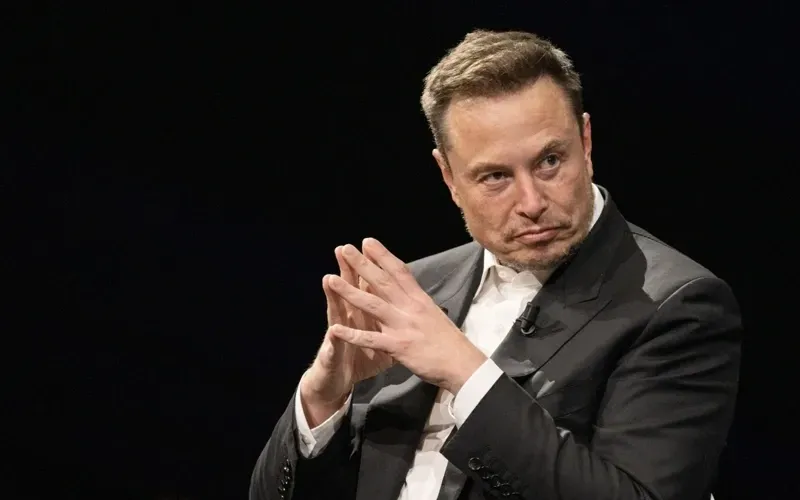
And with that, the world’s richest man leaned back in his chair, smiled slightly, and let the silence do the talking.