JUST IN: “CANADA THRIVES BECAUSE WE ARE CANADIAN” — CARNEY’S DEFIANT MESSAGE SHAKES GLOBAL STAGE
Canada’s political tone shifted decisively after Mark Carney delivered a blunt, unscripted response to remarks made by Donald Trump at the World Economic Forum in Davos. Trump’s claim that Canada “exists because of America” crossed a diplomatic line, and Carney chose not to soften his reply. Speaking before his cabinet in Quebec City, he declared plainly: Canada flourishes because we are Canadian. It was not rhetoric for applause—it was a line drawn in public view.
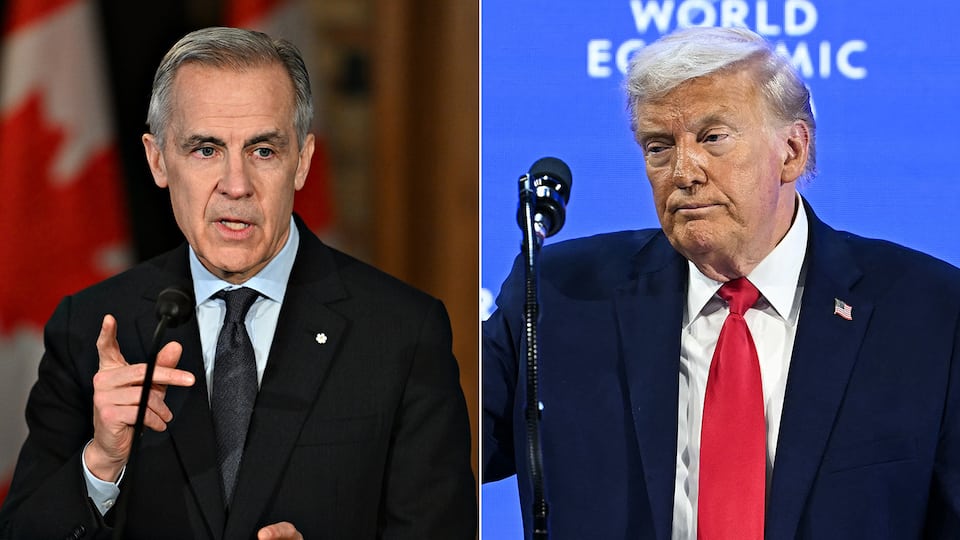
Carney’s response rejected hierarchy outright. He framed Canada as a country built on inclusion, not privilege—where prosperity is not reserved for those born wealthy, well-connected, or culturally dominant. More importantly, he warned that Canadian values do not survive by default. They require protection, confidence, and the willingness to assert national dignity. The remark that Canada does not exist because of America was deliberately added, signaling that Ottawa would no longer absorb dismissive narratives under the guise of diplomacy.
The reaction from Washington was immediate and revealing. U.S. Commerce Secretary Howard Lutnick appeared on television expressing visible frustration, accusing Canada of arrogance and hinting that future trade negotiations under the USMCA could become more hostile if Ottawa continued diversifying toward markets like China. The warnings were not policy proposals; they were pressure tactics—designed to reassert leverage that Canada has historically lacked alternatives to resist.
But that leverage is weakening. Canada has spent years expanding trade relationships beyond a single dominant corridor, reducing vulnerability to economic coercion. As Carney’s government accelerates partnerships in Europe, Asia, and emerging markets, Washington’s traditional pressure points are losing effectiveness. Analysts note that Lutnick’s comments reflected not confidence, but anxiety—an acknowledgment that Canada now has options where once it had dependencies.
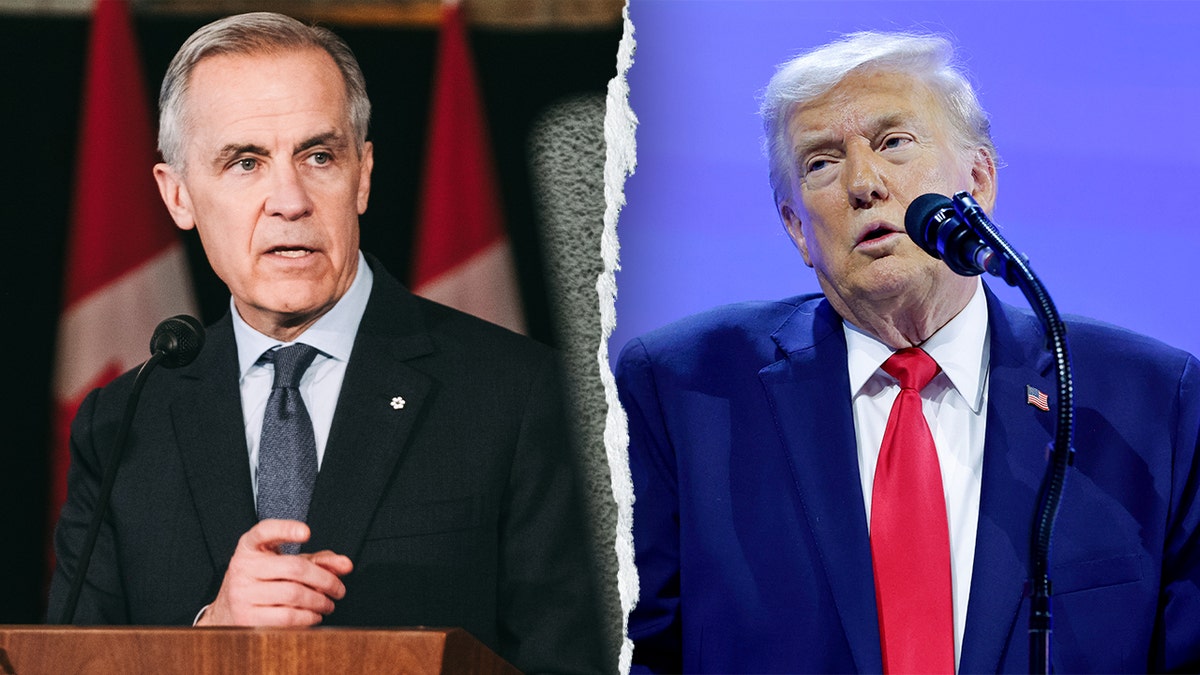
Domestically, Carney linked this assertive posture to a broader national agenda. His government has removed federal barriers to interprovincial trade, unlocked hundreds of billions in nation-building investment, committed to doubling defense spending by the end of the decade, and prioritized strategic sectors such as artificial intelligence, quantum computing, cybersecurity, and critical minerals. The message was clear: sovereignty is not symbolic—it is economic, technological, and strategic.
What unsettled Washington most was not criticism, but vision. Carney described Canada as both a bastion—secure, resilient, capable—and a beacon—open, democratic, and diverse in an era of rising nationalism. He positioned Canada as proof that accessibility and strength are not opposites. In doing so, he closed a chapter in bilateral relations: the era of Canada adjusting itself to meet American expectations. Canada is not ending its relationship with the United States—but it is ending the habit of being talked down to.