By XAMXAM
For much of the year, Washington’s posture toward Ottawa carried a familiar edge: tariff threats, talk of “reciprocity,” and the insinuation that Canada’s economic dependence would eventually force compliance. Then, without a signing ceremony or even a crisp statement, the tone softened.

In the ecosystem that surrounds T.r.u.m.p, the shift was framed as temperament — a personal thaw, a grudging respect for Prime Minister Mark Carney. But in the account now circulating among market watchers and industry executives, it looked less like diplomacy than arithmetic. The cost of confrontation, they argue, began landing at home.
The observation gained traction after a remark by the economist David Rosenberg, who said that “whether you like it or not,” T.r.u.m.p had “chosen to like” Carney. In Rosenberg’s telling, the phrase was not about affection. It was about leverage — and the moment when leverage turns.
On the surface, Canada should have been vulnerable. It is a smaller economy, trade-dependent, deeply integrated with American supply chains. Yet several of the most politically sensitive Canadian exports remained sheltered by existing trade rules, limiting the reach of the tariff weapon that has defined T.r.u.m.p’s economic style. And as the threat environment intensified, Canada’s underlying signals strengthened in ways that constrained Washington’s room to escalate.
The most visible cue was in currency markets. The Canadian dollar, long treated as a proxy for sluggish growth and housing-fueled fragility, pushed to multi-month highs against the U.S. dollar, a move traders read as confidence in Canada’s relative stability. The divergence in monetary policy added force. The Bank of Canada held its policy rate steady at 2.25 percent, even as the U.S. Federal Reserve moved to cut rates to steady a slowing American economy.
That spread mattered. So did the improvement in Canada’s terms of trade — the quiet but powerful metric that captures what a country earns for its exports relative to what it pays for imports. Base metals rebounded. Oil regained momentum. For Canada, a resource exporter that often looks strongest when the world is re-industrializing, the mix was supportive. For the United States, where tariffs raise input costs and ripple quickly through consumer prices, the mix was perilous.
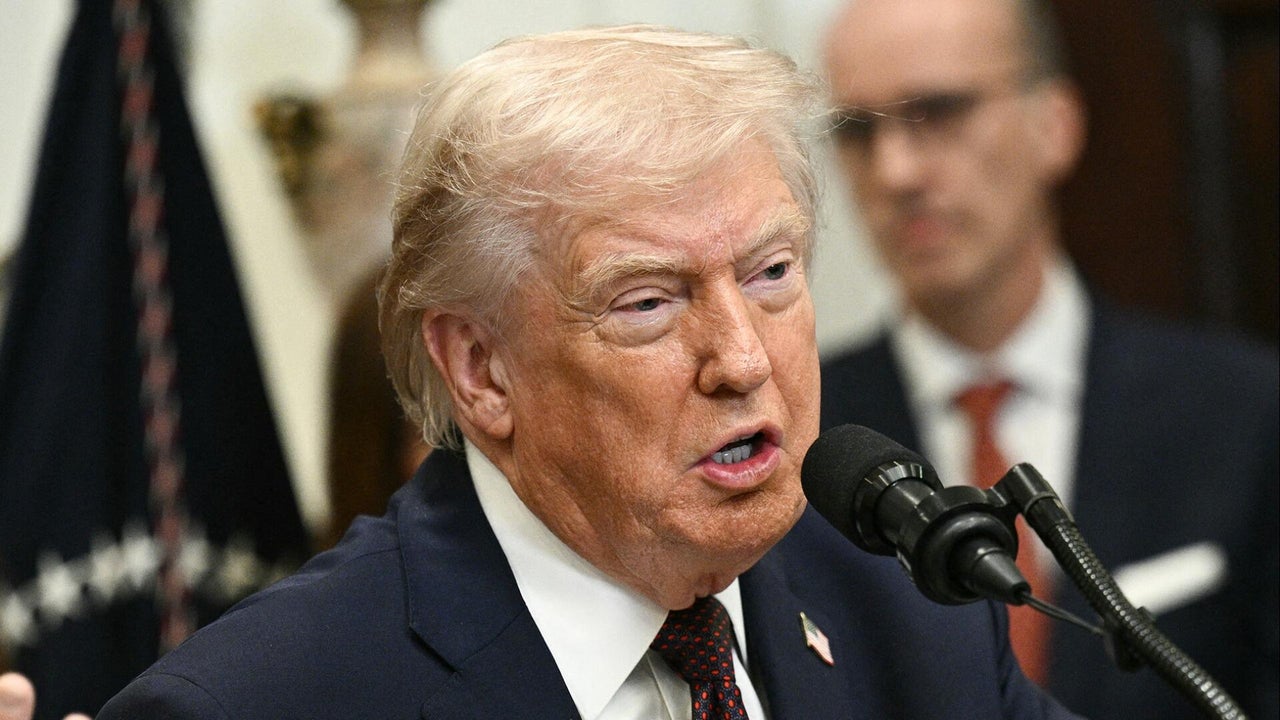
This is where the politics begins to show. Tariffs can be sold as toughness, but inflation is felt as betrayal. The more a new round of duties threatened to raise prices for American households — at the grocery store, the gas station, the auto lot — the more the “pressure Canada” strategy risked boomeranging into the domestic narrative T.r.u.m.p cares about most: personal economic pain.
The White House did not announce a reversal. It simply stopped following through on some of the most aggressive reciprocal tariffs it had been signaling — a silence that analysts read not as restraint but as calculation. When escalation stops hurting the other side more than it hurts you, it becomes harder to justify, even for a president who performs dominance as policy.
Canada, meanwhile, did not meet threat with threat. It widened its margin of safety.
One pivot took shape inside an industry that has long been treated as a shared North American project: autos. Canadian parts makers, deeply exposed to U.S. demand, have watched American volumes wobble under tariff uncertainty and investment delays. In a candid interview on Canadian television, Flavio Volpe, who leads the Automotive Parts Manufacturers’ Association and advises the Carney government, described a scenario that terrifies suppliers: U.S. automakers cutting output as costs rise and planning becomes impossible.
His point was blunt. If Canada stays attached to a sinking system, it sinks too. And Canada, he suggested, is preparing to detach.
The pathway is not to abandon the United States — geography makes that fantasy — but to build optionality. Volpe pointed to the pandemic-era lesson when Canadian factories retooled rapidly to produce ventilators, protective equipment and other urgent goods. The muscle memory is back. Suppliers are scouting defense components, aerospace tooling, robotics, battery systems — high-precision work where reliability and certification matter more than political theater.
Carney’s government is reinforcing that shift with procurement policy. Public spending, officials have indicated, will lean more heavily toward Canadian production when domestic capability exists. This is not framed as anti-American; it is framed as risk management. A partner that weaponizes trade, the argument goes, cannot be treated as a dependable default supplier.
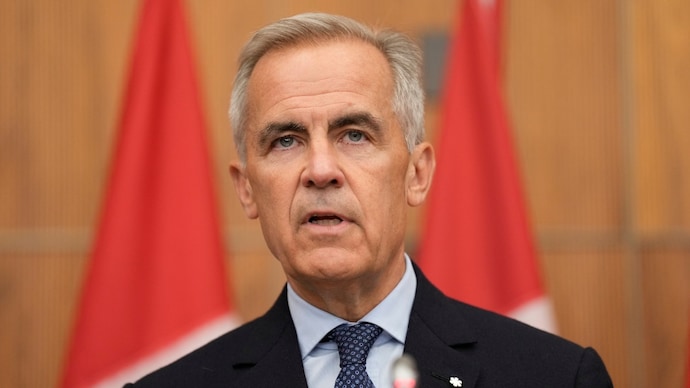
The most consequential turn may be rhetorical. Carney has described the old era of ever-closer economic integration with the United States as “over,” calling the break a “rupture.” The term is striking precisely because it implies permanence. A slowdown can be negotiated away. A rupture suggests that policy unpredictability has become structural — embedded in the American system, not confined to one administration.
If Carney’s language is severe, so is the estimate attached to it: the combined hit from tariffs and U.S.-driven uncertainty, he has argued, could cost Canada about 1.8 percent of GDP — roughly $50 billion — a figure meant to translate geopolitics into household reality.
That diagnosis also explains why the shift in Washington’s tone arrived without fanfare. It is easier to claim you “like” a counterpart than to admit the opposite: that your favored weapon is now constrained by markets, by prices, by the political limits of inflation.
In the coming months, the central question may not be whether Canada can avoid pressure, but whether it can finish the pivot it has begun — building domestic resilience, diversifying markets and treating resources and energy as strategic assets rather than passive endowments.
T.r.u.m.p may still posture. But the episode suggests a truth that is often obscured by the theater of trade wars: power does not only move through speeches. It moves through currencies, supply chains and the slow, decisive choices governments make when they decide not to be cornered again.