By XAMXAM
The decision arrived with the bluntness of a rally chant and the mathematics of a balance sheet: T.r.u.m.p said he would double tariffs on imported steel and aluminum to 50 percent. In the political telling, it was another assertion of toughness, a promise to wall off domestic industry from foreign competition. In the industrial reality, it was something else — a sudden tremor through a supply chain so integrated that “foreign” and “domestic” have long been welded together.

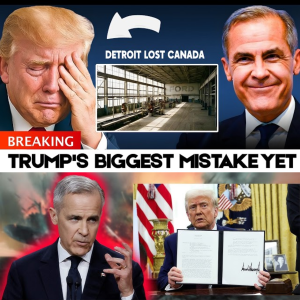
In Detroit, where the modern automobile is less a product than a choreography of parts, costs and timing, the first shock was not ideological. It was operational.
Steel is not simply a raw material for carmakers; it is the backbone of scheduling. Stamping plants rely on steady deliveries of coil and sheet to keep presses running. Assembly lines assume those stamped pieces arrive in rhythm. When that rhythm breaks, shutdowns can happen with little warning, and the consequences cascade outward — from suppliers and logistics contractors to diners and daycare centers that orbit factory shifts.
That is why the tariff move reverberated beyond trade lawyers and television panels. It hit the places where a “policy signal” becomes an idled shift.
The North American steel relationship has always been less like a buyer-seller arrangement than a shared circulatory system. Canada’s mills feed American manufacturers; American demand supports Canadian capacity; both sides benefit from proximity and predictability. The tariff escalation introduced the opposite: higher costs and uncertainty — the two things manufacturers spend fortunes trying to avoid.
If the United States wanted to squeeze imports, the logic went, domestic producers would step in. But the automotive sector doesn’t switch sources the way consumers switch brands. Specifications, metallurgy, certification, delivery logistics and long-term contracts are the hidden architecture of industrial life. “Just buy American” sounds simple until you remember that “American” cars already contain steel that crosses the border and returns again, sometimes more than once, before a vehicle is finished.
Then Canada moved.

The striking feature of Ottawa’s response, at least as presented by its supporters, was not a theatrical counterpunch. It was a pivot: protect the home market, accelerate industrial modernization, and broaden the export map. In that narrative, Canada stopped behaving like a supplier waiting for U.S. orders and started behaving like a country with options.
The details mattered. Rather than merely complain about tariffs, the Canadian government cast its response as industrial strategy: investing in cleaner production, tightening rules on steel entering Canada from countries without free-trade agreements, and using public procurement to favor domestic steel in infrastructure and large projects. Provinces signaled similar intentions, reinforcing the idea that the Canadian market would not become a dumping ground.
There is a contemporary logic to that approach, especially in a world where trade policy increasingly overlaps with climate policy. European regulators have been building toward carbon border measures that reward lower-emissions production and penalize dirtier steel. If Canada can credibly brand its output as cleaner — because of its electricity mix and production methods — it can position itself not just as a North American supplier but as a premium exporter into markets where carbon accounting is becoming a form of tariff by another name.
For American automakers, this is where a trade dispute becomes a cost crisis. They do not merely buy steel; they buy steel that meets exact standards at exact times. If tariffs inflate those costs and Canadian producers find better margins elsewhere — or choose to prioritize domestic commitments — Detroit’s vulnerability is not theoretical. It’s measured in the price of a truck, the margin on a sedan, the willingness to greenlight the next investment in a stamping line or battery plant.
In Washington, the tariff increase was framed as a defense of workers. In Michigan, the effect can feel like a tax on production.

A pickup truck, after all, is a political symbol and a steel-intensive object. Raise steel costs and you pressure the very consumer segment that has sustained American automakers for decades. Prices at dealerships don’t rise because executives feel ideological; they rise because inputs do. When sticker prices climb, demand softens at the edges. When demand softens, overtime shrinks. When overtime shrinks, families notice.
The most consequential aspect of Canada’s response, though, may not be steel at all. It may be the lesson about leverage. The modern North American economy was built on the assumption that the United States is the gravitational center and Canada the dependable orbit. But when policy volatility becomes routine, businesses and governments look for ways to reduce reliance on the most unpredictable variable. If Canada can demonstrate that it has alternative buyers, alternative corridors and an industrial plan that aligns with future trade rules, it can turn a tariff shock into a long-term rebalancing.
That doesn’t mean Detroit collapses, or that the United States loses its industrial base overnight. It means something subtler: a shift in bargaining power and investment momentum. Those shifts often happen quietly, then suddenly feel permanent.
The tragedy, as always, is that workers experience these changes as anxiety long before politicians experience them as accountability. A tariff announcement is instant; an industrial adjustment is slow. But layoffs, frozen hiring and paused expansion can arrive fast.
In the end, the steel story is less about who “won” a round and more about what kind of economy North America wants to be. If policy is designed as spectacle, supply chains respond like systems under stress: they reroute, they hedge, they seek stability elsewhere. And in a region where Canada and the United States built decades of shared industrial infrastructure, the first shockwaves of a trade war do not stop at the border.
They show up in Detroit.