Washington—A tense Senate confrontation has erupted into a broader controversy over power, accountability, and the integrity of federal law enforcement after Sen. Sheldon Whitehouse publicly challenged FBI Director Kash Patel over what he described as a disturbing “enemies list” pattern—one that appears to track a sequence of adverse actions taken against individuals named on that list.
The exchange, which unfolded during a high-stakes oversight hearing, quickly escalated beyond partisan sparring. Whitehouse pressed Patel on two fronts: first, the existence and consequences of an alleged enemies list; and second, Patel’s prior testimony claiming that court orders prevented him from discussing his own grand jury testimony—an assertion later contradicted by the presiding judge.
Taken together, the moments have triggered alarms across Capitol Hill, raising questions about candor under oath, the politicization of federal power, and whether internal accountability mechanisms are functioning as intended.
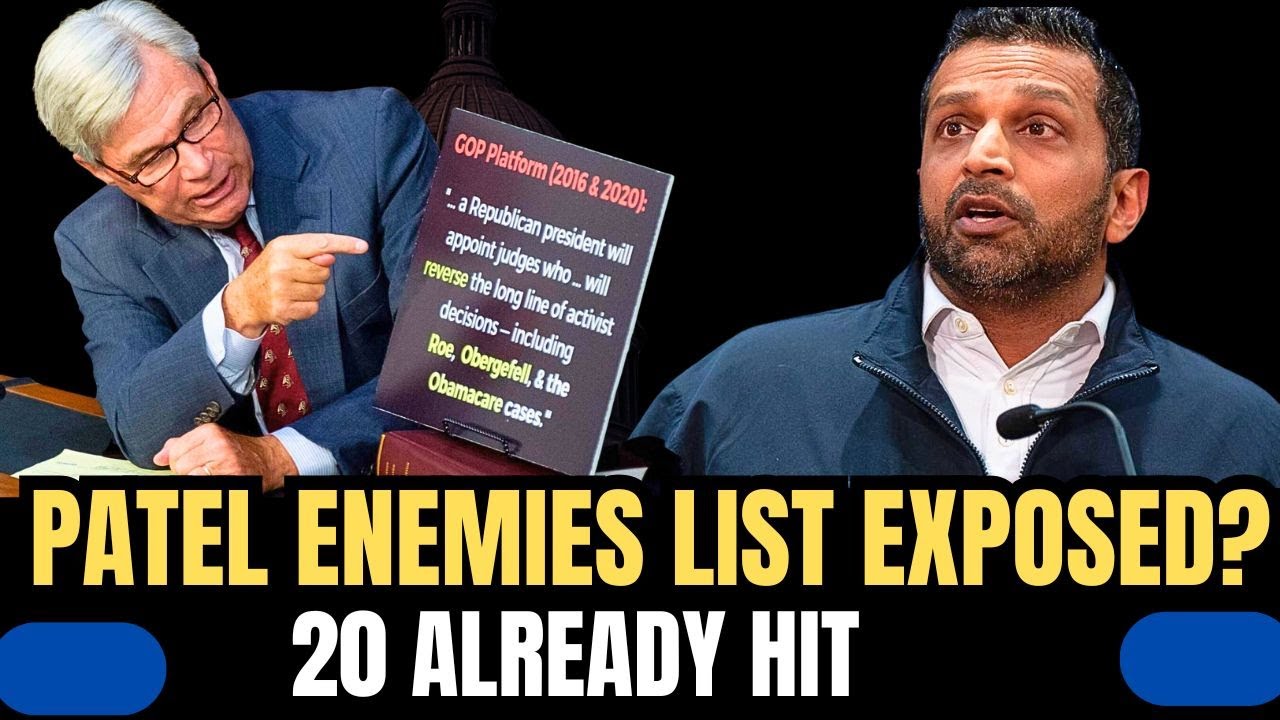
The “Enemies List” Allegation
Whitehouse’s core allegation centered on a document or compilation—referred to by critics as an “enemies list”—that reportedly named dozens of individuals perceived as political or institutional adversaries. According to Whitehouse, a striking pattern emerged: many of the people listed subsequently faced investigations, professional sanctions, or other adverse actions tied to federal processes.
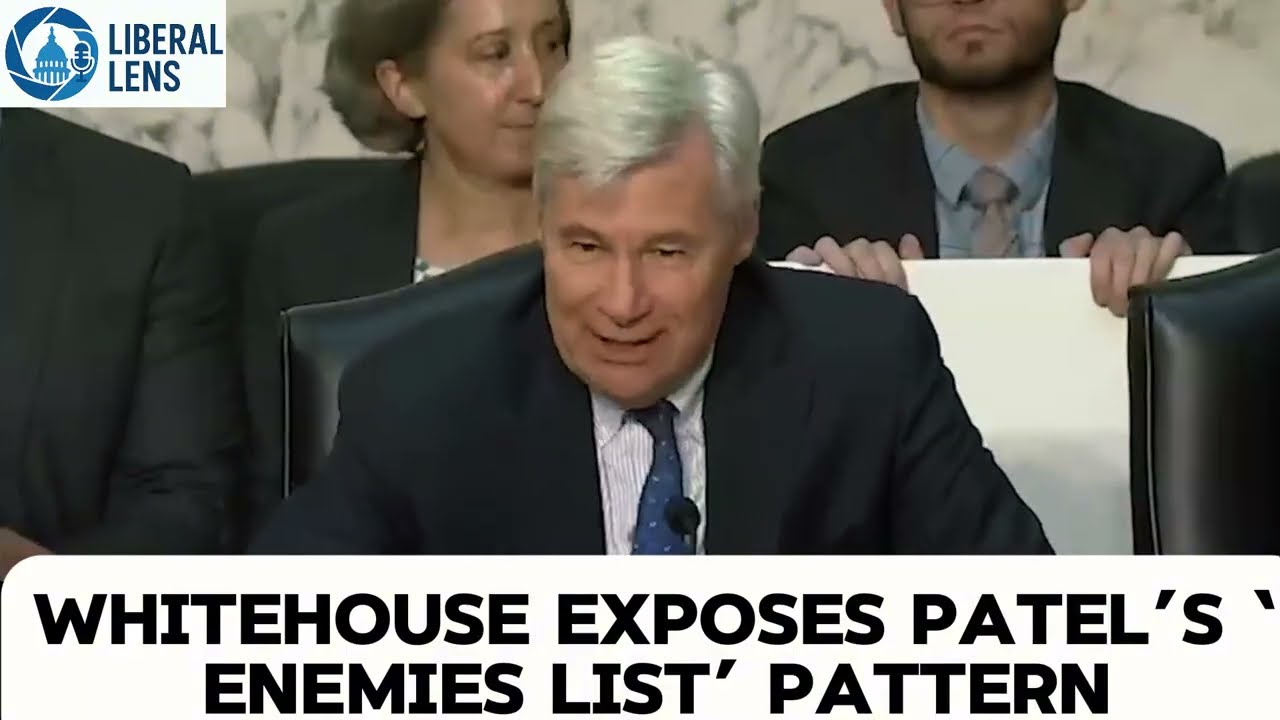
“This isn’t about coincidence,” Whitehouse argued, citing what he characterized as a recurring sequence that warrants scrutiny. “When names appear on a list and consequences follow, oversight is not optional—it is mandatory.”
Patel rejected the premise, pushing back on the notion that the FBI or its leadership maintained any retaliatory targeting mechanism. He emphasized that investigative decisions are guided by evidence and legal thresholds, not personal animus or political considerations.
Still, the senator was unsatisfied. He pointed to timelines, internal communications, and overlapping personnel involved in cases affecting those allegedly listed, suggesting at minimum the appearance of impropriety. For Whitehouse and other Democrats on the panel, appearances matter—especially when public trust in federal institutions is already strained.
A Testimony Contradicted
If the enemies list allegations set the tone, the contradiction involving Patel’s earlier testimony raised the temperature.
Whitehouse reminded the committee that Patel had previously stated—under oath—that court orders prevented him from discussing aspects of his own grand jury testimony. That claim, Whitehouse said, collapsed when the presiding judge later clarified on the record that no such prohibition existed.
The implication was stark: either Patel misunderstood a basic legal constraint governing his own testimony, or he misrepresented the facts to Congress.
Patel defended himself by citing confusion around sealed proceedings and legal advice he said he received at the time. He stopped short of acknowledging any error, insisting there was no intent to mislead and no violation of congressional rules.
But legal experts watching the hearing were less forgiving. A misstatement about judicial restrictions—particularly one later contradicted by a judge—can expose witnesses to further scrutiny, including referrals for clarification or, in extreme cases, investigations into false or misleading testimony.
Broader Stakes for the FBI
Beyond the personalities involved, the confrontation underscores a deeper institutional dilemma. The FBI sits at the crossroads of law enforcement and politics, tasked with operating independently while remaining accountable to elected officials. Any suggestion that lists are being compiled—or perceived to be compiled—for retaliatory purposes threatens that delicate balance.
Republicans on the committee accused Whitehouse of weaponizing oversight to score political points, arguing that the hearing itself exemplified the politicization Democrats claim to oppose. They framed Patel as a target of partisan hostility rather than a perpetrator of misconduct.
Democrats countered that oversight is not harassment—and that transparency is the price of public power.
“This is about patterns, not personalities,” one Democratic aide said after the hearing. “If leadership can’t clearly explain how decisions are made, Congress has a duty to dig deeper.”
What Comes Next
The immediate fallout is likely to include formal follow-up questions submitted for the record, requests for documents, and potential witness recalls. Some lawmakers are already discussing whether the alleged contradictions warrant an independent review or referral to the Senate Ethics Committee for further examination.
Meanwhile, the FBI faces renewed pressure to demonstrate that its internal controls prevent political influence from shaping investigative outcomes. For an agency whose credibility rests on perceived neutrality, the stakes could not be higher.
As Washington digests the implications of the hearing, one reality is clear: the clash between Whitehouse and Patel has reopened unresolved debates about power, truthfulness, and accountability at the highest levels of government. Whether this episode fades into partisan noise—or triggers substantive consequences—will depend on what the paper trail reveals next.