Ford Pushes Back as Trump Floats 15 Percent Tariff, Raising Stakes in North American Trade
TORONTO — Trade tensions between Canada and the United States sharpened this week after President Donald Trump raised the possibility of imposing a sweeping 15 percent global tariff, a move that could reverberate across North America’s deeply integrated manufacturing and energy sectors.
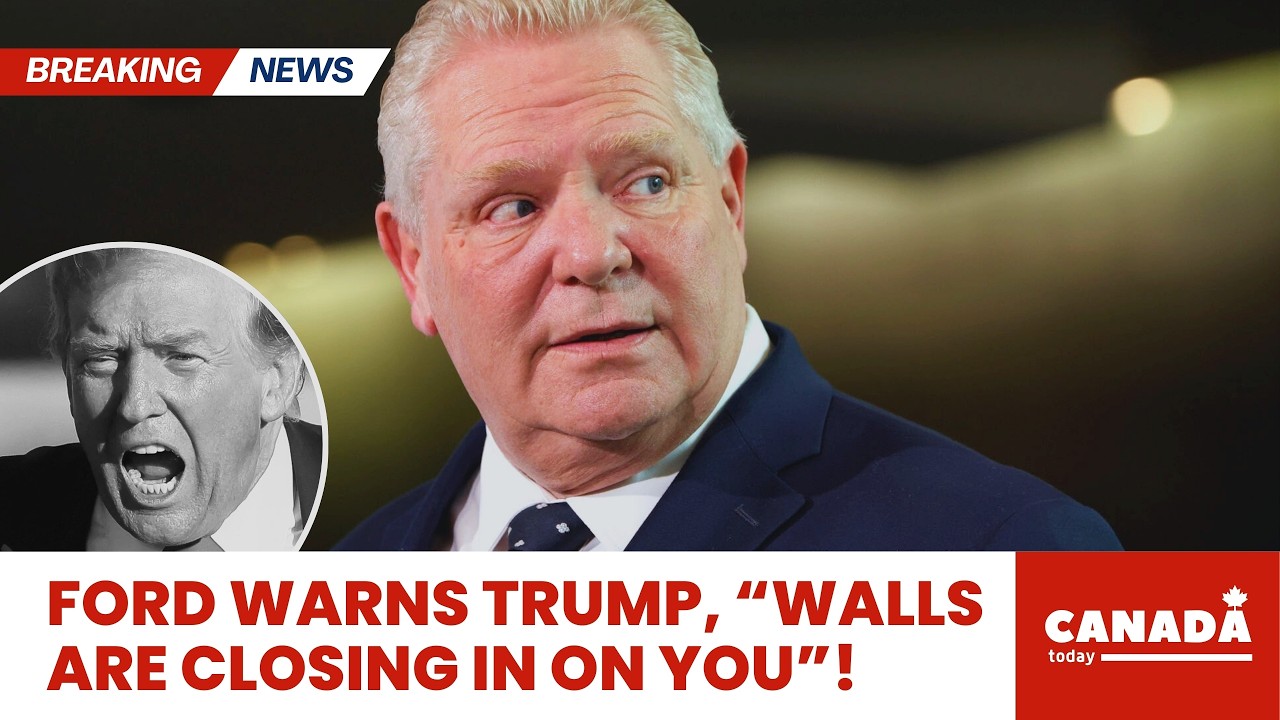
In unusually direct remarks, Ontario’s premier, Doug Ford, questioned the volatility surrounding Washington’s trade posture and signaled that Canada would not rush into negotiations under pressure. His comments came amid mounting uncertainty over U.S. tariff authority following a recent Supreme Court decision that constrained aspects of executive trade power and as Congress debates related measures.
“How can one person create so much turmoil around the world?” Mr. Ford said during a press conference, referring to the ripple effects of tariff threats on global markets. While he did not outline specific retaliatory measures, he made clear that Ontario — and by extension Canada — would proceed cautiously.
The dispute arrives at a delicate political moment. With U.S. midterm elections approaching, trade policy is increasingly entangled with domestic political strategy. Mr. Trump has long championed tariffs as leverage, arguing they protect American workers and rebalance trade relationships. Supporters frame the proposed 15 percent tariff as a negotiating tool designed to extract concessions and secure more favorable bilateral arrangements.
Critics, however, warn that broad-based tariffs risk functioning as taxes on consumers and supply chains, particularly in regions where cross-border production is tightly synchronized. Ontario alone is a major destination for American exports; provincial officials frequently cite that millions of U.S. jobs are linked, directly or indirectly, to trade with Canada.
Mr. Ford underscored that point, emphasizing the degree of industrial integration between the two countries. Automotive components, agricultural products, energy resources and manufactured goods often cross the border multiple times before reaching final assembly or retail shelves. “Tariffs on Canada are not punishment for Ottawa,” he suggested. “They are costs borne on both sides.”
The premier also cautioned against haste in striking a deal. “No deal is better than a bad deal,” he said, referencing other countries that have entered rapid tariff agreements only to see terms shift later. The remark appeared aimed at signaling resolve rather than escalation, framing patience as leverage rather than defiance.
Canadian officials have been careful to present a coordinated front. Prime Minister Mark Carney, whose background in global finance lends weight to Ottawa’s economic messaging, has stressed stability and rules-based trade. While Mr. Ford’s tone was blunt, Mr. Carney’s office has emphasized consultation and institutional channels, reinforcing the message that Canada views tariff threats as serious but manageable within established frameworks.
The tension is layered atop legal uncertainty in Washington. The Supreme Court recently narrowed aspects of executive discretion under certain trade statutes, prompting debate over how far unilateral tariff authority extends. Though the ruling did not invalidate existing duties wholesale, it injected fresh scrutiny into how trade powers are exercised — and how Congress may respond.
On Capitol Hill, lawmakers remain divided. Some Republicans have defended the president’s aggressive posture as essential to maintaining bargaining strength. Others have expressed concern about unpredictability in global markets. Democrats, meanwhile, argue that frequent tariff threats contribute to volatility and undermine long-term planning for businesses.
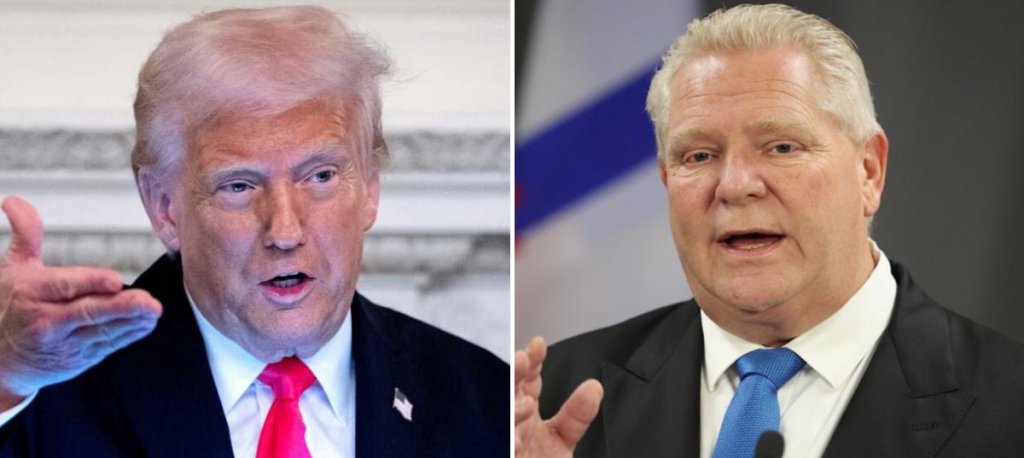
For Ontario, the practical implications are immediate. The province’s economy relies heavily on manufacturing exports to the United States, particularly in autos and steel. Energy flows and critical mineral development — sectors Ottawa has prioritized in response to global supply chain realignment — could also be affected if duties expand beyond rhetoric.
Mr. Ford described the moment as akin to “an economic war,” language that conveys urgency but stops short of formal retaliation. He called for accelerated project approvals, streamlined regulation and faster private-sector mobilization — measures intended to insulate Ontario from potential external shocks.
Economists caution that while tariffs can offer short-term leverage, they carry broader macroeconomic consequences. Even the prospect of new duties can influence currency markets, investment flows and corporate decision-making. For consumers, especially in inflation-sensitive environments, additional import costs can amplify price pressures.
Yet trade disputes between the United States and Canada have historically been cyclical rather than permanent. Disagreements over softwood lumber, dairy quotas and steel tariffs have flared and cooled across administrations. The U.S.-Mexico-Canada Agreement (USMCA) remains the governing framework, and both governments have signaled that it continues to function as the structural backbone of continental commerce.
The political dimension, however, complicates timing. As midterms approach, trade messaging intersects with voter anxieties about prices, jobs and economic sovereignty. Whether the 15 percent tariff proposal evolves into concrete policy or remains rhetorical leverage may depend as much on domestic political calculus as on bilateral negotiation.
For now, Canada’s message appears calibrated: caution without capitulation, coordination without theatrics. Mr. Ford’s remarks — amplified across American media outlets — suggest an effort not only to address Ottawa’s concerns but also to speak directly to U.S. audiences about shared economic interests.
In cross-border trade, escalation is rarely cost-free. The question facing both capitals is whether tariff brinkmanship yields strategic gain — or whether it risks destabilizing a partnership that has, for decades, underpinned North American economic integration.