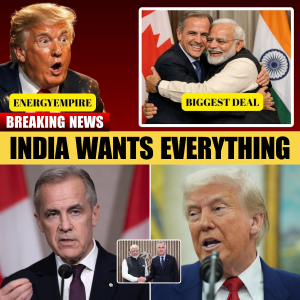
When former President Donald Trump declared this week that the United States–Mexico–Canada Agreement was “over” and suggested that it would expire next year, the remark reverberated far beyond campaign rhetoric. Within hours, agricultural groups, auto manufacturers and currency traders were seeking clarity on whether the legal foundation of North America’s $1.6 trillion trading relationship was in jeopardy — or whether the statement reflected a political strategy rather than a policy shift.

The agreement, known in Canada as CUSMA and in the United States as the USMCA, does not expire next year. It includes a scheduled joint review clause in 2026, designed to assess performance and consider updates, but it remains in force unless one of the three member countries formally withdraws. Trade lawyers noted that terminating the pact would require a complex legal process and would likely face resistance from Congress and industry groups. Even so, Mr. Trump’s comments unsettled markets because they revived memories of the tariff battles and renegotiations that marked his first term.
Prime Minister Mark Carney responded within hours, striking a markedly different tone. Speaking in Ottawa, he described the agreement as “foundational to continental prosperity” and emphasized that Canada was prepared for the scheduled review but not for dismantlement. According to senior Canadian officials, Mr. Carney also initiated quiet consultations with Mexican counterparts and senior U.S. lawmakers to reinforce institutional support for the agreement. His approach, aides said, was intended to reassure markets and demonstrate that trade stability would not be dictated by campaign-season rhetoric.
The contrast underscored deeper political and economic currents. Mr. Trump has long argued that North American trade arrangements disadvantage American workers, particularly in manufacturing. In recent speeches, he has revived language portraying Canada and Mexico as beneficiaries of unfair terms. Economists across the political spectrum dispute that characterization, noting that supply chains in autos, agriculture and aerospace are deeply integrated and that American exporters rely heavily on Canadian and Mexican markets. “The United States sells more to Canada and Mexico than to China, Japan and Germany combined,” said one trade analyst at a Washington think tank. “Undoing the framework would create significant domestic costs.”
Industry groups moved swiftly to dampen uncertainty. The American Farm Bureau Federation issued a statement urging policymakers to maintain continuity, warning that Canada and Mexico represent the largest export markets for U.S. agricultural goods. Automotive associations highlighted that parts can cross borders multiple times before a vehicle is assembled, making predictability essential. In Canada, manufacturers echoed those concerns, cautioning that investment decisions hinge on long-term stability.
Financial markets reflected the tension, though not panic. The Canadian dollar dipped briefly before stabilizing, and equity markets showed modest volatility in sectors with high cross-border exposure. Analysts said investors appeared to distinguish between campaign rhetoric and imminent legal action, but cautioned that repeated challenges to trade frameworks can erode confidence over time. “Uncertainty functions like a tax,” said a senior strategist at a global investment firm. “Even if nothing changes immediately, the perception of risk can delay investment.”

The episode also unfolded against a broader backdrop of geopolitical strain. Relations between Washington and Ottawa have been complicated by renewed tariffs on selected goods and by disputes over energy policy and defense spending. At the same time, Canada has sought to diversify trade relationships, expanding ties with the European Union and pursuing new agreements in the Indo-Pacific. Some observers view Mr. Carney’s measured response as part of a longer-term strategy to reduce vulnerability to abrupt policy shifts in Washington.
Domestically, the political resonance differs on each side of the border. In the United States, skepticism of trade agreements remains potent in certain regions, particularly in industrial states that experienced job losses over past decades. In Canada, the agreement is broadly seen as essential to economic security. Mexican officials, for their part, reiterated their commitment to the pact and signaled willingness to engage constructively in the 2026 review process.
Trade experts caution that the upcoming review could become a focal point for renegotiation pressures. The original agreement includes provisions that require all three countries to affirm their participation; failure to do so could trigger expiration after 16 years. While that mechanism was designed to encourage periodic modernization, it also provides leverage to any government seeking concessions. “The review was meant to strengthen the pact,” said a former U.S. trade negotiator. “But in a polarized environment, it can be reframed as an exit ramp.”
For now, the institutional architecture of North American trade remains intact. Yet the episode illustrates how quickly stability can be questioned in a climate of political volatility. Mr. Carney’s effort to project calm reflects a recognition that markets and allies are attentive not only to formal policy but to tone and intent. Whether the rhetoric surrounding CUSMA becomes a bargaining tactic, a campaign motif or a precursor to substantive change will depend on political calculations in Washington as much as on economic logic.
What is clear is that the agreement’s durability is no longer taken for granted. As the 2026 review approaches, businesses and governments alike are preparing for a period of negotiation that could test the resilience of a framework built on interdependence. The tremor that began with a single phrase may yet subside — or it may foreshadow a more consequential debate about the future of continental integration.