By XAMXAM
WASHINGTON — The new signage went up quickly, bold letters affixed to stone with the confidence of permanence. But on Capitol Hill this week, the message from the United States Senate was unmistakably slower, quieter, and far more consequential: a sign is not a law.

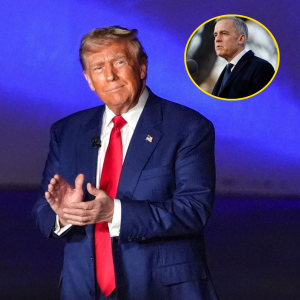
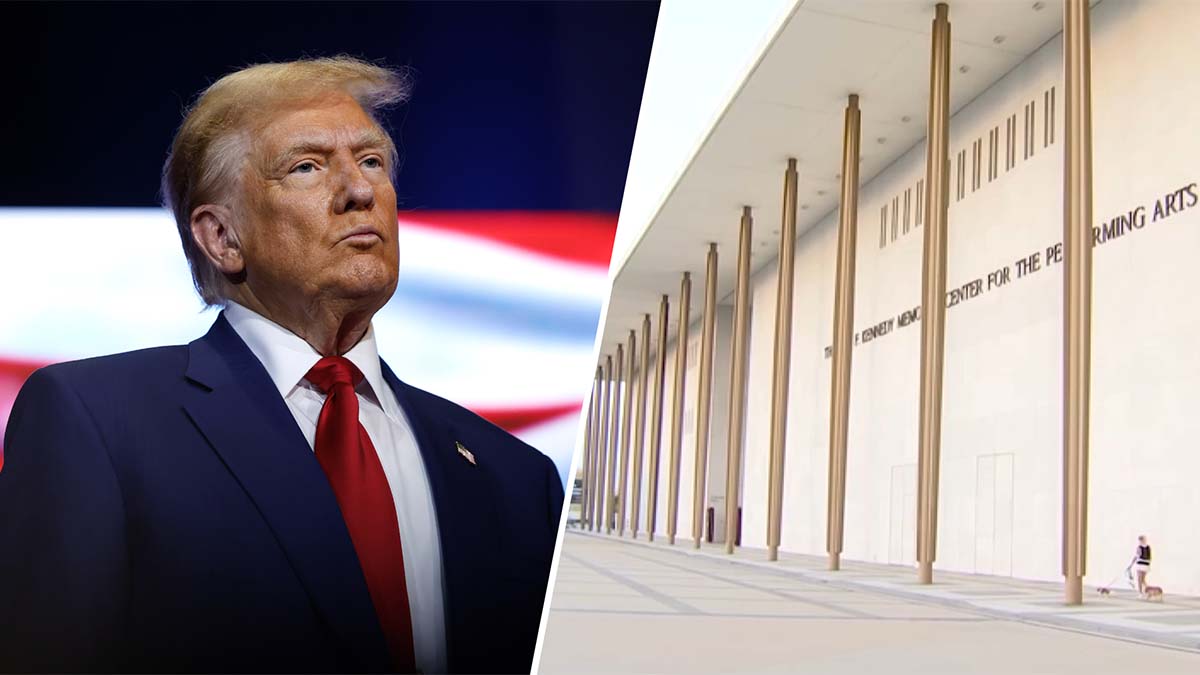
President Trump’s effort to attach his name to the John F. Kennedy Memorial Center for the Performing Arts has run into a wall of institutional resistance, exposing the limits of spectacle when it collides with statutory authority. While the building’s façade briefly suggested a fait accompli, lawmakers from both parties have made clear that renaming a congressionally designated national memorial is not something a board vote or branding rollout can accomplish on its own.
The backlash was swift. Members of the Kennedy family condemned the move as disrespectful and ahistorical, while legal scholars and legislators emphasized a basic point of governance: the Kennedy Center was created and named by Congress, and Congress retains control over its formal designation. Without legislative action, they argue, the official name remains unchanged, regardless of what appears on a marquee or website.
At the heart of the dispute is not only Donald Trump’s polarizing presence, but a deeper question about power and precedent. Can a sitting president, through loyal appointees and administrative maneuvering, effectively rebrand a national memorial to honor himself while still in office? Or does such an attempt represent an overreach that undermines the stability of civic institutions meant to transcend political cycles?
The Senate’s answer, at least for now, is no.
Unlike the House, where leadership can move quickly if it chooses, the Senate is designed to resist haste. Any effort to formally rename the Kennedy Center would require legislation, committee consideration, floor time, and, in most cases, a supermajority to overcome procedural hurdles. There is no indication that such support exists. In fact, there is little appetite among senators to engage what many privately describe as a vanity fight that risks opening the door to endless partisan relabeling of national landmarks.

That reluctance reflects more than political calculation. It reflects concern about normalization. If one administration can attach its brand to a memorial by stacking a board and acting first, what stops the next from undoing it just as casually? The result would be a civic landscape in constant flux, where monuments become trophies exchanged every four or eight years.
“This isn’t about liking or disliking a president,” one senator said privately. “It’s about whether national memory is stable or transactional.”
The administration’s strategy followed a familiar pattern: move fast, dominate the visuals, and create an impression of inevitability. By the time critics object, the argument goes, the change already looks real. But government does not work the way branding does. Authority flows from law, not optics, and the Senate remains one of the few institutions capable of slowing a spectacle long enough for those distinctions to matter.
Legally, the situation now sits in an awkward limbo. The Kennedy Center’s public-facing materials may reflect a new label, but federal statutes, appropriations language, and official government references still rely on the name established by Congress. That mismatch is not merely symbolic. It affects contracts, oversight, funding mechanisms, and governance — the unglamorous infrastructure that determines what endures once the headlines fade.
Culturally, the reaction has been even sharper. The Kennedy Center occupies a particular place in American life, conceived as a living memorial to a slain president who championed the arts as a unifying force. For many, the idea of a sitting president appending his own name to that legacy feels less like homage than appropriation. The discomfort is heightened by a longstanding norm against memorializing living political leaders at the national level, a norm designed to separate public honor from personal power.
Supporters of the move dismiss the outrage as performative, arguing that names change all the time and that critics are overinvested in symbolism. But symbols are the point. The effort to rename the Kennedy Center was never a quiet administrative tweak; it was a public assertion of ownership. And that is precisely why it triggered resistance.
For now, the Senate’s opposition does not require a dramatic vote or a televised showdown. Blocking, in Washington, often means simply not acting — no hearings, no floor debate, no path forward. Over time, that inaction can be decisive. Bills expire. Momentum dissipates. Administrations change.
What remains is a test of limits. Can branding override law? Can speed overpower process? In this case, the answer appears to be no. The letters on the building may linger, but without congressional approval they lack the force the administration implied.
If history is any guide, the most durable parts of American government are not the loudest. They are the rules that persist when the cameras move on. And on this question, the Senate has reminded the country — and the president — that national memorials are not personal property, and that legacy cannot be declared into existence by signage alone.
:max_bytes(150000):strip_icc():focal(749x0:751x2)/joe-kennedy-iii-donald-trump-121825-23aaeab11e534ec3a62eabfea4859ca4.jpg)