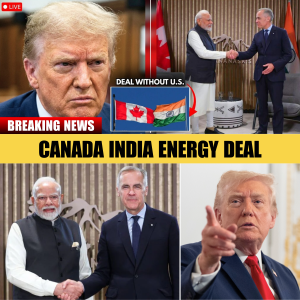
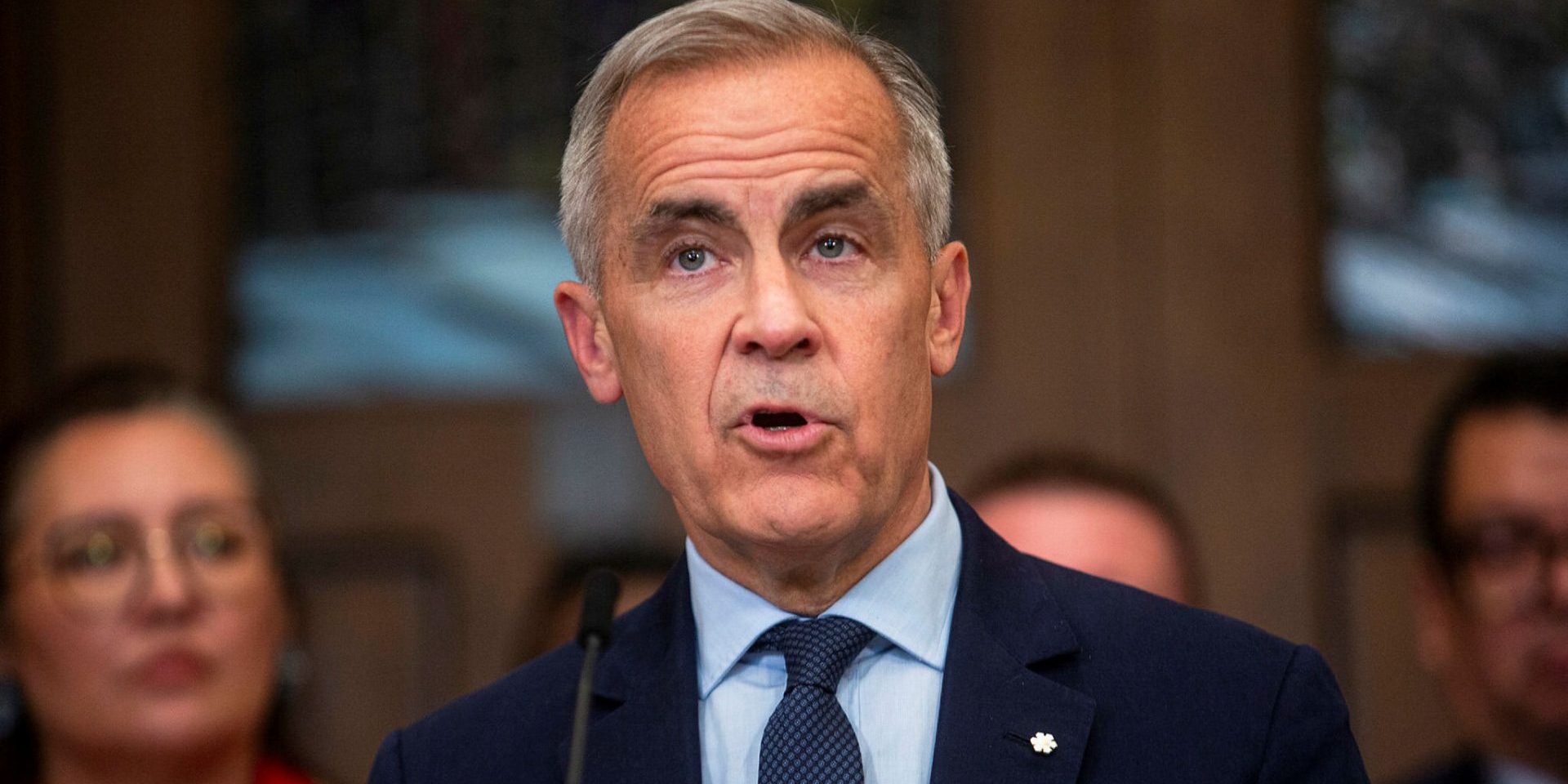
When Prime Minister Mark Carney stepped onto the tarmac in Mumbai this week, greeted by senior Indian officials and a ceremonial welcome that would have been improbable a year ago, the symbolism was unmistakable. Relations between Canada and India had been deeply strained after Ottawa publicly accused New Delhi of involvement in a violent crime on Canadian soil, an allegation that triggered diplomatic expulsions and months of frozen dialogue. Yet the visit now unfolding signals not only a thaw, but a calculated recalibration of Canada’s global economic strategy at a moment of heightened tension with the United States.

The trip comes as President Donald Trump continues to pursue an assertive trade agenda that has unsettled allies and competitors alike. Since beginning his second term, Mr. Trump has revived tariff threats and reshaped trade negotiations in ways that have introduced volatility into long-standing partnerships. Canadian officials, according to people familiar with internal deliberations, have concluded that overreliance on a single market leaves Ottawa exposed to policy swings beyond its control. India, with its rapid economic expansion and vast energy needs, has emerged as a central pillar in Canada’s diversification strategy.
Indian officials were explicit about their interest. Canada, they noted publicly, is an energy superpower that exports the majority of its oil, gas and uranium to one customer. India, by contrast, is one of the fastest-growing major economies in the world and faces mounting demand for energy security. Discussions during the visit included long-term liquefied natural gas contracts, expanded uranium exports for civilian nuclear programs and cooperation on critical minerals essential to battery and clean energy supply chains. While no final agreements were announced, officials described the talks as substantive and forward-looking.
The geopolitical subtext is difficult to ignore. Canada is currently the only Group of 7 nation without a preferential trade agreement with India. The United Kingdom and the European Union have each advanced their own frameworks in recent years, positioning themselves to capture greater access to India’s expanding consumer and industrial markets. Canadian policymakers, aware of that lag, have accelerated efforts to revive negotiations toward a comprehensive economic partnership agreement that stalled amid diplomatic friction.
Analysts say the shift reflects a broader reassessment of Canada’s place in the global order. “What we’re seeing is not an abandonment of the U.S. relationship,” said one former Canadian trade official, “but an acknowledgment that optionality is power.” In practical terms, that means expanding export corridors through the Indo-Pacific, strengthening ties with Japan and Australia, and deepening economic links in the Gulf region. The India visit, in this view, is part of a networked strategy rather than a singular pivot.
India’s calculus is equally pragmatic. New Delhi has long pursued what it calls strategic autonomy — cultivating partnerships across geopolitical blocs without binding itself too tightly to any single power. Canada’s emphasis on stability and predictable regulation, particularly in the energy and mining sectors, offers an attractive complement to India’s industrial ambitions. Moreover, both governments have an interest in reducing vulnerability to abrupt trade measures that can ripple through global supply chains.
Still, the rapprochement carries political sensitivities. The earlier rupture over allegations of Indian involvement in a killing on Canadian soil has not been formally resolved. Security cooperation and intelligence-sharing frameworks remain delicate, and human rights advocates in Canada continue to press for transparency. Diplomats on both sides acknowledge that trust must be rebuilt incrementally, through sustained engagement rather than symbolic gestures.
In Washington, the reaction has been measured but watchful. American officials have long regarded Canada as one of their most integrated economic partners, particularly in energy and defense manufacturing. While there has been no public criticism of the India outreach, analysts in U.S. policy circles note that deeper Canadian energy ties in Asia could gradually rebalance trade flows that have historically run south. For a White House focused on trade leverage, reduced dependence complicates the equation.
The visit also underscores the growing centrality of energy and critical minerals in global diplomacy. As countries compete to secure supplies of lithium, cobalt and uranium for the energy transition, exporters with stable governance and transparent legal systems gain strategic weight. Canada’s investments in export infrastructure — from liquefied natural gas terminals to expanded pipeline capacity — have positioned it to respond to demand from Asian markets more readily than in the past.
Whether this diplomatic reset evolves into a transformative partnership remains uncertain. Trade agreements take years to negotiate, and political winds in both capitals can shift. Yet the optics in Mumbai suggest a broader truth about the current geopolitical moment: middle powers are recalibrating relationships in response to volatility among larger actors. Canada’s outreach to India is less a repudiation of Washington than a recognition that resilience requires alternatives. In an era when economic interdependence is increasingly weaponized, the capacity to diversify may prove as consequential as the alliances that once seemed permanent.