Europe Raises Alarm Over Greenland as U.S. Rhetoric Tests NATO Unity

Copenhagen / Brussels / Washington — Denmark’s parliament convened an emergency, classified session this week to address what officials described as an unthinkable scenario: the possibility that the United States could threaten or use force against Greenland, an autonomous territory within the Kingdom of Denmark and a member of NATO.
The meeting came amid a series of public statements by senior figures aligned with the Trump administration suggesting that “all options are on the table” if Denmark and Greenland do not comply with U.S. strategic demands. Those remarks coincided with the dispatch of a U.S. envoy to Greenland, sharply escalating tensions between Washington and its closest European allies.
What was once dismissed as rhetorical excess is now being treated in European capitals as a genuine security concern.
A Rare Show of European Unity

In response, France, Germany, Italy, Poland, Spain, the United Kingdom, and the Kingdom of Denmark issued a joint statement underscoring the importance of Arctic security and reaffirming the foundational principles of international law.
“Arctic security remains a key priority for Europe and is critical for international and transatlantic security,” the statement said. “The Kingdom of Denmark, including Greenland, is part of NATO. Security in the Arctic must therefore be achieved collectively, in conjunction with NATO allies, including the United States, by upholding the principles of the U.N. Charter, including sovereignty, territorial integrity, and the inviolability of borders.”
The Netherlands’ prime minister formally joined the statement shortly afterward, signaling broad European consensus. Diplomats described the move as unusually direct, reflecting mounting concern that core post–World War II norms are being openly challenged by a leading NATO power.
U.S. Officials Stoke Controversy
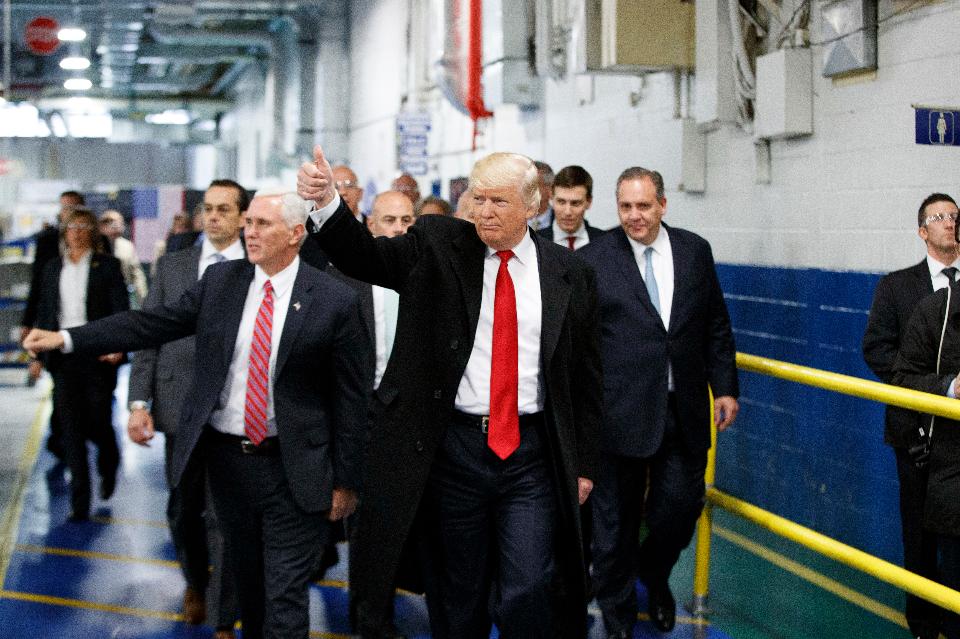
The diplomatic backlash followed a series of television appearances by Jeff Landry, the governor of Louisiana, who has been designated by the Trump administration as its envoy to Greenland. In interviews across major U.S. news networks, Mr. Landry refused to rule out coercive measures, framing the mission as both an economic opportunity and a strategic imperative.
When asked whether Washington was seeking cooperation or annexation, Mr. Landry responded ambiguously, invoking The Godfather to distinguish between persuasion and compulsion: “There’s a way of offering a carrot, and there’s another way of making an offer someone can’t refuse.”
In a separate appearance, Mr. Landry explicitly cited the Monroe Doctrine, arguing that the United States must “dominate the Western Hemisphere” to protect its national security interests. Greenland, he said, fell squarely within that strategic sphere.
The comments alarmed European officials, who viewed them as an unprecedented justification for territorial expansion by force against an allied democracy.
“Greenland Belongs to Its People”

On CNN, Anders Vistisen, a Danish member of the European Parliament, forcefully rejected claims by senior White House adviser Stephen Miller, who questioned Denmark’s legal basis for governing Greenland.
Mr. Vistisen pointed to a 1917 treaty in which the United States formally recognized Danish sovereignty over Greenland as part of the agreement that transferred the U.S. Virgin Islands from Denmark to the United States.
“If the current U.S. administration is in doubt about who owns Greenland,” Mr. Vistisen said, “they can simply consult their own historical records.”
European officials emphasized that Greenland’s political status is determined by its people, in accordance with international law and long-standing agreements between Denmark and Greenland’s autonomous government.
Alarm Bells in Washington
The controversy has also exposed deep divisions within the United States Congress. Senate Majority Leader John Thune suggested that the president’s remarks should not be dismissed as bluster, stating that Washington is prepared to act decisively to protect what it defines as vital national security interests.
“These are not idle threats,” Mr. Thune said, pointing to U.S. actions in Venezuela as evidence that the administration intends to enforce its strategic red lines across the hemisphere.
Democratic senators, however, expressed serious concern following classified briefings with senior administration officials, including Secretary of State Marco Rubio and Defense Secretary Pete Hegseth.
Senate Minority Leader Chuck Schumer said he sought explicit assurances that the United States was not planning military operations against countries such as Cuba, Colombia, or Greenland. “I was very disappointed by their answers,” he said.
Senator Tammy Duckworth went further, drawing parallels to the Iraq War. “We fought a war built on bluster and lies,” she said, warning that similar patterns of arrogance and misinformation could lead to catastrophic consequences.
Canada Steps Forward
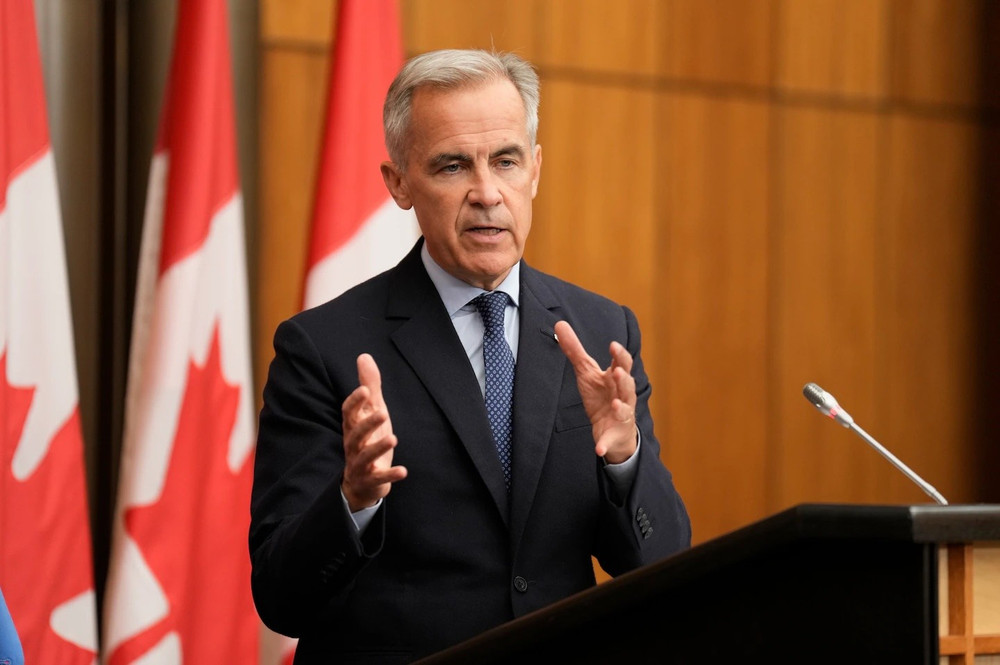
As tensions mounted, Danish Prime Minister Mette Frederiksen met with Canadian Prime Minister Mark Carney in Paris. Both leaders emphasized their shared commitment to Arctic security and NATO principles.
“Canada will always support the sovereignty and territorial integrity of Denmark, including Greenland,” Mr. Carney said in a public statement. The remarks were widely interpreted as a signal that Canada sees itself as a stabilizing force amid growing uncertainty about U.S. intentions.
Video footage of the meeting showed both leaders stressing cooperation, respect for international law, and the importance of collective security in the Arctic region.
Global Reaction Extends Beyond Europe
Concern over U.S. actions was not limited to NATO allies. South African President Cyril Ramaphosa condemned Washington’s military operation in Venezuela and its broader threats against other nations, calling them violations of the U.N. Charter.
“We reject utterly the actions that undermine the territorial integrity and sovereignty of U.N. member states,” Mr. Ramaphosa said, urging the U.N. Security Council to intervene.
A Defining Moment for the Alliance
Analysts say the Greenland dispute may mark a turning point in transatlantic relations. For the first time since NATO’s founding, European allies are openly discussing contingency plans for a scenario in which the alliance’s leading power is perceived as a potential threat rather than a guarantor of security.
Greenland’s strategic location and vast natural resources have long made it geopolitically significant. Now, it has become a symbol of a deeper struggle — over the future of international law, alliance cohesion, and the role of the United States in a rapidly changing global order.
As one European diplomat put it privately, “This is no longer about Greenland alone. It is about whether the rules that have governed the world for generations still apply.”