A move just hit Washington like a cold splash of reality: Canada has secured a place inside the European Union’s €150 billion defence financing machine—SAFE (Security Action for Europe)—a program designed to supercharge European-led weapons production and joint procurement. And the part that’s triggering panic in U.S. defence circles is simple:
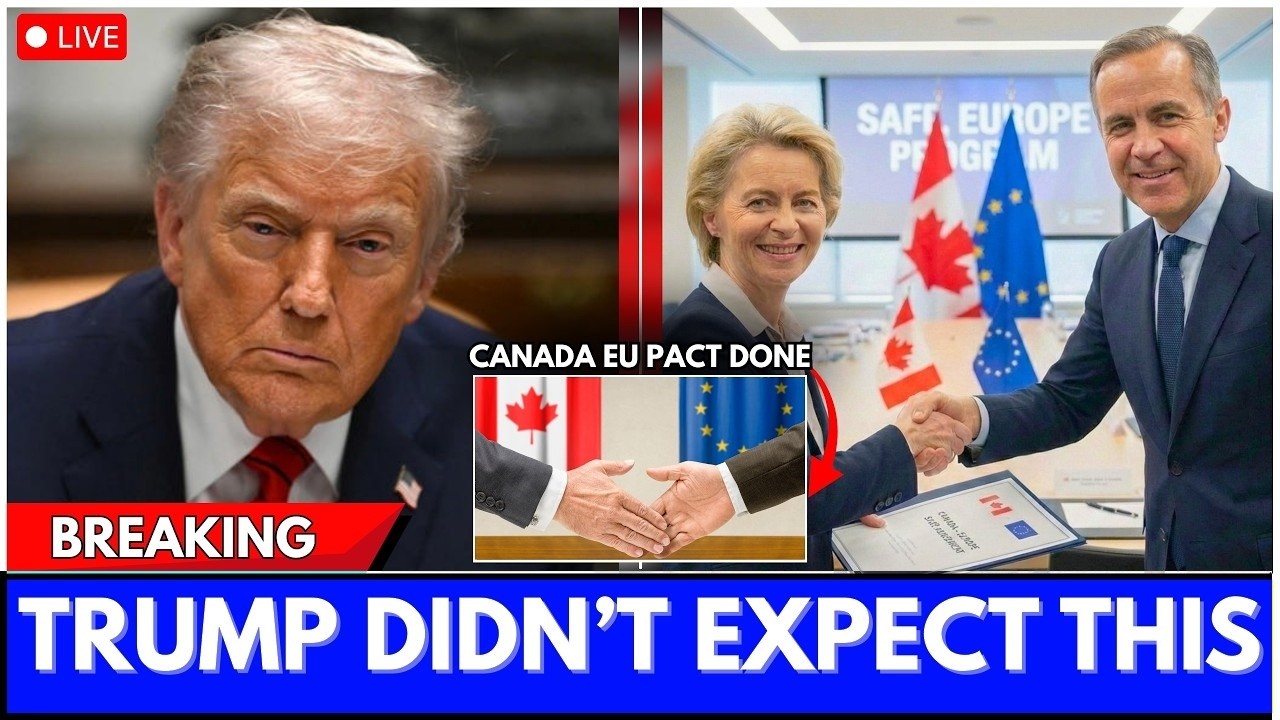
SAFE money is built to stay in Europe.
Meaning: contracts funded through this instrument strongly favor European supply chains—and U.S. defence companies don’t get to compete for those SAFE-financed deals under the program’s rules.
SAFE isn’t a symbolic “partnership agreement.” It’s a real financing and procurement pipeline. The EU can raise up to €150 billion and channel it into common procurement across priority military capabilities—missile defence, drones, ammunition, cyber systems, strategic enablers—while rebuilding the European defence industrial base.
And here’s the key twist: Canada became the first non-European country brought into SAFE, after EU member states endorsed an agreement on Canada’s participation in December 2025.
That matters because SAFE was built on a “Buy European” spine. Reporting and EU explainers describe rules that prioritize production in Europe (often summarized as a 65% European preference in key components), so the spending doesn’t just buy weapons—it builds factories, supply chains, and long-term capacity on European soil.
So when Canada gets access, it’s not just “Ottawa buys European.” It’s Ottawa plugs into Europe’s joint buying clubs, where scale drives price down, where requirements are set together, where technology development can be shared, and where the procurement lane is—by design—less friendly to American primes.
That’s why this looks like a strategic break, not a shopping trip.
For decades, Canadian defence procurement has leaned heavily U.S.-ward for the easy reasons: interoperability, NORAD logic, familiar supply chains, political habit. SAFE introduces a new gravitational pull: Europe coordinated, Europe financed, Europe standardized. And if Canada is inside those procurement circles, the default “buy American” reflex weakens—not overnight, but structurally.
The most eye-catching example being discussed is submarines.
Canada’s ageing Victoria-class subs are nearing the end of their practical life. The replacement program is one of the biggest procurement decisions Canada can make, and the video frames SAFE as opening a new lane: partnering with European builders and procurement groups where Canada can push for Arctic requirements, secure deeper technology transfer, and anchor more maintenance and industrial work at home—rather than staying locked into a single supplier ecosystem.
Even if you strip the drama away, the directional signal is obvious: Canada is building optionality.
And Europe has its own reasons for wanting Canada close. Beyond politics, Canada brings things Europe cares about: Arctic know-how, advanced surveillance and cyber capability, and access to critical minerals that matter for defence electronics and batteries.
The EU’s own public messaging around SAFE emphasizes building resilience and closing capability gaps through common investment and industrial production—exactly the kind of ecosystem where partners with resources and niche expertise are valuable.
Now zoom out to the NATO shockwave.
SAFE was born in an era where Europeans openly debate what happens if U.S. support becomes less reliable. It’s a rearmament mechanism designed to let Europe procure and sustain capabilities with fewer external chokepoints.
And Canada joining—while remaining a NATO ally—broadcasts a provocative message: you can stay in NATO and still reduce dependence on U.S. defence industry dominance.
Washington doesn’t lose Canada as an ally tomorrow. But Washington may be watching something more uncomfortable: Canada shifting from “captive customer” to multi-polar procurement player, with Europe offering financing leverage and industrial participation that U.S. firms can’t automatically match inside SAFE-funded lanes.
That’s why this move isn’t just about contracts.
It’s about who sets the rules for the next decade of Western defence production—and who gets boxed out when the money starts moving.