In Washington, public warnings from Congress directed at a sitting or former president’s trade strategy are uncommon, particularly when the target is a long-standing ally. Yet this week, members of the Joint Economic Committee released an analysis that amounted to a cautionary signal: escalating economic pressure on Canada is producing measurable blowback inside the United States. The language was clinical, but the implication was unmistakable. Policies designed to extract concessions may instead be eroding local economies in American border states.
For months, the White House maintained that tariff threats were working as intended — that pressure would eventually yield market access in sectors such as dairy and procurement. But the congressional report pointed to data suggesting a different pattern. Canadian travel to the United States declined sharply in several regions, with border crossings in states like Maine falling by nearly one-fifth compared with the previous year. Hotel bookings, ferry traffic and retail sales followed a similar trajectory.
Tourism is often dismissed as secondary in trade disputes, yet in smaller border economies it carries disproportionate weight. Canadian visitors account for a substantial share of seasonal revenue in parts of the Northeast and Pacific Northwest. When discretionary trips are postponed or canceled, the effects are immediate: fewer restaurant shifts, reduced ferry schedules, diminished retail turnover. The report estimated that Canadian tourism supports tens of thousands of American jobs. A sustained decline, lawmakers warned, is not abstract — it is local and visible.
What distinguishes this episode is not only the downturn but its character. There has been no formal Canadian boycott campaign, no coordinated public retaliation. Instead, the shift appears behavioral and incremental. Families opting for domestic vacations, shoppers redirecting weekend spending, businesses reassessing cross-border supply dependencies. Such adjustments rarely generate headlines, but once entrenched they are difficult to reverse.
Ottawa’s response has mirrored that quietness. Prime Minister Mark Carney has avoided overt escalation, emphasizing instead a long-term strategy of economic resilience. Federal procurement rules have been adjusted to prioritize Canadian suppliers for major government contracts. Infrastructure and defense projects now emphasize domestic sourcing where feasible. Officials frame the changes not as retaliation but as insulation — reducing vulnerability to sudden tariff shocks.
This posture builds on groundwork laid years earlier. Canada’s export diversification initiatives, including expanded trade agreements in Europe and the Indo-Pacific, were conceived during previous periods of tension. While the United States remains Canada’s dominant trading partner, incremental gains in alternative markets alter negotiating psychology. If dependence is marginally reduced, leverage recalibrates.
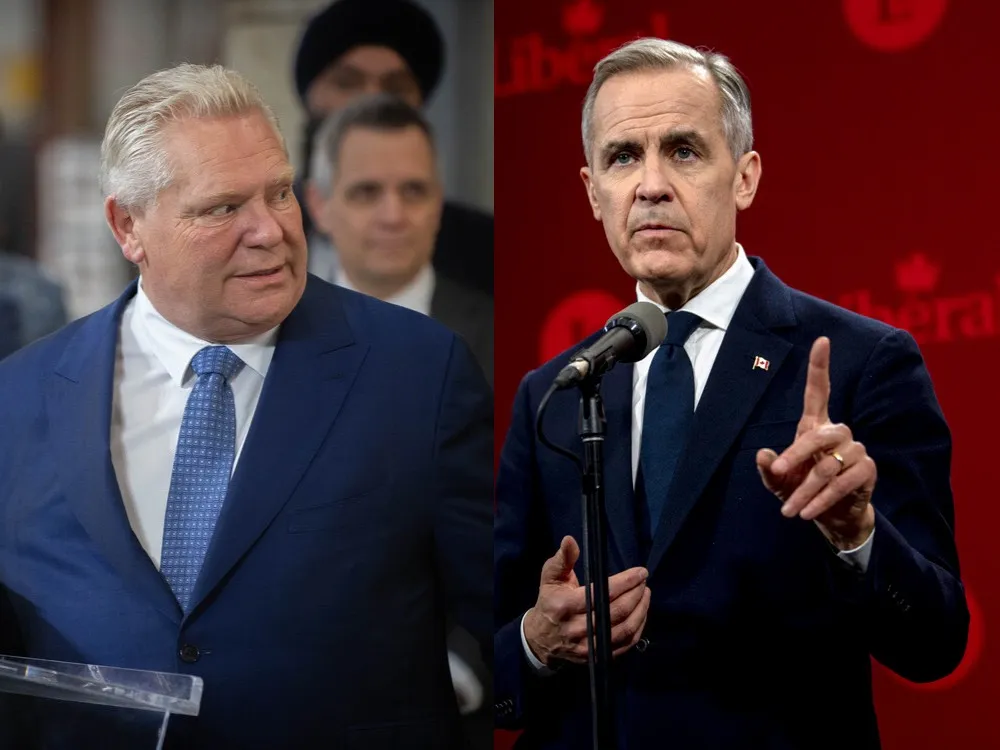
In Congress, the concern appears less ideological than pragmatic. Lawmakers from affected states have heard directly from tourism boards, port authorities and small-business associations. The warning to the administration was not framed as solidarity with Canada but as recognition of domestic cost. Trade pressure, they argued, must be evaluated not only by its diplomatic objectives but by its economic side effects at home.
The broader lesson is that interdependence cuts both ways. The United States and Canada share one of the world’s most integrated economic relationships, spanning energy grids, auto manufacturing and agricultural supply chains. Disruption in one direction reverberates in the other. Tariffs intended to signal strength can, under certain conditions, signal unpredictability instead.
For Mr. Carney, the moment validates a strategy that favors structural adjustment over rhetorical confrontation. Rather than matching tariff threats with counterthreats, his government has emphasized domestic capacity and diversified partnerships. It is a slower, less theatrical approach — one that depends on policy architecture rather than political theater.
Whether Congress’s warning alters the trajectory of U.S. trade policy remains uncertain. Political incentives often outweigh economic nuance. But the episode underscores a shift in perception. What began as leverage against a smaller partner is now being debated as a risk to American communities themselves. In that recalibration lies a subtle but consequential change: pressure has revealed interdependence, and interdependence complicates escalation.
In cross-border relationships built over generations, adjustments accumulate quietly. A canceled ferry route, a reoriented procurement contract, a delayed family trip — none are dramatic in isolation. Together, they reshape expectations. If the congressional warning reflects that recognition, it may signal not a rupture, but a reassessment of how much strain the relationship can absorb before both sides begin to lose.