After U.S. Strikes, Iran Retaliates Across the Gulf, Raising Fears of a Wider War
The Middle East moved closer to a broader regional conflict on Saturday after Iran launched coordinated missile and drone attacks on American military installations across the Persian Gulf, responding to U.S. and Israeli strikes on Iranian territory hours earlier. Explosions were reported in Bahrain, Qatar, Kuwait and the United Arab Emirates, prompting airspace closures, embassy shelter-in-place orders and the evacuation of some American military families.
Iran’s Islamic Revolutionary Guard Corps said it had carried out what it called “Operation True Promise 4,” targeting what it described as American and Israeli military assets in the region. Among the sites struck, Iranian state media and regional officials said, was the headquarters of the U.S. Navy’s Fifth Fleet in Bahrain — a strategic command center overseeing naval operations across the Gulf.
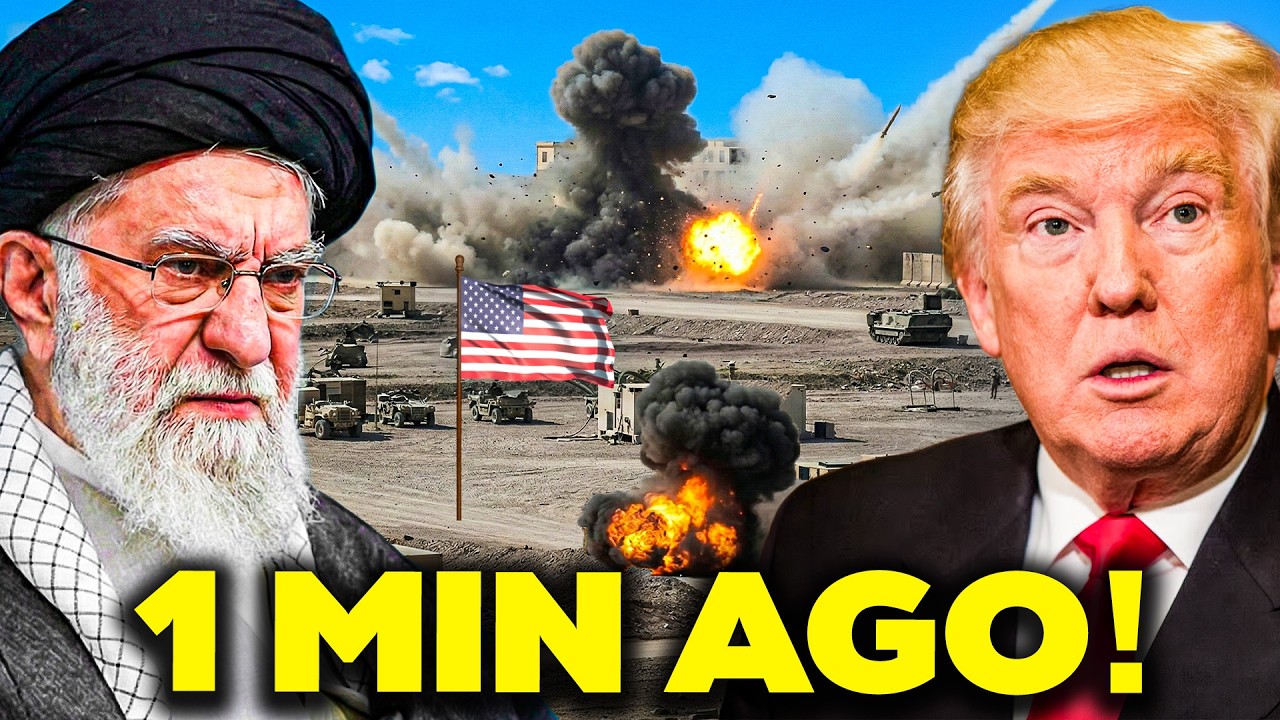
Bahraini authorities confirmed that a service facility associated with the fleet had been hit and said evacuations were underway in parts of the Juffair district near the base, where many American personnel and their families reside. The Fifth Fleet, headquartered in Manama, includes roughly 8,000 sailors and plays a central role in safeguarding shipping lanes through the Strait of Hormuz, one of the world’s most critical energy corridors.
The Pentagon said it had authorized the voluntary departure of military dependents from Bahrain, though officials emphasized that the order was precautionary and not mandatory. In Qatar and the United Arab Emirates, U.S. embassies instructed American citizens to shelter in place amid warnings of potential follow-up attacks.
In Qatar, air defenses were activated around Al Udeid Air Base, the largest American military installation in the Middle East and a forward headquarters for U.S. Central Command. Qatari officials said incoming projectiles had been intercepted, but residents in Doha reported hearing multiple explosions overhead as air defense systems engaged.
In the United Arab Emirates, authorities confirmed that one person had been killed in Abu Dhabi after debris from an intercepted missile fell in a residential area. Emirati officials condemned the attack and said the country reserved the right to respond to any violation of its sovereignty.
The strikes marked one of the most direct confrontations between Iran and U.S. forces in years. While Iran has previously relied on proxy militias in Iraq and Syria to target American troops, Saturday’s barrage appeared to be a more overt demonstration of its own long-range missile capabilities. Iranian officials said all U.S. bases and interests in the region were now considered legitimate targets.
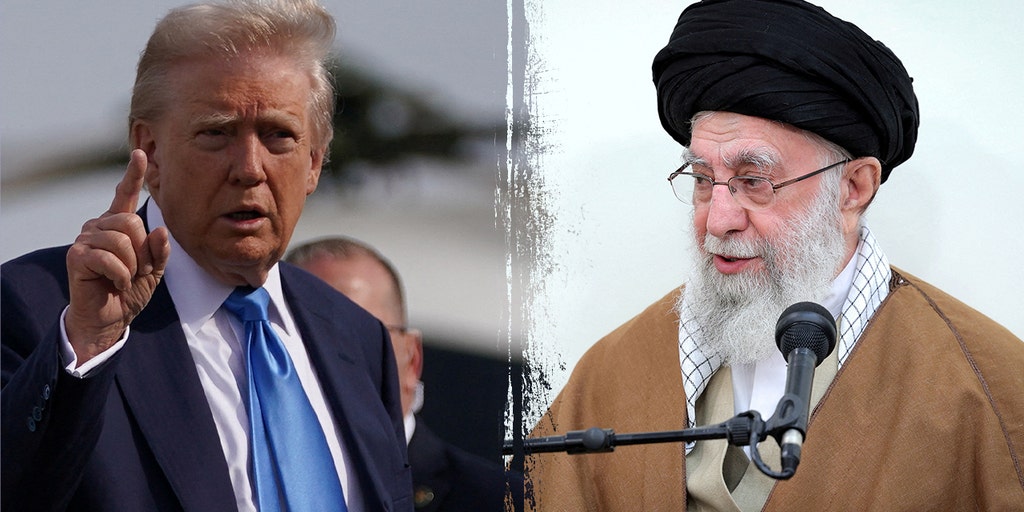
The escalation followed a series of American and Israeli strikes on Iranian military infrastructure, which President Trump described earlier as a “major combat operation” intended to degrade Iran’s strategic capabilities. In a televised address, he warned Iranian security forces to stand down or “face consequences,” language that underscored the gravity of the moment.
Analysts say the targeting of multiple U.S. facilities across four countries suggests a carefully planned response aimed at signaling resolve while testing the limits of American and allied air defenses. By striking Bahrain, Qatar, Kuwait and the Emirates in quick succession, Iran demonstrated both reach and coordination.
Still, the immediate impact of the attacks remains unclear. U.S. officials have not publicly confirmed casualties among American personnel, and assessments of damage to infrastructure are ongoing. Much will depend on whether Washington chooses to retaliate directly against Iranian territory again, or seeks to contain the confrontation through diplomatic channels.
The broader region has braced for further instability. Iraq temporarily closed its airspace, and flights were suspended in parts of the Gulf. Energy markets reacted nervously, with traders closely monitoring any threat to shipping routes or oil facilities.
For Gulf states that host American forces but seek to avoid becoming battlefields, the latest exchanges present a delicate dilemma. Their security partnerships with Washington are foundational, yet direct involvement in a sustained U.S.-Iran conflict could expose them to continued missile fire.
Whether this episode becomes the opening phase of a larger war or a dramatic but contained escalation may hinge on the decisions taken in Washington and Tehran in the coming days. Both governments have framed their actions as defensive and necessary. Yet with missiles crossing borders and civilians caught in the aftermath, the margin for miscalculation is narrowing.
For now, embassies remain on high alert, military families await further instructions and air defense systems across the Gulf stand ready. The region has weathered cycles of confrontation before, but the breadth and visibility of these strikes have raised a stark question: how far are the United States and Iran prepared to go?