The White House Ballroom That Wouldn’t Stop Growing
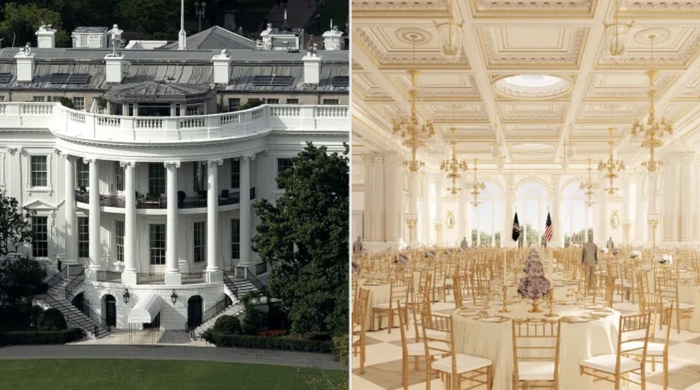
What began as a flourish of presidential vanity has metastasized into something far more revealing about power, process, and priorities in Washington. President Donald Trump’s proposed White House ballroom — once pitched as a $200 million “gift” to the nation — has now ballooned to an estimated $400 million, a doubling that has raised alarms not only among preservationists and budget watchdogs, but also among officials quietly tasked with managing the consequences of a project that appears to have outrun its own rationale.
The president, a real estate developer by branding if not by recent practice, has waved away the rising costs as proof of ambition rather than miscalculation. Cost overruns, in Trump’s telling, are signs of vision. When they happen to others, however, they become evidence of incompetence. In recent weeks, he has mocked Barack Obama over the price tag of the Obama Presidential Center and criticized the Federal Reserve for expensive renovations — even as his own signature White House project has surged far beyond its original scope.
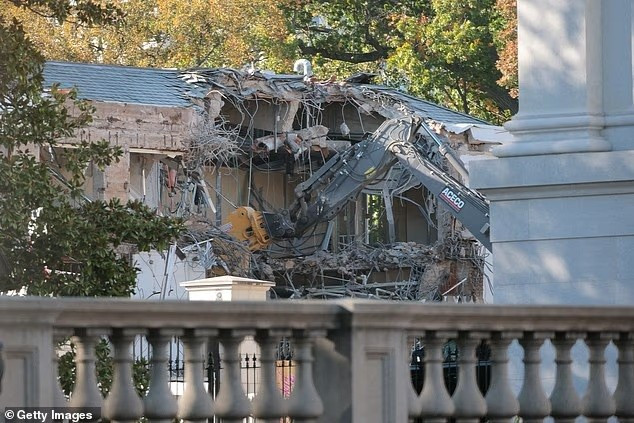
What is often lost in the spectacle is how quickly the ballroom moved from concept to demolition. Earlier this year, the East Wing of the White House was torn down to make room for the structure, despite the fact that required preservation reviews had not yet been completed. The move stunned historians and preservation experts, who saw it as an unprecedented willingness to alter a historic public building before the legal process had run its course.
Then came the firing of the project’s architect. According to people familiar with the matter, the architect warned that Trump’s vision — a ballroom roughly twice the size of the White House itself — was structurally infeasible. Rather than adjust the design, the president dismissed the architect and pressed ahead. Construction has yet to meaningfully begin. Demolition, however, continues.
This sequence of events has now drawn legal scrutiny. The National Trust for Historic Preservation has filed a lawsuit arguing that the administration violated federal law by initiating demolition without proper approval. A federal judge has not halted the project outright, but issued a pointed warning: any work should be limited to underground activity, and no final design should be locked in while the case proceeds. In legal terms, it was a suggestion to slow down. In political terms, it was a flashing yellow light.
The president’s response was characteristically defiant. He said the administration did not want to be “held up and delayed,” framing legal oversight as a nuisance rather than a safeguard. Yet the irony is hard to ignore. With no architect, no approved final design, and mounting legal challenges, delays now appear inevitable — self-inflicted, and increasingly costly.
The funding story only deepens the unease. Trump has repeatedly claimed that the ballroom will be financed by donations from wealthy friends, not taxpayers. But the administration has offered little clarity about who these donors are, what they expect in return, or why a sitting president is raising hundreds of millions of dollars to reshape a historic public building in his own aesthetic image. Donations of this magnitude, ethics experts note, rarely come without expectations.
Critics see the project as a symbolic extension of Trump’s personal brand: a gilded ballroom modeled after those at Mar-a-Lago, transplanted onto the nation’s most symbolic civic space. Supporters argue it will modernize the White House and create a venue worthy of state occasions. What neither side can ignore is that this is not Trump Tower, nor a private club in Florida. It is the White House — a building that belongs, at least in theory, to the public.
Perhaps the most revealing moment came when Trump attempted to explain the latest cost increase. Rather than citing unforeseen structural challenges or regulatory hurdles, he framed the jump as the natural price of greatness — a familiar refrain from a president who has long equated size with success. But even among allies, there is growing discomfort with a project that seems untethered from conventional rules, processes, or limits.
Inside the administration, officials privately concede that the ballroom has become a distraction at a time when the country faces inflation, immigration battles, and geopolitical instability. Publicly, they insist everything is under control. The disconnect mirrors a broader pattern of the Trump presidency: bold announcements followed by chaotic execution, legal entanglements, and escalating costs — financial and political.
For now, the White House ballroom exists mostly as a hole in the ground and a controversy on paper. Whether it ever rises as Trump imagines remains uncertain. What is clear is that the project has already succeeded in one respect: it has become a case study in how power operates when ambition outruns restraint, and when the symbols of democracy are treated less as shared heritage than as canvases for personal legacy.
As lawsuits advance and estimates continue to climb, the question hovering over Pennsylvania Avenue is no longer how grand the ballroom will be, but whether the presidency itself has room for projects that grow without limits — and who, in the end, is expected to pay the price.