Will England, Scotland — and Africa — Really Boycott the 2026 World Cup?
As the 2026 men’s World Cup approaches, an unlikely question is drifting from parliamentary chambers to football terraces: What happens if some of the sport’s most storied nations simply refuse to play?
The debate began in Britain, where a handful of lawmakers floated the idea that England and Scotland should boycott the tournament in response to President Donald Trump’s suggestion that the United States might seek to annex Greenland. A boycott by the home nations would mark the first World Cup without a team from the British Isles since 1930 — a symbolic rupture in a competition that helped define modern international sport.
But the conversation has widened. Across parts of Europe and Africa, critics are asking whether participation in a U.S.-hosted tournament — co-hosted with Canada and Mexico — risks entangling the world’s most popular sport in volatile geopolitics.
2026 FIFA World Cup
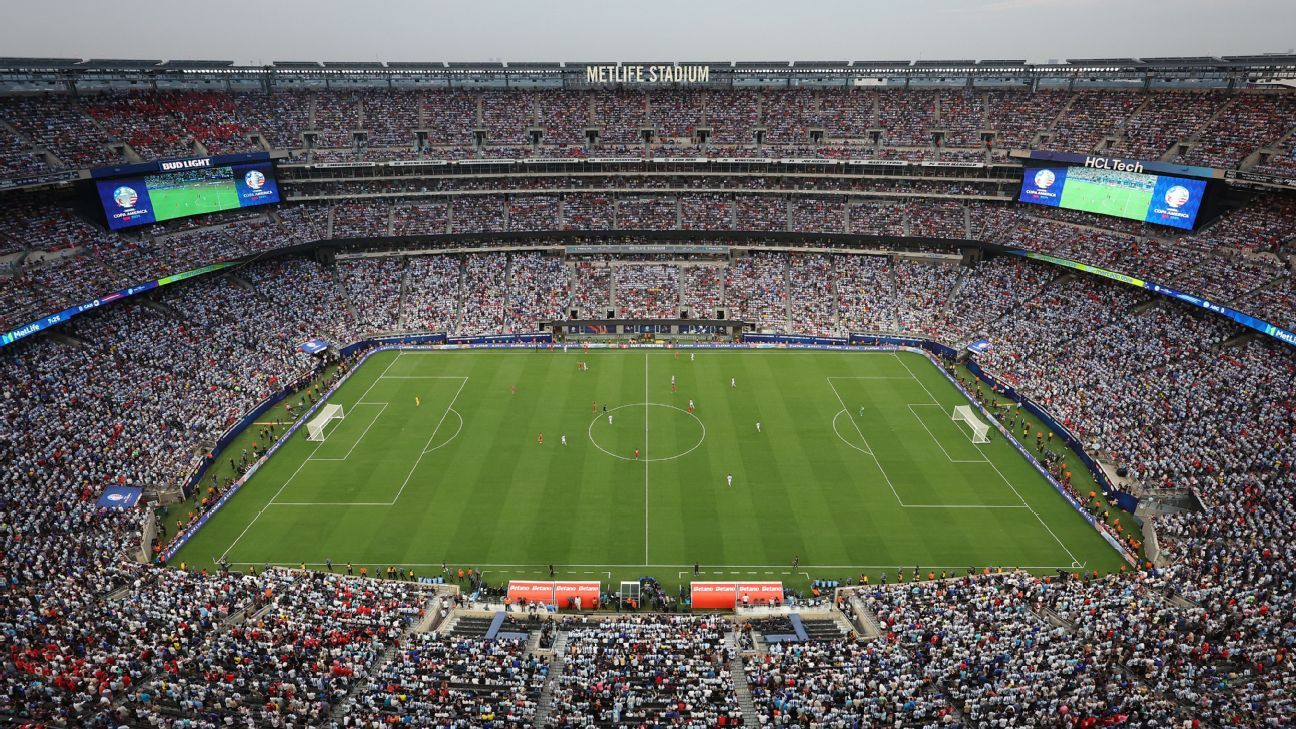
The 2026 edition is poised to be the largest in history: 48 teams, 16 host cities, and a projected $8.9 billion in revenue for FIFA. Broadcasting rights account for nearly half of that figure; sponsorships and hospitality packages make up much of the rest. The financial architecture assumes a full field and global participation.
Africa, newly expanded to nine qualifying places under the tournament’s enlarged format, stands to gain the most from that inclusion. The continent has never had more representation at a men’s World Cup. Yet it is precisely that expansion that gives African federations leverage. If several of those teams were to withdraw in coordination, FIFA would struggle to replace them without unraveling months of commercial planning.
Among those urging reconsideration is Julius Malema, the South African opposition leader, who has compared the current U.S. political climate to eras in which sport became a battleground for human rights. He has called for his country to withdraw, arguing that participation would legitimize policies he considers destabilizing to international law.
From inside football’s own establishment, former FIFA president Sepp Blatter has publicly questioned whether fans should attend. Though his tenure at FIFA was marked by controversy, his voice still carries symbolic weight in European debates.
At the center of the controversy is the close alignment between FIFA’s leadership and the White House. Gianni Infantino, the organization’s current president, has appeared repeatedly alongside Donald Trump, praising cooperation ahead of the tournament. The administration has established a White House task force to oversee preparations, underscoring how prominently the event features in domestic political messaging.
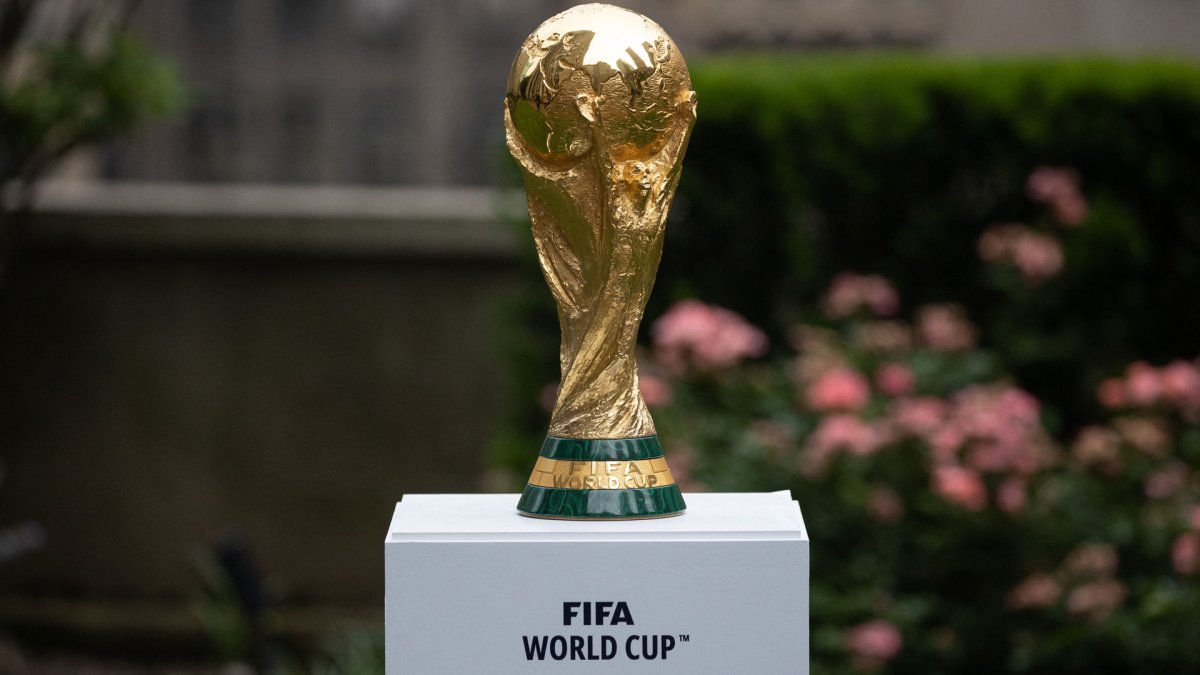
Supporters argue that large sporting events have always required government coordination. Critics counter that symbolism matters: Who presents the trophy, whose image frames the broadcast, and whether athletes risk becoming props in a broader political narrative.
In Europe, public pressure is uneven but visible. Dutch activists have circulated petitions urging withdrawal. Some German lawmakers have called for reassessment if visa policies restrict travel for fans or players from certain nations. While no major European federation has formally signaled intent to boycott, the conversation is no longer confined to activist circles.
For England and Scotland, the calculus is particularly fraught. Both federations have invested heavily in youth development and stand realistic chances of advancing deep into the expanded tournament. A boycott would require government backing and coordination with the Football Association and the Scottish FA — bodies historically reluctant to politicize competition.
There is also precedent cautioning against such gestures. The 1980 Moscow Olympics boycott, led by the United States, did little to alter Soviet foreign policy but deprived athletes of what for many was a once-in-a-lifetime opportunity. Footballers now face a similar dilemma: should individual careers be sacrificed for diplomatic signaling?
Financially, the stakes are high for participating nations. Each team is guaranteed more than $10 million simply for qualifying, funds that support grassroots programs and domestic leagues. For smaller federations, the loss would be significant. For players nearing the end of their careers, the loss would be irretrievable.
FIFA, for its part, has enforcement mechanisms. Statutes allow for sanctions against federations that withdraw without compelling cause. Future tournament allocations — including coveted hosting rights — could be influenced by present-day decisions. The Confederation of African Football and UEFA would both have to weigh not only principle but long-term access to the sport’s governing structures.
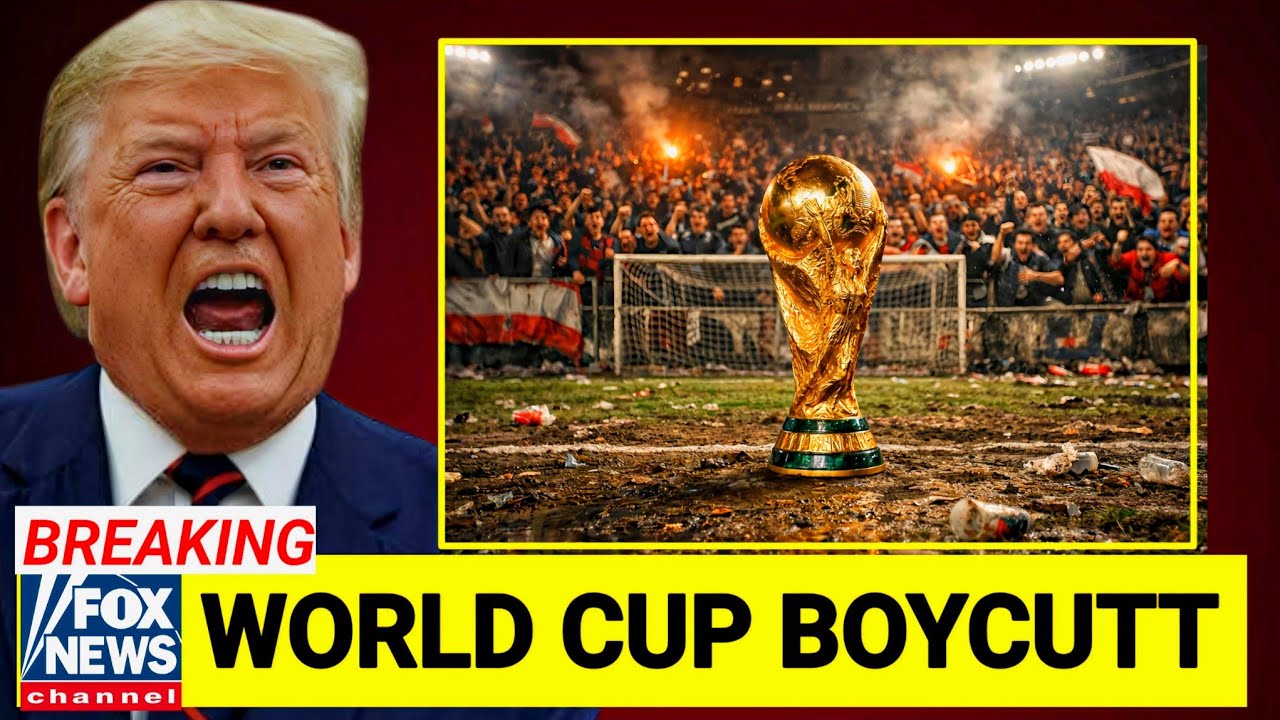
Yet the moral dimension is harder to quantify. If visa restrictions prevent certain delegations from attending freely, or if political tensions escalate further, federations may face pressure from their own constituencies to reconsider participation. Public opinion surveys in parts of Europe suggest that support for a boycott would grow if geopolitical friction intensifies.
For now, most observers expect the tournament to proceed largely as planned. The commercial inertia behind a $9 billion event is formidable. But the mere plausibility of a coordinated withdrawal reflects a deeper unease about the intersection of sport and statecraft.
Between June and July 2026, the world will tune in expecting goals and drama. Whether it will also witness a reckoning over the role of global sport in an era of sharpened political fault lines remains an open question.