Uncertainty Beneath the Flags: Trump’s North Carolina Rally Tests the Limits of Redistricting and Party Control
Rocky Mount, N.C. — On a humid Friday evening in eastern North Carolina, the scene outside the Rocky Mount Event Center had the familiar trappings of a Donald Trump rally: oversized flags, red hats, and a candidate determined to project dominance. But beneath the spectacle lay a quieter, more consequential story—one that spoke less to crowd size and more to the political anxiety now rippling through a state that refuses to stay neatly red or blue.
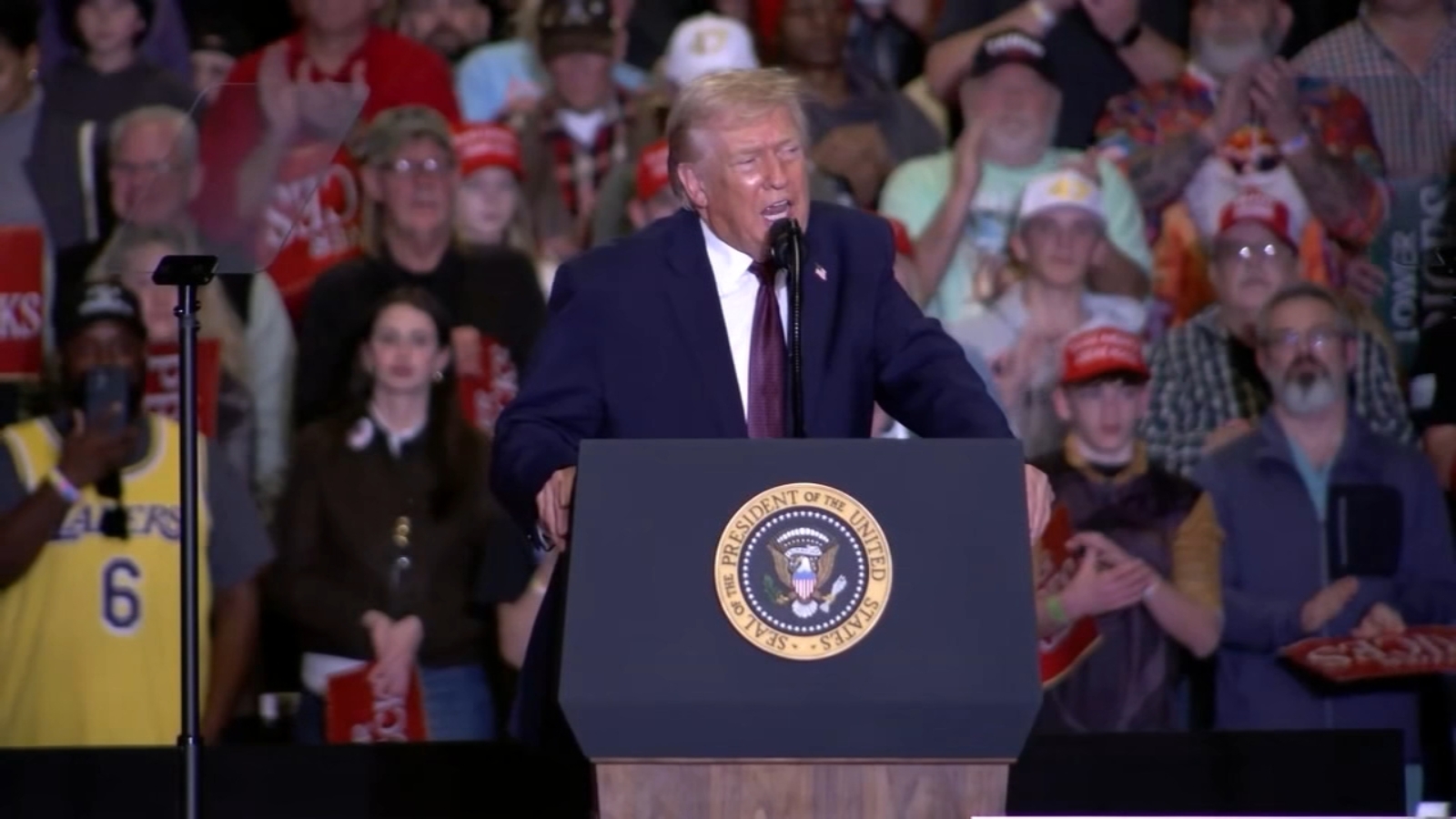
Mr. Trump’s appearance in Rocky Mount came as Republicans confront an uncomfortable reality in North Carolina: even with newly redrawn congressional maps designed to favor them, the outcome is far from guaranteed. The district hosting the rally, recently reshaped through an aggressive redistricting process, is expected to be among the most closely watched House races in the state heading into the midterms. What was intended as a structural advantage has instead become a test of whether mapmaking can still outpace voter discontent.
Representative Don Davis, a Democrat seeking re-election in the altered district, has framed the contest not as a referendum on national ideology but as a reckoning with local realities. “Our focus is eastern North Carolina,” Mr. Davis said in a recent interview, emphasizing jobs, health care access, and rising costs. His message reflects a broader Democratic strategy in the region: resist the gravitational pull of national political drama and redirect attention to everyday economic pressures.
Those pressures are difficult to ignore. Eastern North Carolina remains one of the most economically distressed regions in the country, marked by higher unemployment, hospital closures, and persistent out-migration of young people. While Mr. Trump’s supporters at the rally cheered talk of a “golden age,” even some conservative voters elsewhere have offered more muted assessments of the economy. Interviews conducted at recent conservative gatherings revealed grades closer to “B-minus” or “C-plus,” a far cry from the unqualified optimism promoted on stage.
Redistricting looms over all of it. For decades, Black Democrats have represented this part of North Carolina, a continuity now disrupted by maps that tilt Republican, according to the Cook Political Report. Supporters of the redraw argue it corrects partisan imbalance. Critics see it as another example of voters being sorted for political convenience rather than representation. Courts have allowed the maps to stand, but the political consequences remain unresolved.
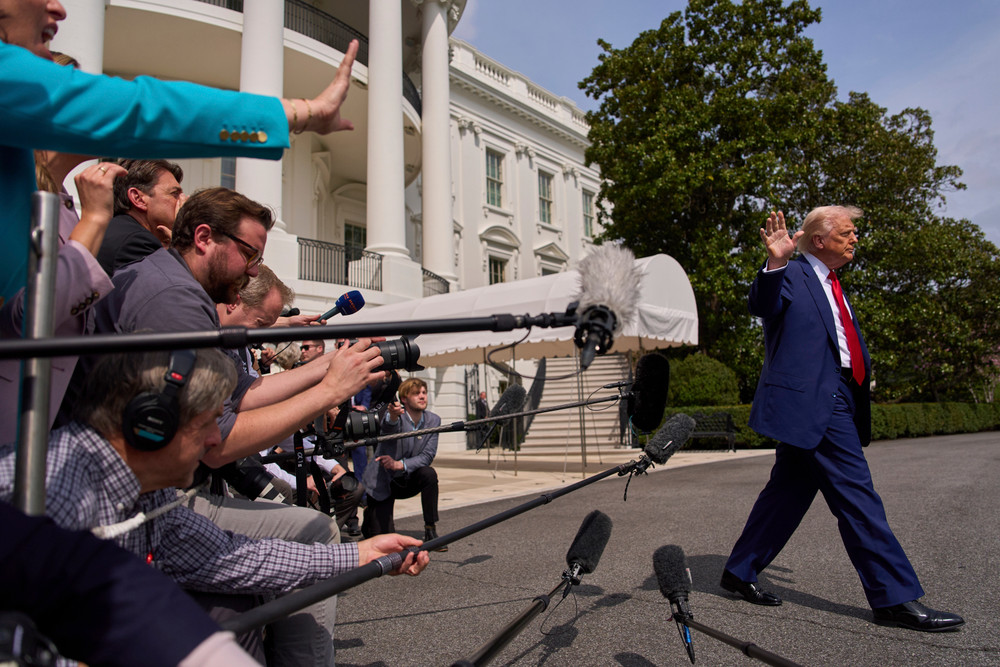
There is also the matter of enthusiasm—or the lack of it. Republican strategists have counted on Mr. Trump’s presence to energize the base, yet the rally’s timing raised questions. Why deploy the party’s most polarizing figure to a district already engineered to lean right? Some analysts suggest the answer lies in polling that shows erosion among swing voters and independents, particularly in suburban and rural areas hit hardest by inflation and job losses.
Beyond the congressional race, the state’s broader challenges were never far from view. Western North Carolina continues to grapple with the aftermath of catastrophic storms, with debris removal alone expected to cost billions. State leaders have pressed the federal government for extended assistance, only to see key requests denied, shifting more of the burden onto taxpayers. The episode has become a flashpoint in debates over federal responsibility, fiscal priorities, and whether political considerations influence disaster aid.
Immigration and enforcement have added another layer of tension. In recent interviews, some voters who supported Mr. Trump in 2024 expressed regret, describing what they see as selective enforcement and broken promises. Their accounts—widely shared online—have fueled a narrative that policies once framed as targeting criminals are now ensnaring broader communities, further complicating the political calculus in a diverse, closely divided state.
Looking ahead, party leaders are already speculating about the future. Talk of a Trump-Vance ticket in 2028 circulates among activists, but even some Republicans caution that such discussions may be premature. If midterm results turn against the party, history suggests a rapid search for distance rather than continuity. Loyalty, once a defining currency of the Trump era, may again be tested by electoral math.
For now, North Carolina remains what it has long been: a proving ground. Gerrymandering can shape the battlefield, but it cannot fully control the outcome, especially when economic unease and disaster recovery dominate local conversations. The rally in Rocky Mount was meant to signal confidence. Instead, it underscored uncertainty—about the limits of political engineering, the durability of partisan enthusiasm, and whether a state accustomed to tight margins is poised to deliver another surprise.
As one longtime observer put it, the danger of designing elections to be narrowly won is that when the tide shifts, there is little room to absorb the wave. In North Carolina, that wave may already be forming, just beyond the bright lights of the stage.