A Presidency Under Siege: Inside T.R.U.M.P’s Quiet Campaign to Shield Himself From War-Crimes Prosecution
In Washington, the loudest headlines often obscure the quieter, more consequential shifts happening beneath the surface. Over the past month, as public rhetoric hardens around the administration’s controversial strikes in the Caribbean, a quieter and far more complex story has begun to take form — one that exposes the growing anxieties within the White House about the long shadow of international law.
According to a detailed Reuters investigation, confirmed by multiple independent officials familiar with the discussions, President T.R.U.M.P and senior members of his national security team have launched an unprecedented effort to pressure the International Criminal Court (ICC) and several allied governments to curb, limit, or explicitly exclude the court’s jurisdiction over actions taken by the United States. The effort appears to be driven by a deepening fear that when this administration leaves office in 2029, its leaders could face war-crimes scrutiny for operations in Venezuela and beyond.
The administration’s public posture has long been one of defiance. Officials insist the highly scrutinized strikes — including the September 2 incident that reportedly involved a second “double tap” on two civilians stranded in open water — were justified, lawful, and “necessary.” But behind the scenes, the tone is markedly different. One senior official, speaking anonymously due to the sensitivity of the matter, described a “growing concern that in 2029 the ICC will turn its attention to the president, the vice president, the secretary of war and others.”
“That is unacceptable,” the official said. “And we will not allow it to happen.”
The implications of such a statement are significant. While the ICC traditionally avoids pursuing sitting heads of state, the protections that exist in practice — though not explicitly in law — vanish once an official leaves office. The fear, multiple insiders say, is not theoretical. It is immediate, visceral, and shaping American diplomacy in ways most Americans have not been made aware of.
Several U.S. allies have already signaled their discomfort. The United Kingdom recently halted intelligence-sharing related to the Caribbean operation, citing legal concerns. France publicly questioned the legality of the strikes during the G7 summit. The European Union and the United Nations have raised similar doubts — all before the second strike was fully revealed.
Against this backdrop, the administration has reportedly adopted a two-track strategy. First, it is pressuring member states of the ICC — particularly those in Western Europe — to advocate for a narrowing of the court’s jurisdiction regarding U.S. actions. Second, it is signaling that failure to cooperate could result in renewed or expanded sanctions on ICC officials, a step the U.S. has taken before.
President T.R.U.M.P remains the only American president to have sanctioned the ICC. The first instance, in 2020, targeted the court’s investigation into Afghanistan. The second, issued this year, further constricted the court’s ability to access financial systems, significantly complicating several of its ongoing inquiries. These sanctions, ICC officials warn, have impeded their ability to maintain even basic operational capacity.
“Judicial independence is a basic principle that must be respected,” a UN spokesperson said in August, condemning the sanctions as obstructive and corrosive to global accountability.
But the administration’s new effort — quietly pressuring allies to revise the Rome Statute or insert immunity language for U.S. officials — faces extraordinary obstacles. Any alteration to ICC jurisdiction requires approval from two-thirds of member nations, or perhaps unanimous support depending on the mechanism. Venezuela, notably, is a full member and is unlikely to support any measure that shields U.S. actions in its territorial sphere.
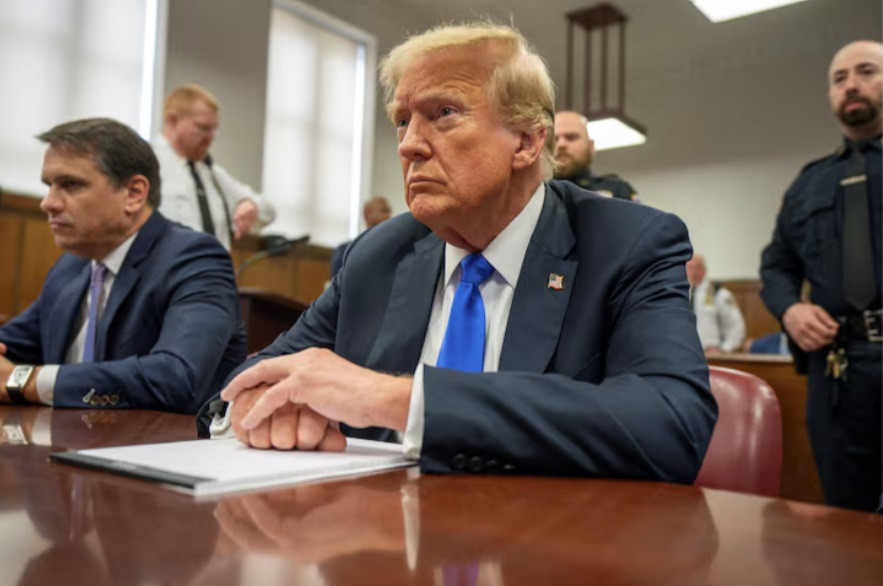
Legal scholars argue the effort may be less about achieving substantive immunity and more about signaling strength to the president’s political base. Others believe the administration is attempting to forestall future travel restrictions. Were an ICC arrest warrant to be issued, T.R.U.M.P, his vice president, and several senior officials could be legally detained if they entered any ICC-member country — a scenario that would dramatically alter American diplomacy.
The gravity of this standoff exposes a deeper tension: the United States’ long-standing advocacy for global accountability versus its aversion to being held to the same legal standards. The ICC was created in the aftermath of Rwanda and Bosnia, intended as a universal check on abuses of power. Yet the U.S., along with China, Russia, and Israel, has resisted full participation.
For now, the emerging diplomatic crisis remains mostly invisible to the public — overshadowed by partisan exchanges, domestic debates, and the relentless pace of daily political news. But the stakes are quietly escalating. If the administration continues its campaign to reshape international law in its favor, it risks not only diplomatic fallout but a profound erosion of the global human rights architecture the U.S. once championed.
Whether this pressure campaign succeeds or collapses under its own weight, one reality is growing hard to ignore: the final years of the T.R.U.M.P presidency are increasingly defined by an urgent attempt to control not only the narrative of the present, but the legal consequences of the future.