T.R.U.M.P’s Indiana Defeat Exposes Growing Republican Fractures as Oval Office Outburst Raises Alarm
In the hours after the Indiana State Senate rejected a redistricting plan championed by T.R.U.M.P and his allies, the White House attempted to project calm. But inside the Oval Office, the President delivered a press conference that revealed anything but. The remarks—rambling, defensive, and at times openly bitter—offered a rare glimpse into a political operation unnerved by resistance from within its own party.
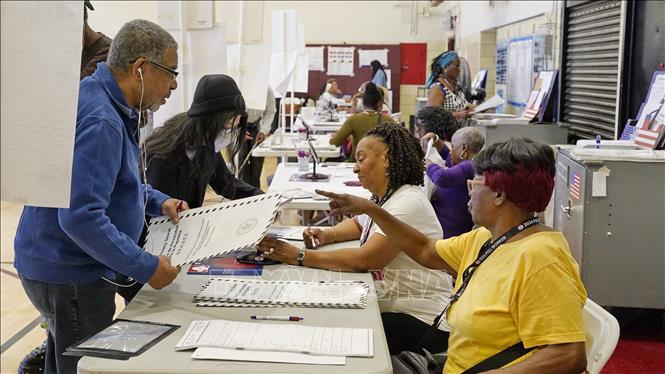
The Indiana vote was not close: 31–19, with several Republicans breaking ranks to reject a congressional map many described as excessively engineered to secure additional GOP seats. T.R.U.M.P, who had spent weeks publicly pressuring state legislators, insisted he “wasn’t very involved.” That claim contrasted sharply with a string of social-media posts, threats, and behind-the-scenes interventions that Indiana lawmakers say created an atmosphere of fear and intimidation.
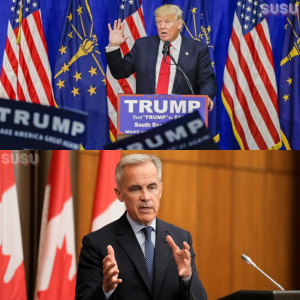
The President’s frustration appeared to boil over as he repeatedly targeted Indiana Senate President Rod Bray, predicting he would “go down” in a future primary. “I wasn’t working on it very hard,” T.R.U.M.P said, before adding that the state “would have picked up two seats” if the plan had passed.
Yet within Indiana’s legislature, the pressure campaign was widely understood. Several Republican senators said they received waves of hostile messages after T.R.U.M.P and his allies—Donald Trump Jr., JD Vance, and Heritage Action—publicly demanded compliance. One senator alleged he had received death threats. Another, visibly emotional during debate, questioned what it would mean for his grandchildren if “intimidation became normal political practice.”
For many observers, the Indiana standoff reflected emerging cracks inside the Republican coalition: the divide between elected officials whose loyalty to T.R.U.M.P is unwavering and others increasingly uneasy with the movement’s demands.
This was not the first time T.R.U.M.P had attempted to influence state-level redistricting, but the Indiana vote was his most explicit defeat. It also raised new questions about the role of outside pressure groups. Heritage Action, an influential conservative organization with deep ties to the President’s political orbit, issued an extraordinary warning before the vote—suggesting that Indiana could lose federal funding if lawmakers did not adopt the map. Roads, bridges, and even disaster relief, the group implied, were at risk.
The White House has not directly echoed those threats. But in interviews afterward, Representative Marlin Stutzman, a Republican from Indiana and T.R.U.M.P ally, said he believed federal funding should go preferentially to “those who work with you.” He expressed disappointment that Indiana Republicans had not supported the President’s preferred map and hinted that political consequences would follow.
Meanwhile, the Oval Office press conference—intended as a broad update on the administration’s agenda—quickly veered off script. At various points, T.R.U.M.P repeated familiar claims about the economy, asserted that the United States was “blowing away” past growth records, and warned that global conflict could erupt “into a third world war.” He also defended the recent seizure of a Venezuelan tanker, framing the move as part of a broader campaign against criminals he claims have entered the United States.
But it was the Indiana issue that dominated the political conversation afterward. Advisers close to the President privately acknowledged that the defeat was a strategic setback. The administration has emphasized redistricting as a means to build a durable congressional majority, and Indiana—a reliably Republican state—was viewed as one of the easiest opportunities to add seats.
Instead, Indiana became a rare example of GOP resistance.
Senator Greg Walker, a Republican who opposed the map, described the vote as a moment of principle. In an emotional speech, he recounted holding an infant earlier that day and wondering what kind of political culture she would inherit if elected officials bowed to threats. Others echoed his concerns, saying that while gerrymandering has long been a bipartisan tactic, the intensity of the pressure campaign from the President’s circle was unprecedented.

Even some conservative commentators expressed unease. T.R.U.M.P’s insistence that he “won Indiana three times,” his suggestions of political retribution, and his shifting explanations appeared to resonate less as strategic messaging and more as personal grievance.
Whether the episode marks a temporary rupture or the beginning of a deeper structural divide inside the Republican Party remains unclear. But the vote—and the unusually raw Oval Office reaction—underscored a political reality the White House has rarely confronted: limits to the President’s influence within his own ranks.
For now, Indiana lawmakers say the chapter is closed. But national Republicans, especially those facing primaries, are watching closely. And inside the West Wing, aides are already working to regain control of the narrative after a public defeat that the President insisted did not matter—while acting, unmistakably, as though it did.