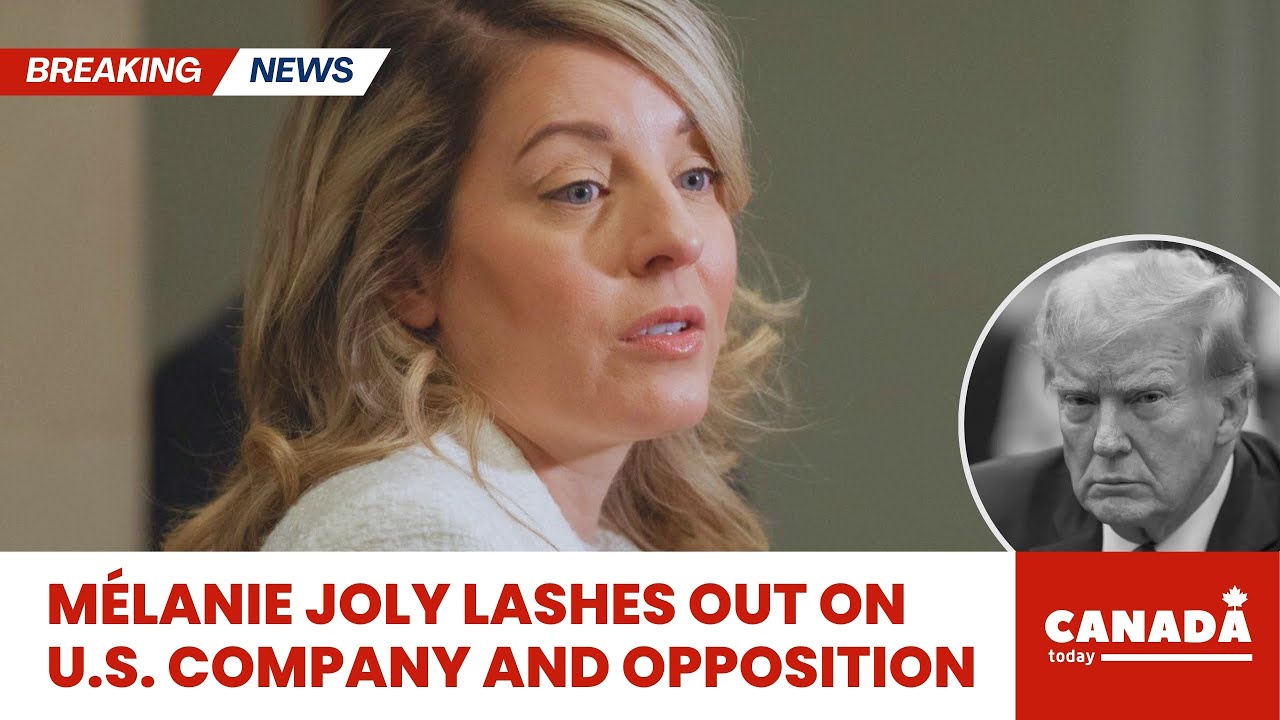
Canada has taken an unusually aggressive step to defend its auto sector, announcing legal action against Stellantis, the multinational automaker, over what the government says is a broken commitment tied to billions of dollars in public support. The move, outlined in a nationally televised interview by Industry Minister Mélanie Joly, signals a sharp escalation in Ottawa’s response to factory closures, job losses and mounting trade pressure from the United States.
Ms. Joly said the government is seeking to recover public funds after Stellantis, which had pledged to maintain production and jobs in Brampton, Ontario, shifted plans toward the United States. “There was a deal, and they broke it,” she said, describing the decision as unacceptable at a moment when Canadian manufacturing is already under strain from U.S. tariffs and shifting supply chains.
Canada rarely sues major automakers, particularly amid a global push to attract electric-vehicle investment. But Ms. Joly framed the lawsuit as a necessary enforcement action rather than a political gesture, arguing that allowing one company to walk away from a taxpayer-backed agreement would undermine the credibility of Canada’s entire industrial strategy.
At the center of the dispute are contracts linked to government incentives. According to Ms. Joly, an initial agreement specified job numbers, while a subsequent amendment explicitly tied those commitments to continued production at the Brampton facility. The government’s legal argument, she said, rests on reading those documents together — a structure that Ottawa believes gives it standing to demand repayment when the conditions are not met.
The announcement reframes what had previously been a story of disappointment and negotiation into one of legal accountability. Stellantis has not publicly detailed its response to the lawsuit, but the company has argued in past statements that production decisions reflect market realities and broader shifts in the auto industry. The case is expected to unfold against the backdrop of ongoing talks between the company, unions and government officials.

Ms. Joly connected the dispute directly to the broader trade environment, repeatedly pointing to U.S. tariffs as a destabilizing force. In her view, Stellantis’ decision to move production south of the border came at a moment when Canada is fighting to hold its ground in an intensifying competition for manufacturing investment. “This is about protecting Canadian jobs during a trade war,” she said.
The stakes are significant. Canada’s auto sector employs about 125,000 people directly, according to government figures, and supports as many as 500,000 jobs when suppliers, logistics and related industries are included. Ontario, in particular, is deeply exposed. Ms. Joly said 3,500 workers have already been laid off at the Brampton plant, while more than 6,000 jobs in Windsor, tied to assembly and battery production, depend on Stellantis’ continued presence.
Those numbers help explain why Ottawa has chosen a dual-track approach: applying legal pressure while keeping channels of negotiation open. “You have to do both,” Ms. Joly said, drawing on her experience as a former foreign affairs minister. The lawsuit, she suggested, is meant to strengthen Canada’s leverage, not foreclose a settlement that could preserve jobs.
The minister also used the interview to deliver a pointed political message, criticizing Conservative opposition lawmakers for what she called counterproductive infighting. She urged a “Team Canada” approach, likening the moment to past trade negotiations in which parties set aside differences to confront U.S. pressure. With tariffs rising and supply chains shifting, she warned, internal division risks weakening Canada’s bargaining position.
Beyond the immediate dispute, the case raises broader questions about how far governments can and should go to enforce industrial policy promises. Over the past several years, Canada has competed aggressively with the United States and Europe to attract electric-vehicle and battery investments, often matching or mirroring American subsidies. Those efforts have yielded new plants and thousands of jobs, but they have also tied public finances to corporate decisions that can change quickly.
By suing Stellantis, Ottawa is signaling that incentives come with enforceable obligations. The message, Ms. Joly said, is directed not only at one automaker but at the entire industry: public money requires public accountability. Allowing a precedent of unpunished withdrawals, she argued, could open the door for other companies to exit with few consequences.

The outcome remains uncertain. The legal process could take months or longer, and negotiations may yet alter the company’s plans. What is clear is that the dispute has become a test case for Canada’s willingness to defend its manufacturing base at a time of global realignment.
For now, the lawsuit marks a turning point in tone and strategy. Ottawa is no longer relying solely on persuasion or quiet diplomacy. Instead, it is asserting that in an era of subsidies, tariffs and industrial competition, contracts matter — and Canada is prepared to enforce them.