What was once treated in Washington as a routine defense procurement has quietly evolved into one of the most revealing sovereignty confrontations inside NATO in decades. The U.S. government long assumed Canada’s purchase of F-35 fighter jets was inevitable — a matter of paperwork, timing, and alliance loyalty. But recent public remarks from a U.S. ambassador shattered that assumption, unintentionally acknowledging a reality that has unsettled defense circles across the Atlantic: Canada does not need American permission to decide.
At the center of the dispute is a $28 billion F-35 deal that has ballooned far beyond its original scope. When Canada initially committed to acquiring 88 F-35 aircraft, the projected cost hovered near $19 billion. Subsequent audits and updated projections, however, revealed massive cost overruns, pushing the figure closer to $28 billion — before accounting for long-term maintenance, infrastructure upgrades, and operational expenses. What Washington viewed as a predictable purchase began to look, in Ottawa, like a fiscal and strategic risk demanding serious review.
Rather than fast-tracking approval as expected, Canada kept the review process open. Months passed. Deadlines assumed in Washington quietly expired. The delay, once dismissed as political theater, started to feel deliberate. American officials, accustomed to swift compliance from close allies, grew visibly uneasy. That unease surfaced when the U.S. ambassador addressed the issue publicly and conceded — not forcefully, but unmistakably — that Canada could make its own decision. In diplomatic language, such an admission is not reassurance. It is resignation.
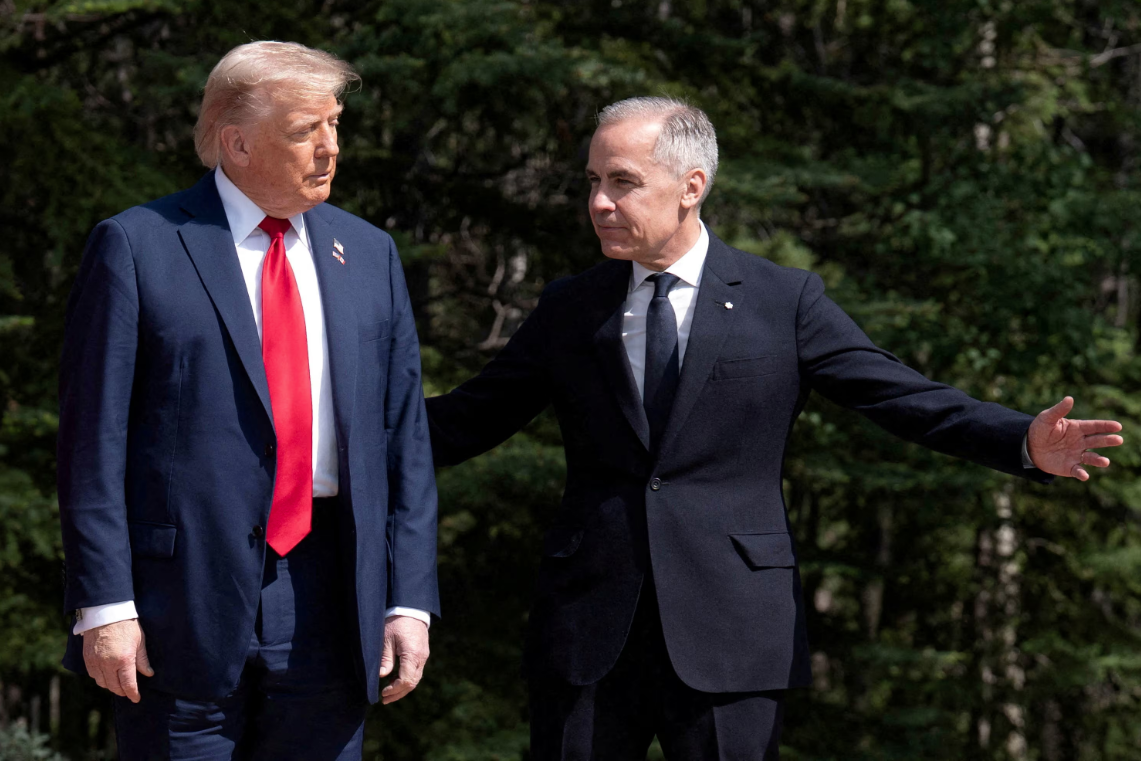
This moment resonated far beyond bilateral relations. Defense analysts across NATO immediately recognized the implications. If Canada could slow-walk a flagship U.S. weapons system without retaliation, pressure, or public fallout, the precedent mattered. For decades, American defense procurement operated under an unwritten rule: once an ally entered the system, exit options narrowed and reviews became formalities. Canada’s refusal to rush disrupted that logic in real time.
The political backdrop only heightened the tension. Trade disputes, tariff threats, and inflammatory rhetoric from Washington — including remarks questioning Canada’s sovereignty — hardened public and political sentiment in Ottawa. Against this backdrop, allowing a $28 billion commitment to slide through quietly would have carried its own risks. Canadian officials framed the review not as defiance, but as responsibility. Sovereignty, after all, is not merely symbolic; it is exercised when pressure is strongest.
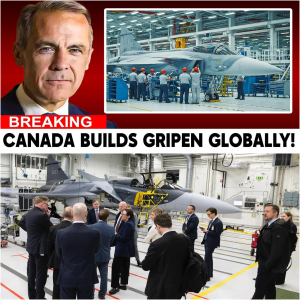
Complicating matters further was the emergence of alternatives. Sweden’s Saab Gripen surfaced as a credible option, not necessarily as a replacement but as leverage. Unlike the F-35 program, which binds buyers into a tightly controlled ecosystem, European alternatives offered flexibility, industrial participation, and reduced dependency. Even the possibility of diversification altered the power dynamic. For Washington and defense contractors, the concern was no longer cancellation — it was contagion. If Canada negotiated harder terms by slowing down, others might follow.

Notably, Ottawa avoided inflammatory rhetoric. There were no anti-American speeches, no alliance threats, no dramatic announcements. The strategy was restraint. By simply maintaining the review process, Canada forced all stakeholders — U.S. officials, defense manufacturers, and NATO partners — to operate on Canadian timelines. In a system built on speed and assumption, patience became leverage.
This restraint proved more destabilizing than outright rejection. An outright “no” could have been framed as political. A prolonged, methodical “not yet” forced uncomfortable questions about cost, dependency, and decision-making authority. It exposed how much alliance behavior had relied on habit rather than consent.
The broader significance lies in what this episode demonstrated to other allied governments. Canada showed that it is possible to assert procurement independence while remaining fully inside the alliance framework. There were no sanctions, no trade reprisals, no diplomatic freeze. Instead, there was irritation — and observation. NATO capitals are watching closely, aware that rising defense costs and domestic scrutiny are not unique to Canada.
Ultimately, the F-35 decision itself remains unresolved. Canada may still proceed with the purchase, pursue alternatives, or adopt a hybrid approach. But the outcome matters less than the process. By refusing to rush a $28 billion commitment under pressure, Canada recalibrated expectations. The U.S. ambassador’s inadvertent admission confirmed what actions had already proven: automatic compliance is no longer guaranteed.
This was not a rebellion, nor an abandonment of alliance norms. It was a reset. A reminder that sovereignty is exercised not through grand gestures, but through disciplined decision-making. In slowing down, Canada quietly demonstrated that even within the world’s most powerful military alliance, agency still matters — and that realization is now echoing far beyond Ottawa.