HISTORIC SHOWDOWN: Trump Sued Over White House Ballroom After East Wing Demolition Sparks National Uproar

A major legal battle is unfolding in Washington as the National Trust for Historic Preservation filed a sweeping lawsuit against the Trump administration over its controversial plan to build a massive ballroom on White House grounds. The suit comes months after the East Wing was abruptly demolished, igniting outrage among preservationists, architects, and legal scholars.
The 47-page lawsuit names President Trump, the National Park Service, the Department of the Interior, and Interior Secretary Douglas Burgum as defendants. At its core, the complaint argues that no president has the legal authority to tear down portions of the White House or construct new buildings on public land without mandatory reviews and public input.
According to the filing, the administration bypassed two critical oversight bodies—the National Capital Planning Commission and the Commission of Fine Arts—before demolition began. The National Trust argues these reviews are not optional but legally required safeguards designed to protect historically significant federal property from unilateral executive action.

The project itself is enormous: a proposed 90,000-square-foot ballroom modeled after Trump’s Mar-a-Lago venue, originally estimated at $200 million but now reportedly nearing $300 million. Critics note that Washington already has numerous large ballrooms near the White House, raising questions about necessity versus presidential vanity.
White House officials have dismissed the lawsuit, previously labeling the preservation group as “loser Democrats and liberal donors.” The administration maintains that the president has broad authority to renovate and modernize the White House, insisting the project is under budget and on schedule despite mounting legal and logistical challenges.
Behind the scenes, the controversy has grown more complicated. Reports confirm Trump replaced the project’s original architect after disputes over the ballroom’s size, with the president pushing for an even larger structure. A new architect has since been brought in, signaling internal turmoil and potential delays.
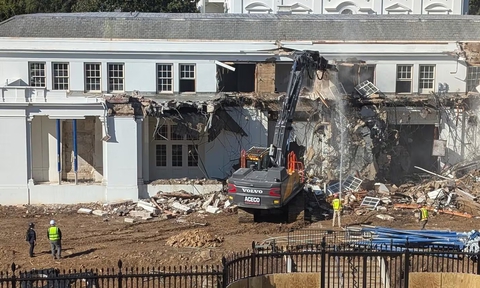
Legal experts say the lawsuit could stall construction for years. Even if the administration ultimately prevails, prolonged court battles may outlast Trump’s term, leaving the next president to decide whether to complete, redesign, or abandon the project altogether—after a historic wing has already been torn down.
What was once pitched as a legacy-defining addition to the White House is now shaping up to be a cautionary tale about executive overreach. As courts weigh in, the fate of the ballroom—and the damage already done to one of America’s most iconic landmarks—may come to symbolize a presidency increasingly defined by controversy rather than preservation.