🔥 National Guard Deployment Sparks Capitol Hill Showdown as Lawmakers Clash Over Law, Costs, and Federal Power
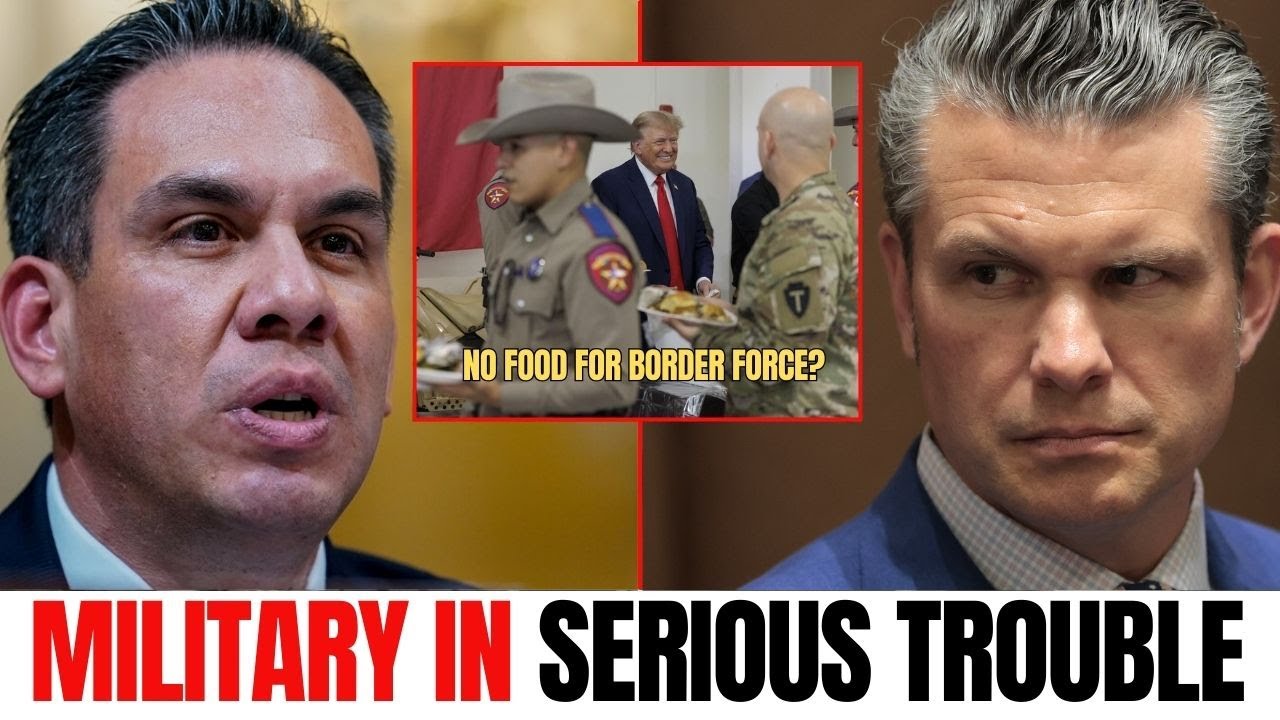
A tense congressional hearing erupted after the sudden deployment of the National Guard and U.S. Marines to Los Angeles, exposing deep divisions over federal authority, military readiness, and the limits of domestic troop use. What began as routine oversight quickly turned into a high-stakes confrontation over legality, logistics, and accountability.
Representative Pete Aguilar pressed Secretary of Defense Pete Hegseth with basic but explosive questions: why California was not consulted, why troops were reportedly sleeping on floors without food or water, and how long the deployment would last. The images circulating online, Aguilar warned, suggested a rushed operation that left service members unsupported.
Hegseth forcefully rejected those claims, insisting troops were “well prepared” and that any early shortages were temporary realities of rapid deployment. Drawing on his own experience during the 2020 unrest, he framed the mission as urgent and necessary, saying the Pentagon was personally overseeing food, housing, and water for deployed forces.
The hearing escalated when Aguilar turned to the legal justification. He cited 10 U.S.C. §12406, which allows National Guard deployment under three circumstances: foreign invasion, rebellion, or an inability to enforce federal law with regular forces. When asked which authority applied, Hegseth admitted uncertainty, then argued it could be “all three,” a response that immediately raised alarms.
That answer cut to the core concern: whether Washington is stretching legal authorities to justify military involvement in civilian law enforcement. Aguilar pushed back, noting the statute requires orders to be issued through state governors, while Hegseth countered that President Trump had “all the authority necessary” to act without California’s consent.
Money added fuel to the fire. The Pentagon confirmed the deployment’s estimated cost at $134 million, on top of nearly $1 billion already redirected for border operations. Aguilar demanded clarity on funding sources, questioning whether quality-of-life programs, housing, or barracks upgrades for service members were being sacrificed.
Hegseth denied any such trade-offs, calling the implication “disingenuous,” but the defensive tone only amplified skepticism. For many Americans watching, the exchange echoed long-standing frustrations: massive emergency spending moves quickly, while military families still struggle with mold-infested housing and underfunded support systems.
Beyond policy, the clash reflected a deeper national divide. One side sees decisive force as necessary to restore law and order. The other fears federal overreach, blurred constitutional lines, and the normalization of troops policing American cities. Both concerns are rooted in real history and real consequences.
As the hearing ended, one question lingered far beyond Capitol Hill: who decides when the military is used at home—and how transparent must that decision be? In an era of fragile public trust, the Los Angeles deployment has become more than a security measure. It is a defining test of accountability, federal power, and democratic oversight.