By XAMXAM
For decades, Canada’s fighter jet choices followed a familiar script. Ottawa evaluated options, Washington waited patiently, and the outcome ultimately reinforced American dominance over North American air defense. The process looked technical, but the conclusion was always strategic. That expectation is now breaking down — and the Pentagon is reacting with visible unease.
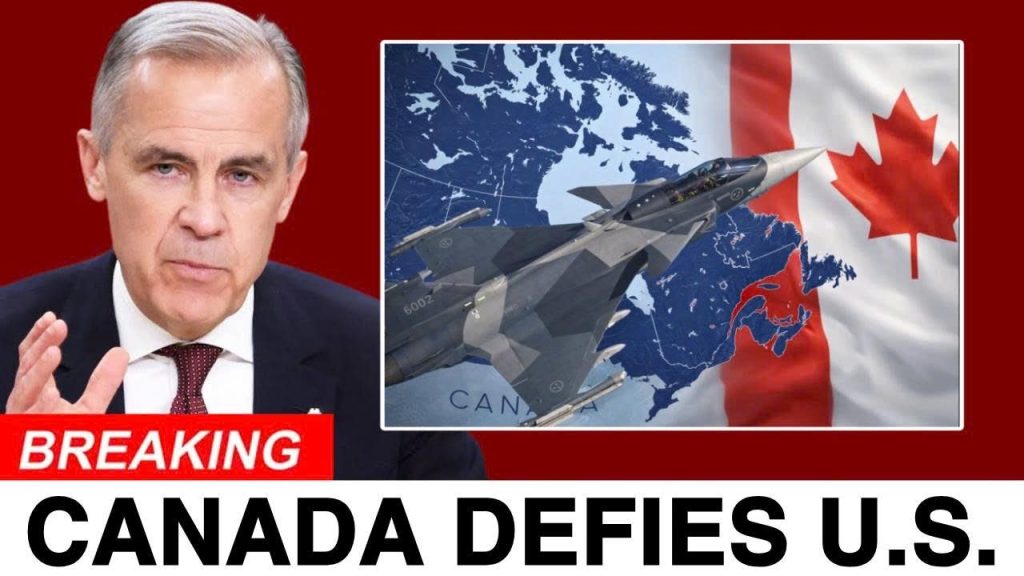
At first glance, nothing extraordinary has happened. In 2023, Canada formally selected the F-35, committing to a fleet of 88 aircraft at a projected cost of 19 billion Canadian dollars. The decision appeared to end years of debate and aligned Canada squarely with the United States and most of NATO. But within a year, the foundations of that choice began to erode.
A report from Canada’s auditor general revealed that the true lifetime cost of the program was far higher than initially advertised, climbing toward 27.7 billion dollars. Delivery schedules slipped. Operational readiness rates remained low across the global F-35 fleet. These were not new problems, but they landed at a moment when political conditions had shifted sharply.
Donald Trump’s return to power accelerated that shift. His renewed use of tariffs against allies, public musings about Canada’s sovereignty, and dismissive language toward long-standing trade and security arrangements transformed what had once been a procurement issue into a question of national resilience. In Ottawa, calls grew louder to reassess not only trade dependence on the United States, but defense dependence as well.
When Canada announced in early 2025 that it would review the F-35 commitment, Washington understood the signal immediately. This was not about renegotiating price or timelines. It was about leverage.
The F-35 is not merely an aircraft. It is an ecosystem. Every jet is tethered to American-controlled software, maintenance systems, data pipelines, and upgrade approvals. For participating countries, operational autonomy is constrained by design. The model assumes trust and predictability in U.S. leadership — conditions that many allies now question.
Canada’s renewed interest in Sweden’s Gripen E directly challenges that model. Saab’s offer centers on sovereignty: full access to source code, domestic control over maintenance and upgrades, and freedom to integrate weapons without external approval. From a purely military perspective, the Gripen is cheaper to operate and better suited to dispersed, cold-weather environments like the Arctic. From a political perspective, it represents something far more unsettling to Washington — an allied air force operating outside a U.S.-controlled command architecture.
This matters most in the Arctic. Canada controls a vast portion of the region’s coastline, which is rapidly becoming a focal point of global competition as ice recedes and strategic access expands. For the United States, Arctic surveillance is inseparable from early warning systems and missile defense. As long as Canada flies American aircraft, that surveillance remains fully embedded within U.S. networks. A non-American platform introduces shared control — and shared intelligence — with other partners.

That prospect is deeply uncomfortable for Pentagon planners. The concern is not Sweden’s reliability as an ally, but the precedent. Once control is shared, it cannot be reclaimed without force or rupture. American dominance in North American air defense has always rested less on treaties than on infrastructure.
There are economic stakes as well. A reduction or cancellation of Canada’s F-35 order would cost U.S. industry billions and disrupt supply chains that span dozens of companies. But those losses, while significant, are secondary. The larger fear is contagion. If Canada — one of America’s closest allies and a founding partner of NORAD — openly questions the F-35, other countries may feel empowered to do the same.
The global fighter jet market has long functioned as an extension of U.S. influence. Fragmentation weakens that influence not only commercially, but diplomatically. Control over standards, data, and interoperability has been a quiet but powerful tool of American leadership.
Canada’s review does not guarantee a reversal. Ottawa may ultimately proceed with the F-35, calculating that disruption outweighs autonomy. But the damage, from Washington’s perspective, is already done. The assumption of automatic alignment no longer holds.
What unsettles the Pentagon most is not that Canada might choose a different aircraft. It is that Canada is openly weighing independence as a strategic value. Once that calculation enters the equation, control ceases to be invisible. It must be negotiated — and sometimes surrendered.
In that sense, this episode is less about jets than about the future shape of alliances. Power built on habit fades when habit is questioned. And the quiet act of reconsideration can be more destabilizing than open defiance.
The fighter jet debate is still unfolding. But its implications reach far beyond runways and procurement spreadsheets. They touch the core question confronting American leadership today: what happens when allies learn they have options?