In a tense and unusually confrontational hearing on Capitol Hill this week, Representative Harriet M. Hageman of Wyoming delivered a blistering critique of the 2020 Census, accusing the U.S. Census Bureau of “systemic failures” and alleging that congressional Democrats have minimized or ignored errors that, she argued, carry long-term consequences for federal funding and political representation.
The hearing, convened by the House Committee on Oversight and Accountability, quickly devolved into one of the most heated exchanges of the session. What began as a routine review of administrative processes escalated into a broader, more politically charged fight over the legitimacy of the population count, its downstream effects on redistricting, and what Republicans describe as a pattern of evasiveness from federal officials.
The confrontation centered on findings released in 2022 that confirmed both overcounts and undercounts in several states. According to the Census Bureau’s post-enumeration survey, states including Florida, Texas, Mississippi and Arkansas—predominantly Republican-led—experienced statistically significant undercounts. Meanwhile, states such as Minnesota, New York and Massachusetts saw overcounts that could affect the allocation of federal resources for the next decade.
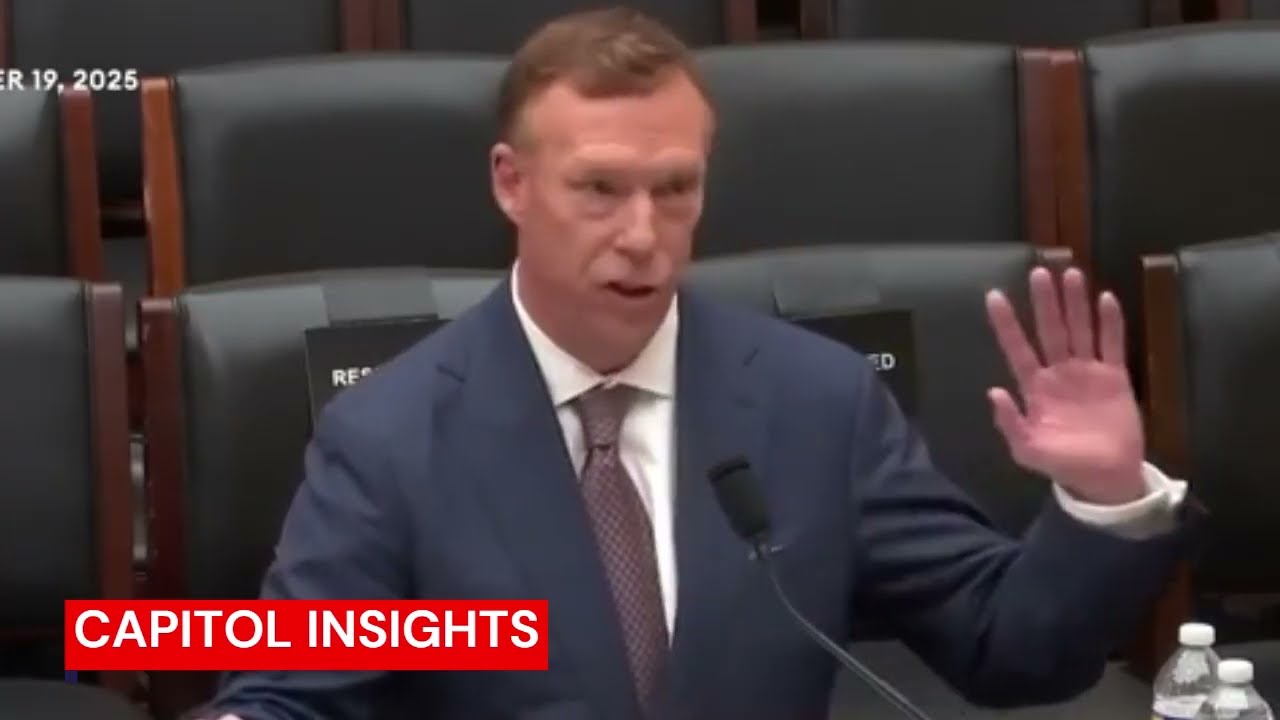
Rep. Hageman seized on those findings during her questioning of Timothy Olson, a senior official in the Census Bureau’s field operations division, pressing him repeatedly on why the bureau’s corrective measures did not extend to recalculating congressional apportionment.
“People in my district want to know why the Census Bureau is willing to acknowledge that the count was wrong but refuses to correct the consequences of that error,” Hageman said. “This is not an academic exercise. Billions in federal spending and the balance of political power depend on getting this right.”
Mr. Olson maintained that longstanding federal statute prevents the bureau from revising apportionment figures once they are certified, regardless of later accuracy assessments. He noted that the post-enumeration survey is standard procedure used to evaluate methodology and inform improvements for future counts, not to revise results already implemented.
That explanation did not satisfy Hageman, who countered that the bureau’s position “effectively allows mistakes to remain embedded in the system” and argued that congressional intervention may ultimately be necessary.
“Your answer seems to be that the errors are real, the consequences are real, but your hands are tied,” she said. “That is simply unacceptable.”
Across the aisle, Democrats pushed back, accusing Republicans of weaponizing the census findings to undermine trust in federal institutions and to relitigate long-standing grievances related to representation, migration patterns, and the political implications of population shifts.
Representative Jamie Raskin of Maryland, the committee’s ranking Democrat, criticized what he called an “effort to transform routine statistical variance into claims of political sabotage.” He emphasized that census inaccuracies, while serious, have occurred under both Democratic and Republican administrations.
“Every census in modern history has produced some level of overcount or undercount,” Raskin said. “The notion that these statistical imperfections amount to a partisan conspiracy is unsupported by the evidence and distracts from meaningful discussion about improving the system.”
Raskin also challenged Hageman’s characterization of the findings, arguing that the post-enumeration survey represents transparency, not concealment. “If anything,” he said, “the report is proof that the Census Bureau is forthright about the limits of its methodology and actively invests in learning from its mistakes.”
Still, the hearing underscored a widening divide between the parties on how to interpret and respond to the discrepancies. Republicans maintain that the errors had clear political consequences, with undercounted states losing out on federal funding for infrastructure, healthcare, and social programs. Democrats counter that while these consequences are real, the structural constraints on amending census results are equally real and should be addressed through reform—not through accusations of partisan manipulation.
Policy experts watching the hearing noted that the intensity of the exchange reflects the broader national climate, in which nearly every administrative process is viewed through a partisan lens. The census—once considered a fundamentally technocratic exercise—has become politically sensitive, especially after the Trump administration’s failed effort to add a citizenship question to the 2020 count and pandemic-related disruptions that complicated the survey process.
Dr. Elaine Friedman, a demographer at Georgetown University, observed that the hearing revealed “a clear push from some lawmakers to recalibrate how census accuracy is addressed after the fact.” However, she cautioned that significant legal and constitutional barriers limit options for altering apportionment data.
“The census is designed to be final once submitted to the president,” Friedman said. “Any attempt to change that retroactively would require extensive statutory revision and could raise constitutional questions about predictability and political neutrality.”
In closing remarks, Hageman suggested that Congress may need to consider precisely those revisions, signaling that Republicans could introduce legislation aimed at creating mechanisms for correcting major census errors in the future. Democrats dismissed the idea as impractical but acknowledged the need for bipartisan discussion on improving operational resilience in 2030 and beyond.
As the hearing adjourned, it remained clear that the census—an institution rooted in the nation’s founding documents—has become yet another battleground in Washington’s ongoing partisan wars. And while Thursday’s session shed light on real methodological concerns, it also exposed the deep political rifts that continue to shape how even the most technical matters are debated.