🚨 Duckworth Sounds Alarm: Trump’s ICE Crackdown Risks Turning U.S. Troops Into Shields for Abuse
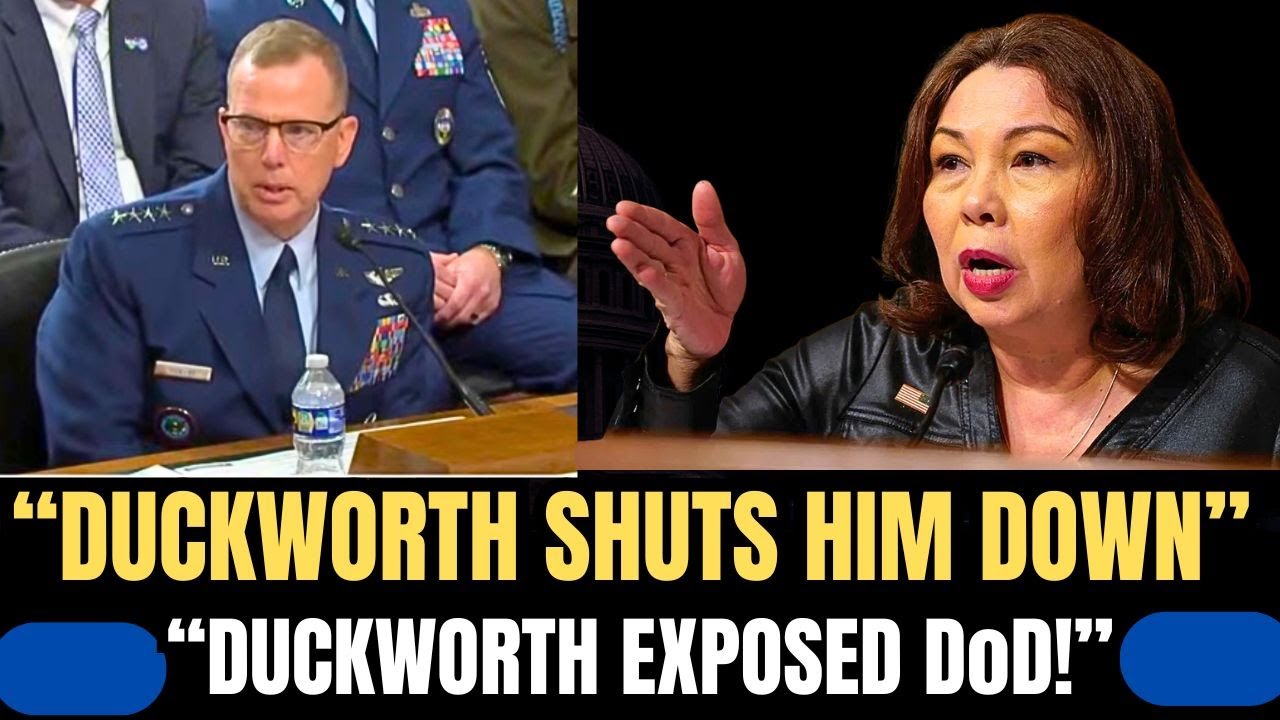
A tense Senate hearing has exposed a profound legal and moral crisis at the heart of the Trump administration’s domestic security strategy. Senator Tammy Duckworth delivered a stark warning that plans to deploy U.S. troops alongside Immigration and Customs Enforcement (ICE) agents in Chicago risk endangering civilians, undermining the Constitution, and shattering public trust in the military.
Duckworth rejected claims that Chicago descended into chaos before federal intervention. According to her testimony, there were no riots prior to ICE operations. Instead, Illinois communities have endured months of aggressive federal actions, including tear gas deployed near children, armed agents confronting unarmed civilians, and nighttime raids that resulted in no charges once cases reached court.
The senator described ICE not as victims, but as the source of escalating violence. She cited incidents in which federal agents allegedly tear-gassed police officers, pointed weapons at bystanders, removed preschool teachers in front of children, and forcibly detained families without legal basis. Federal courts, she emphasized, have repeatedly found no justification for these actions.
What makes the situation more alarming, Duckworth argued, is President Trump’s push to place the U.S. military in the middle of these operations. She warned that troops could be ordered to protect federal agents whose conduct is already under judicial scrutiny, forcing service members into impossible choices between obeying orders and upholding their oath to the Constitution.
At the core of her questioning was a simple but explosive issue: legal protection. Duckworth pressed Defense Department officials to commit to defending any service member who intervenes to stop a federal agent from wrongfully harming a civilian. The Pentagon’s inability to provide a clear “yes” revealed what she called a dangerous legal vacuum.

Unlike federal law enforcement officers, who have a duty to intervene against excessive force, uniformed service members lack explicit legal protections if they step in to stop civilian abuse. Duckworth warned that troops could face prosecution simply for doing the right thing, while standing by could permanently damage how Americans view the military.
She also highlighted the growing confusion between soldiers and federal agents. With DHS personnel wearing camouflage and carrying military-style weapons, the public may struggle to distinguish professional troops from agents accused of misconduct. That blurring of identities, Duckworth cautioned, risks turning respect for the armed forces into fear.
 By the end of the exchange, Duckworth made clear that this was about more than Chicago. It was a warning about preserving a foundational principle of American democracy: a military that belongs to the people, not a president. Without clear rules, legal safeguards, and firm boundaries, she argued, the cost could be irreversible—both for civilians and for the institution entrusted with defending them.