A Ceremony, a Moment, and a Firestorm: Trump’s FIFA Prize Turns Into a Political Spectacle
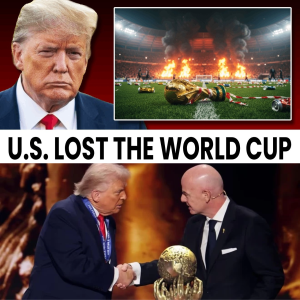
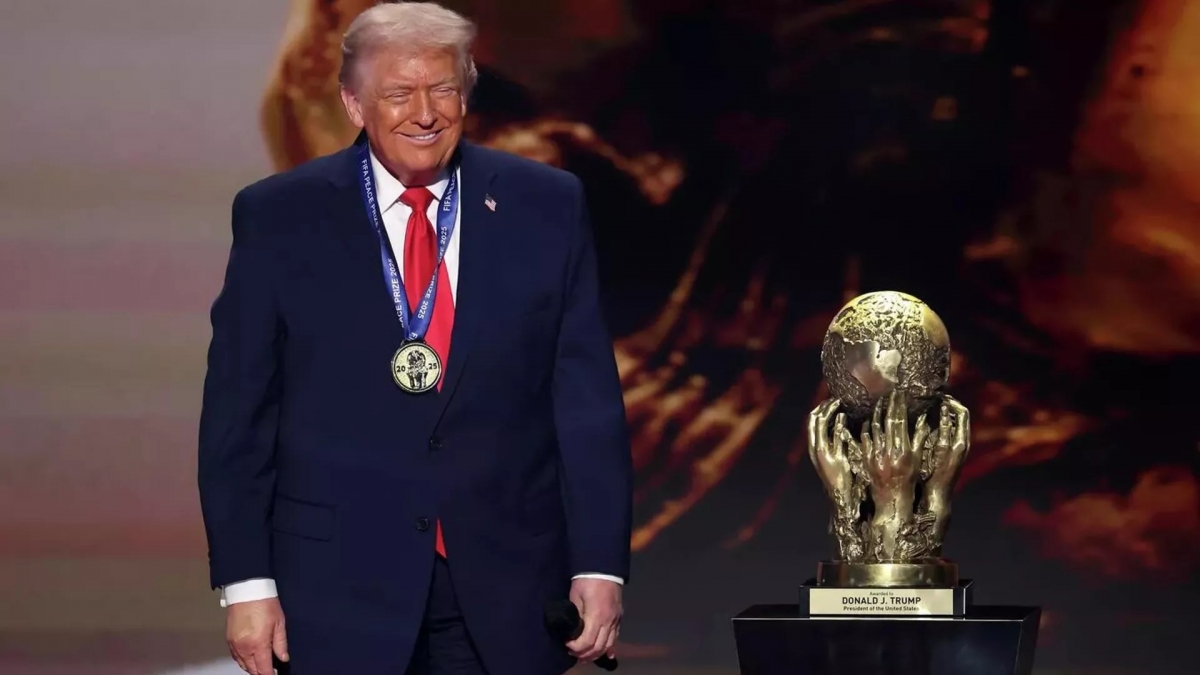
It began as a meticulously planned celebration—one meant to showcase global sports diplomacy, presidential stature, and a rare moment of cross-continental harmony. Instead, it became one of the most dissected clips on the internet this week. During a ceremony at the Kennedy Center, President Donald J. Trump appeared to momentarily close his eyes as he accepted the newly created FIFA Peace Prize, a gesture innocuous to some and deeply symbolic to others. Within hours, the footage became a flashpoint in an already fevered political atmosphere, amplified by late-night host Jimmy Kimmel, who suggested that “what happened off-camera was far stranger than what viewers saw.”
What followed was not merely another viral clip in an age saturated with political spectacle. It was a collision of entertainment culture, presidential power, and global sports institutions—each now entangled in the aftermath of a brief, ambiguous moment.
A Prize No One Expected and an Image Difficult to Ignore
The FIFA Peace Prize itself has drawn scrutiny since its creation earlier this fall. According to officials familiar with the organization, even some senior members of FIFA were unaware the award was under consideration until invitations to the Washington, D.C., event were sent out. The decision to present the inaugural honor to President Trump—already a polarizing figure on the international stage—raised questions about whether the award served diplomatic aims or political convenience.
At the ceremony, Trump stood beneath an enormous LED backdrop flanked by global football iconography, with FIFA president Gianni Infantino praising him as “a steadfast advocate for peace through sport.” The moment appeared carefully choreographed. Yet the widely shared clip—just a few seconds long—captured something unplanned: the President closing his eyes, head lowering subtly as applause continued around him.

White House officials quickly dismissed the observation as “a non-story,” calling it a “normal blink” taken out of context. But online, the reaction surged far beyond typical partisanship. On TikTok, accounts reposting the footage drew millions of views within hours; on X, hashtags comparing the incident to prior moments of presidential fatigue trended throughout the night.
Kimmel’s Intervention—and the Questions It Raised
If the clip had remained merely a social-media curiosity, the story might have faded. But on his late-night program hours later, Jimmy Kimmel introduced a new element: mystery. After airing the footage, he remarked that “sources inside the venue” described the atmosphere as “tense, confused, and surprisingly chaotic,” adding only that “what happened backstage is going to come out sooner than they expect.”
Kimmel did not elaborate. That vagueness—half-joke, half-suggestion—was enough to ignite a broader debate across the political and cultural landscape. Republican allies of the President accused the comedian of manufacturing scandal, while some Democrats suggested the ceremony reflected deeper tensions within the administration’s relationship with international organizations.

For years, Kimmel has positioned himself as one of Trump’s most visible media antagonists, and Trump, in turn, has treated the host as a political irritant. Their back-and-forth has rarely influenced policy, but it has increasingly shaped public perception—particularly among younger voters who consume politics through entertainment.
Behind the Scenes: Conflicting Accounts
Interviews with several attendees, granted anonymity to speak candidly, painted a more complex picture of the event. One attendee described the atmosphere backstage as “rushed, pressured, and unusually tightly controlled,” noting that staff members were instructed not to linger near the President’s entrance. Another claimed there had been a disagreement between FIFA officials regarding the positioning of cameras, concerned that the broadcast felt “overly presidential” for what was meant to be a global sports award.
There is no evidence of a major incident behind the scenes, but the accounts underscore a reality increasingly visible during Trump’s second term: cultural institutions that once appeared apolitical now operate under heightened scrutiny, with even routine events subject to partisan interpretation.
The Broader Implications
The ceremony’s fallout speaks to the evolving relationship between political narrative and digital culture. A moment that might once have gone unnoticed became a symbol, interpreted and reinterpreted through layers of satire, suspicion, and partisan loyalty. The President’s supporters argue the reaction exemplifies unfair media fixation, while critics contend that the episode highlights the performative dimension of Trump-era governance—where optics often overshadow policy.

The FIFA award, intended to project stability and international goodwill, now sits at the center of an unexpected controversy. Whether the moment becomes a lasting political metaphor or simply another fleeting online sensation remains to be seen.
But as the clip continues to circulate—spreading across platforms, dissected frame by frame—one thing is clear: the intersection of politics, entertainment, and global sport has never been more combustible. And in this case, a few seconds onstage were enough to ignite a conversation that shows no sign of fading.
The full clip is still trending. Millions have watched it. And, as Kimmel hinted, many now wonder what they haven’t seen yet.