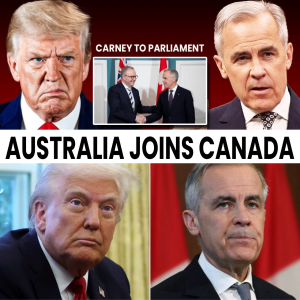
🔥 BREAKING: “WE DON’T NEED CANADA,” TRUMP DECLARES — TRADE REALITIES TELL A DIFFERENT STORY 🇺🇸🇨🇦
When President Donald Trump declared that the United States was terminating trade talks with Canada over Ottawa’s plan to impose a digital services tax on large technology companies, the statement was delivered with characteristic bluntness. “We don’t need Canada,” he said, framing the rupture as a matter of economic self-assurance rather than retaliation.
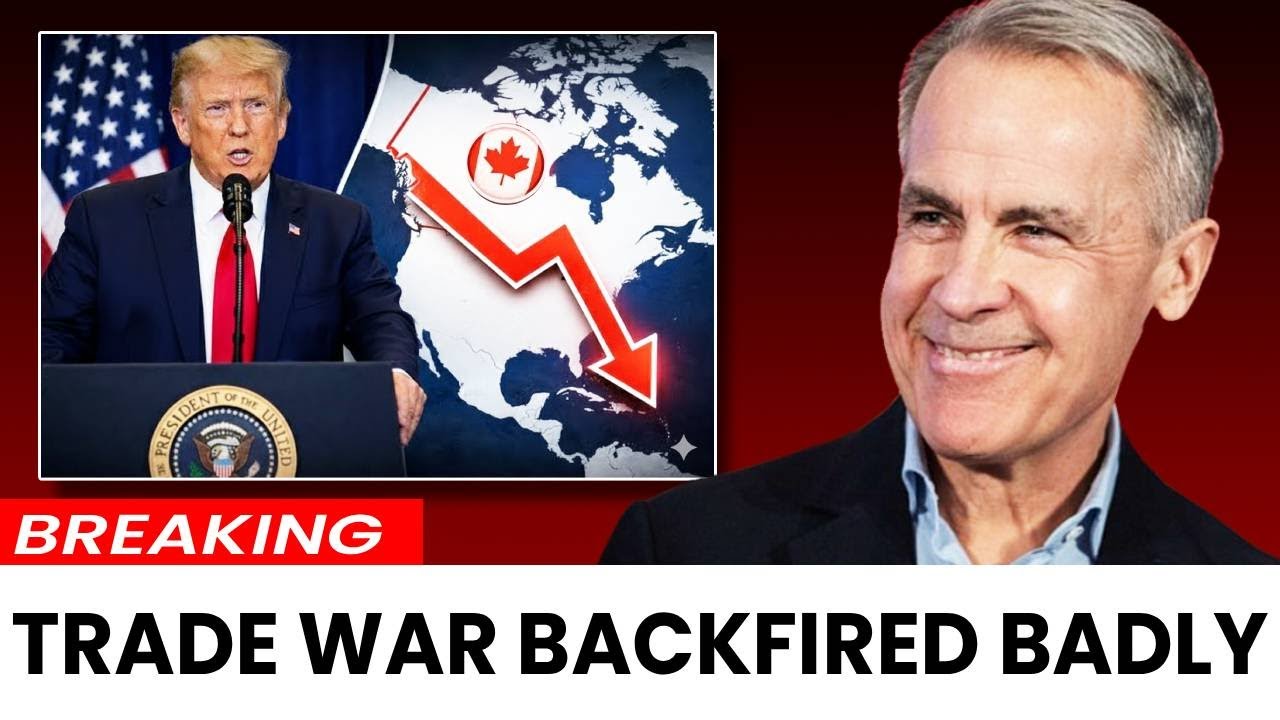
The remark landed with force on both sides of the world’s longest undefended border.
At issue is Canada’s decision to proceed with a tax on digital services revenue earned within its borders — a measure projected to raise more than $7 billion over five years, much of it from American technology giants. The Trump administration called the tax discriminatory and responded by cutting off trade discussions, injecting fresh uncertainty into a relationship that underpins hundreds of billions of dollars in commerce each year.
The political theater, however, obscures a deeper reality: The United States and Canada are bound together by an economic architecture so integrated that disentangling it would carry significant costs for both.
Energy is the clearest example. Canada is by far the largest foreign supplier of crude oil to the United States, accounting for roughly 60 percent of American crude imports in recent years. An estimated four million barrels per day move south through pipelines that have operated for decades. Many refineries in the Midwest and along the Gulf Coast were specifically configured to process heavy Canadian crude, meaning substitution is neither simple nor inexpensive.
Natural gas ties are even tighter. Nearly all U.S. natural gas imports — about 98 percent — originate in Canada, flowing through an interconnected pipeline network that heats homes in northern states and fuels power plants during winter surges. Canadian hydropower also supports electricity grids in states like New York and Minnesota, providing stability during periods of peak demand.
In 2024, the value of bilateral energy trade alone approached $150 billion, reflecting not imbalance but infrastructure designed around proximity and reliability. Disruptions in that system would reverberate quickly through fuel prices, heating bills and industrial costs.
Trade beyond energy is equally entwined. Canada is the largest single-country destination for American exports, purchasing roughly $350 billion in U.S. goods last year. The United States imported about $413 billion in goods from Canada, producing a goods trade deficit that Mr. Trump has frequently cited. But economists note that the picture shifts when services are included; American firms export substantial financial, professional and digital services northward, narrowing the overall imbalance.
Perhaps more important, nearly half of bilateral trade consists of intermediate goods — components that cross the border multiple times before a final product is assembled. The North American auto industry illustrates the point. A vehicle assembled in Michigan may include steel from Ontario, engines from Ohio, and electronics that have traveled back and forth across the border more than once. Tariffs or border frictions imposed at any stage ripple through the entire chain, raising costs that are eventually borne by consumers.
Canada, for its part, depends heavily on the American market: about three-quarters of its merchandise exports go south, accounting for more than one-fifth of its gross domestic product. That asymmetry has often been seen in Washington as leverage. But the events of recent months suggest that leverage can cut both ways.

Earlier rounds of tariffs — including 25 percent duties imposed on certain Canadian goods — were followed by a sharp decline in cross-border exports and rising input costs for American manufacturers. Steel and aluminum prices increased, squeezing profit margins and complicating expansion plans. U.S. imports overall fell steeply during the period, a contraction not seen outside the pandemic or the 2008 financial crisis.
Diplomatic fallout has accompanied the economic strain. Canadian leaders have publicly questioned the reliability of their closest ally, while opinion polls show overwhelming opposition among Canadians to any notion of political absorption into the United States — an idea Mr. Trump has floated rhetorically. Travel from Canada to the United States has declined significantly, and consumer campaigns promoting domestically made products have gained traction.
Retaliatory tariffs from Ottawa have targeted tens of billions of dollars in American goods. Provincial officials have even discussed restricting electricity exports to U.S. states — proposals that, while not enacted, signal the depth of frustration.
The broader implications extend beyond North America. The United States, Canada and Mexico are scheduled to review the United States-Mexico-Canada Agreement in 2026. The Trump administration has suggested it could withdraw if its demands are not met. Economists warn that the collapse of the pact could shrink Canada’s economy by more than 2 percent and reduce U.S. gross domestic product by more than 1 percent — losses measured in hundreds of billions of dollars.
The administration has framed its actions as a defense of American sovereignty and a pushback against unfair treatment of U.S. firms. Critics argue that the digital services tax dispute could have been resolved through negotiation or multilateral forums rather than unilateral escalation.
What remains indisputable is the scale of integration. Supply chains optimized over decades cannot be reconfigured overnight. Refineries cannot instantly switch crude grades. Pipeline networks cannot be rerouted with a speech.
For generations, the United States-Canada relationship has been characterized less by drama than by quiet interdependence. The border facilitated trade rather than constrained it; cooperation was assumed rather than debated.
Whether the current rupture proves temporary or structural will depend on choices made in the coming months. But the assertion that America does not need Canada collides with a dense web of pipelines, transmission lines, factories and contracts that suggest otherwise. In economics, as in engineering, systems built over decades rarely yield to rhetoric without consequence.