When President Donald Trump greeted Canada’s prime minister with uncharacteristic warmth during a recent Oval Office meeting, the optics suggested a thaw. There were compliments about pragmatism and partnership, a softer tone after months of tariff threats and barbed remarks about Canada being “the 51st state.” But beneath the choreography, tensions in the North American auto sector were already intensifying.
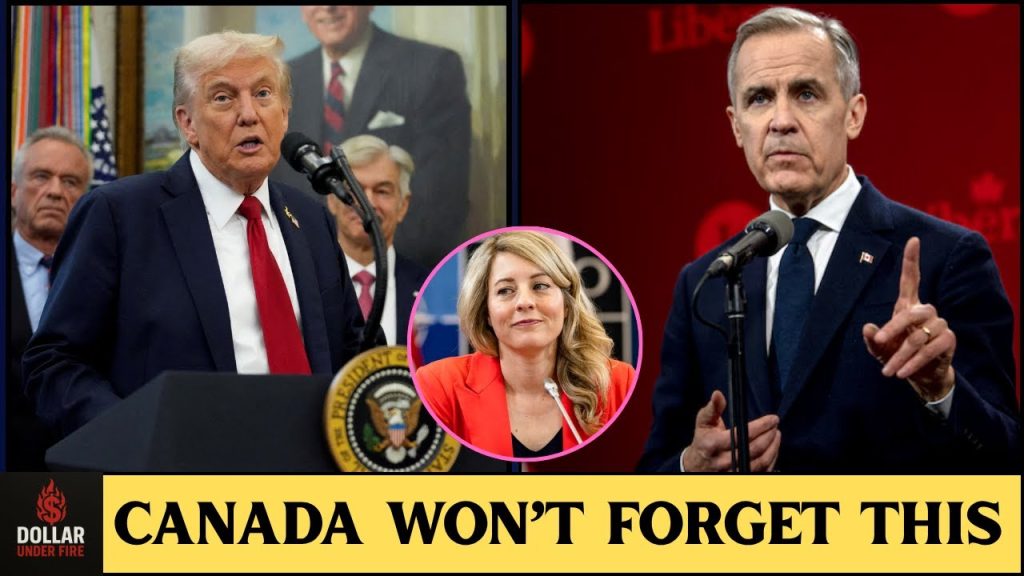
Within days, U.S. Commerce Secretary Howard Lutnick told a business audience in Toronto that future trade arrangements would prioritize American auto assembly, with tariffs remaining a central lever. The message was blunt: manufacturing jobs belong in the United States. For Canadian officials and industry leaders, it confirmed that the rhetorical shift in Washington had not translated into policy restraint.
The auto industry is among the most deeply integrated on the continent. Vehicles assembled in Michigan routinely cross into Ontario for parts; Canadian factories rely on American components and vice versa. Disrupting that ecosystem carries costs on both sides of the border. Yet Ottawa concluded that passivity would leave its domestic industry perpetually exposed to political volatility in Washington.
Prime Minister Mark Carney and Industry Minister Mélanie Joly began outlining a strategy that officials describe as economic sovereignty rather than retaliation. The plan rests on three pillars: increase Canadian content in public procurement, expand domestic refining and processing of critical minerals, and diversify export markets beyond the United States. “Buy, build, partner,” Ms. Joly said in a speech that quickly became a rallying cry in industrial cities.
The mineral dimension is particularly sensitive. Canada supplies significant quantities of nickel, cobalt and other materials essential for electric vehicle batteries. Ontario Premier Doug Ford warned that if Washington sought to dismantle Canada’s auto sector through tariffs, access to those minerals could be reconsidered. While no export restrictions have been imposed, the threat alone underscored how interdependence can become leverage.
American automakers are already navigating tight margins and global competition. Industry data show declining volumes at several major manufacturers, driven by high financing costs and uneven electric vehicle demand. Additional tariff-related friction risks further cost increases. U.S. executives, speaking privately, acknowledge that an escalating dispute with Canada would complicate production planning at a moment of technological transition.

Canadian officials argue that their objective is not confrontation but insulation. For decades, Canada’s economy has relied heavily on American demand. Roughly three-quarters of its exports still flow south of the border. That concentration magnifies vulnerability when U.S. trade policy shifts abruptly. By investing in domestic manufacturing capacity and strengthening trade ties with Europe and Asia, Ottawa aims to create alternatives.
The strategy is already influencing consumer behavior. Retailers report a rise in “Made in Canada” marketing, and some provincial governments have adjusted procurement guidelines to favor domestic suppliers. Economists caution that consumer nationalism alone cannot offset structural trade imbalances. Yet symbolic shifts can reinforce broader industrial policy, particularly when paired with targeted incentives.
In Washington, reaction has been mixed. Some lawmakers aligned with Mr. Trump insist that hard-line trade tactics will ultimately secure more American jobs. Others warn that alienating Canada — the largest export market for U.S. goods — could undermine domestic manufacturers. The Pentagon and State Department have sought to reassure allies that security cooperation remains intact despite commercial tensions.
What makes the moment unusual is the balance of restraint and resolve. Canada has not imposed sweeping retaliatory tariffs. Instead, it is recalibrating quietly, investing in capacity and signaling that access to its resources is not automatic. Mr. Trump, for his part, has moderated his public language without retreating from his broader “America First” framework.
The outcome is uncertain. North American auto production remains economically intertwined, and neither country can easily disentangle without significant disruption. But the episode illustrates a deeper shift. The relationship once defined by assumption — that economic integration would steadily deepen — now operates under scrutiny. Integration persists, but trust is conditional.
If there is a turning point, it may not be the exchange of threats or smiles. It may be the recognition on both sides that leverage cuts both ways. In a continent-spanning industry where parts cross borders multiple times before reaching consumers, dominance is constrained by dependence. And as Ottawa’s strategy suggests, resilience is becoming as prized as access in the evolving calculus of North American trade.