Canada’s Fighter Jet Dilemma Reveals the Real Cost of American Defense Partnerships
What was supposed to be a routine military procurement has quietly turned into one of the most revealing geopolitical tests Canada has faced in decades.
Canada’s decision over its next generation of fighter jets was initially framed as a technical upgrade — a replacement for aging CF-18 Hornets based on performance metrics, interoperability, and long-term defense planning. Instead, it has exposed something far larger: how modern alliances operate when power imbalances meet economic pressure, and how sovereignty becomes conditional when defense systems are monopolized.
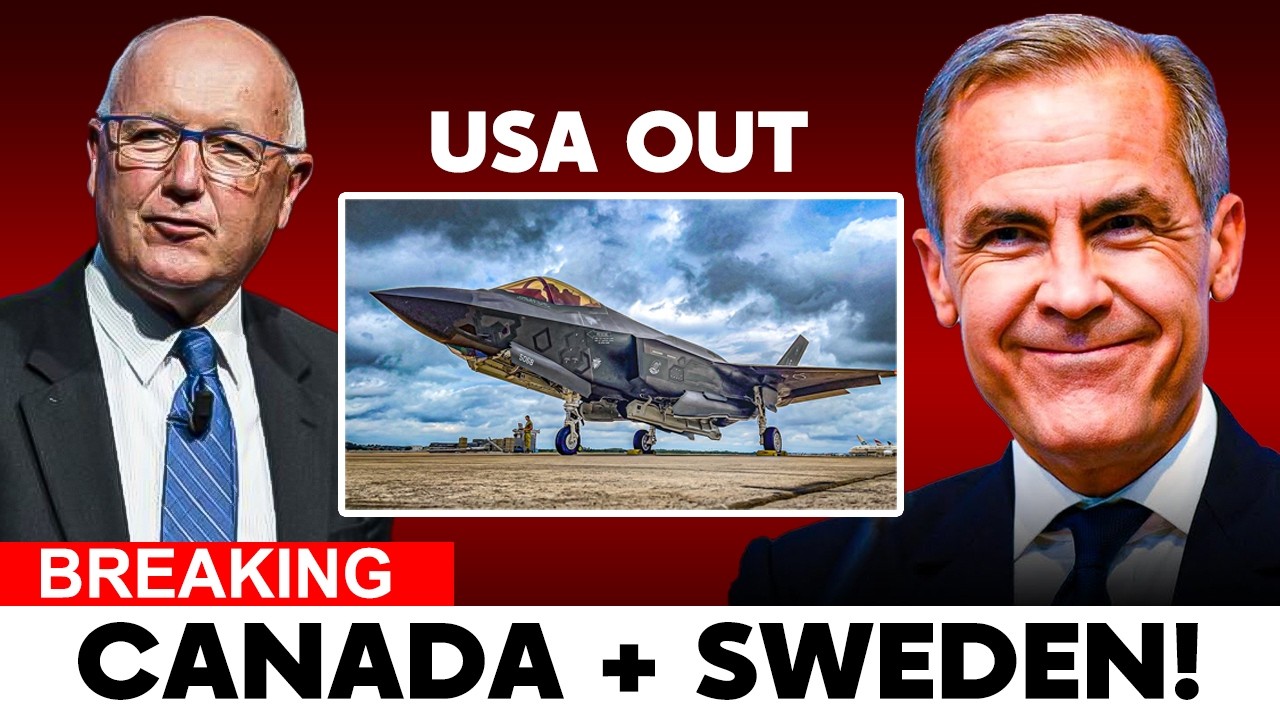
At the center of the controversy is Canada’s planned purchase of 88 American-made F-35 fighter jets from Lockheed Martin — and a growing reconsideration that has drawn an unusually blunt response from Washington.
A Warning That Changed the Conversation
In early 2026, the United States ambassador to Canada delivered a message that cut through diplomatic ambiguity. Ottawa’s decision to review its F-35 purchase, he said, would not be treated as a neutral budgetary exercise.
If Canada failed to proceed with the full acquisition, the United States would increase the presence of American fighter aircraft operating within Canadian airspace. NORAD would remain intact on paper, but the practical implications were unmistakable: Canadian sovereignty would become more conditional, tied directly to compliance with a specific American defense platform.
What followed was not a debate about radar systems or stealth coatings. It was a confrontation between leverage and autonomy.
How the Costs Quietly Exploded
Canada’s original commitment dates back to 2022, when the government agreed to purchase 88 F-35s at a projected cost of approximately $19 billion CAD. The plan called for 16 aircraft to be delivered starting in 2026, with the remaining jets arriving over subsequent years.
In 2025, that framework unraveled.
A government audit revealed that the projected cost had surged to $27.7 billion CAD, a 46% increase over the original estimate. Nearly $9 billion in additional costs appeared without prior parliamentary approval or long-term budget accommodation.
For any major capital project, such an escalation would trigger an immediate reassessment. For the most expensive weapons program in history, it raised deeper concerns about structural cost overruns rather than one-time miscalculations.
Rather than canceling outright, Ottawa chose a calibrated response. The initial 16 F-35s would remain on order to preserve baseline interoperability with U.S. systems. The remaining 72 aircraft were placed under review.
That decision opened the door to alternatives.
Saab’s Gripen Offer Reframes the Debate
Almost immediately, Sweden’s defense manufacturer Saab entered the conversation with a proposal that challenged the prevailing assumptions of Canada’s defense procurement model.
Saab offered to supply 72 Gripen E fighter jets, paired with advanced surveillance aircraft, under a framework centered on domestic production. Final assembly would take place in Ontario and Quebec. Major components would be manufactured in Canada. Maintenance, upgrades, and long-term sustainment would be anchored inside the country rather than routed through foreign-controlled systems.
According to Saab’s projections, the deal would generate approximately 12,600 Canadian jobs, tied directly to physical facilities and verifiable output.
This stood in sharp contrast to Lockheed Martin’s industrial offsets. While Lockheed advertises up to $50 billion in economic activity linked to the F-35 program, those figures are distributed across a global supply chain Canada does not control. Software access, upgrades, and maintenance pipelines remain governed externally.
The difference is structural, not symbolic.
Public Opinion and Political Pressure
Canadian public opinion responded quickly. An Abacus Data survey found that 72% of Canadians supported adopting the Swedish aircraft either fully or as part of a mixed fleet. Only 13% favored sticking exclusively with the F-35.
Support for the Gripen cut across regions and political affiliations, driven less by ideology than by cost transparency, job creation, and sovereign control.
Washington’s response hardened.
The U.S. ambassador publicly dismissed the Gripen as an inferior platform, despite its NATO compatibility, Arctic performance, and operational use by multiple allied air forces. The criticism was accompanied by renewed warnings that choosing Saab would result in greater American fighter activity within Canadian airspace.
At that point, persuasion gave way to pressure.
The Mechanics of Leverage
Four mechanisms became visible.
First was sovereignty leverage. NORAD, designed as a cooperative Cold War defense framework, was implicitly reframed as a compliance tool. Cooperation would continue — but only on approved terms.
Second was industrial leverage. Saab’s proposal localized production and authority. Lockheed’s model embedded Canada deeper into a system governed elsewhere.
Third was interoperability control. U.S. officials argued that the Gripen would struggle to integrate fully with NORAD systems. Analysts noted the circular logic: integration depends on permission. Restrict access, then cite incompatibility as justification.
Fourth was cost normalization. The F-35 program’s lifetime costs exceed $1.7 trillion globally. Overruns are routine, and partner nations are expected to absorb them because alternatives are discouraged or politically penalized.
Canada’s review disrupted that expectation.
Why This Matters Beyond Canada
This episode is not about jets alone. It is about how dependency is enforced in modern alliances.
Competitive markets respond to alternatives with better offers. Monopolies respond with pressure. The American response focused on warnings rather than improved pricing, industrial concessions, or cost guarantees.
That distinction did not go unnoticed.
Analysts now expect a compromise outcome: a mixed fleet, with the initial F-35s preserved for interoperability and Saab aircraft supplying the remainder. Such a move would balance operational needs while reducing long-term exposure to cost overruns and external leverage.
But the broader shift is already underway.
A Quiet Realignment
This is how de-Americanization happens in practice — not through dramatic ruptures, but through incremental decisions. Defense supply chains are localized. Trade is diversified. Strategic dependencies are reduced.
Prime Minister Mark Carney has framed the issue carefully, emphasizing diversification and unity while reaffirming cooperation with the United States through formal channels. Sovereignty, he has made clear, remains non-negotiable.
Canada is not abandoning alliances. It is recalibrating the terms under which those alliances remain acceptable.
The fighter jet decision will be studied closely by other middle powers navigating similar pressures. The message from Washington has already been received — quietly, methodically, and with growing urgency.
And once received, it cannot be unlearned.